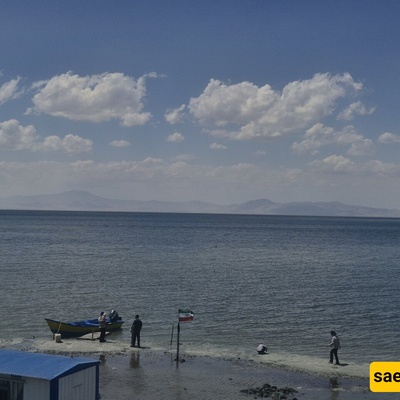
SAEDNEWS: Around 50 years ago, Mr. Najafi discovered a cave near Eshqabad, but locals avoided it due to fear and unknown conditions. In 1998, village elders reported to authorities that a legendary and frightening cave—known as the “Hell Cave”—existed on the village outskirts, and no one dared to approach it.
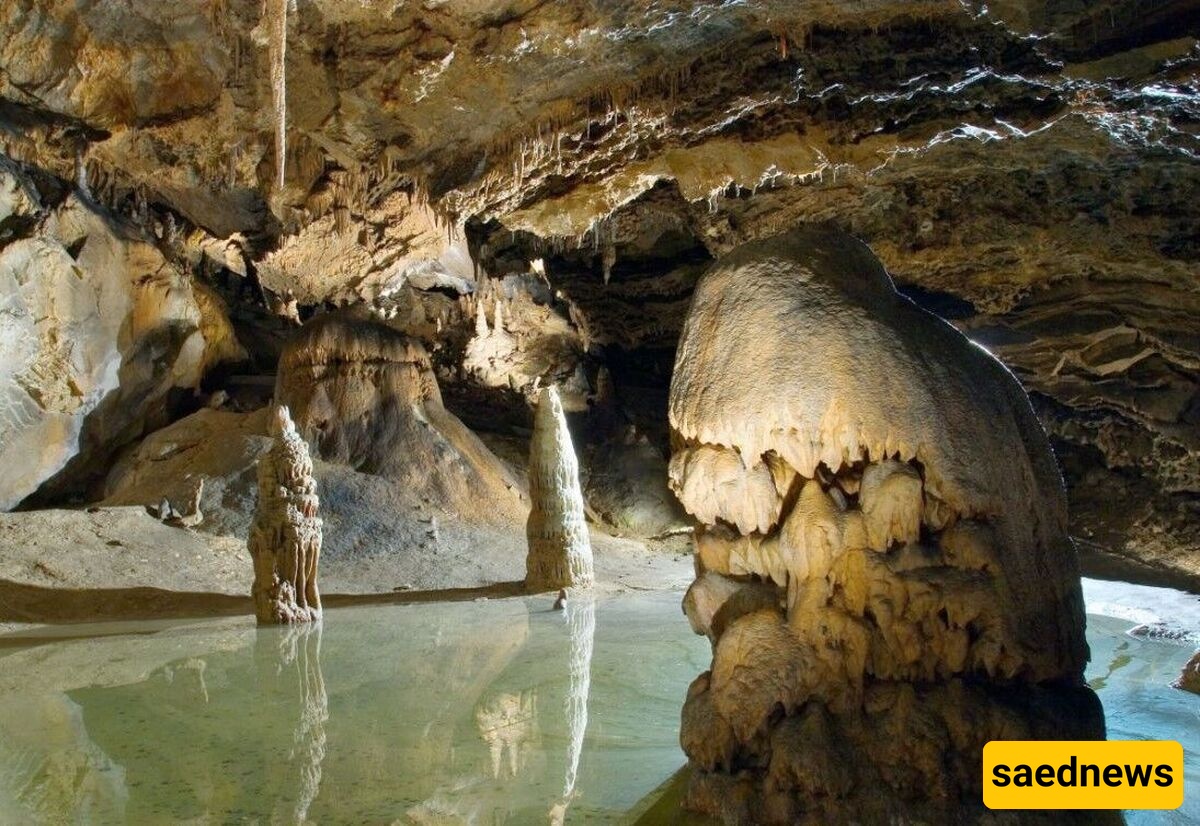
According to the Tourism Service of Saed News, citing Fararu, the Hell Cave of Bardaskan is a historical cave dating back approximately 50 million years, featuring stunning natural formations. This article introduces the cave and its remarkable characteristics.
The Hell Cave of Bardaskan is an ancient cave located near the areas of Aghcheh Abad (Ashghabad) in Bardaskan and Tabas. The name “Hell Cave” does not refer to anything frightening; rather, it is derived from the high temperature inside the cave. Despite its intimidating name, the interior is extremely beautiful and visually impressive.
According to Dr. Ariamanesh, a PhD in geology and university professor, the cave is estimated to be around 50 million years old. The presence of large and beautiful stalactites and rock formations inside the cave—many of which are hundreds of years old—creates a breathtaking sight for visitors.
The Hell Cave is located 195 kilometers from Tabas and 85 kilometers from Aghcheh Abad in Bardaskan, within the Koh Yakhab rural district. It lies north of Sefid Tappeh Taagh Mountain, in the Dastgerdan district of Tabas County, South Khorasan Province, about 15 kilometers off the Aghcheh Abad–Bardaskan road.
To reach the cave, visitors must travel from the village of Tahtagh and continue along a 40-kilometer dirt road.
The cave was discovered about 50 years ago by Mr. Najafi. However, due to its unknown nature, local residents avoided entering it. In 1998 (1377 in the Iranian calendar), two elders from Aghcheh Abad village reported to the local water and wastewater department that a mysterious and legendary cave—known as the Hell Cave—existed near the village and was avoided by locals.
Following this report, a 10-member team of local officials and water department representatives, led by Mr. Rostami (the district governor of Dastgerdan), became the first group to enter and explore the cave using proper equipment.
The Hell Cave is essentially a vertical pit cave with a depth of 50 meters and a length of about 350 meters. Until recently, very few people dared to enter this deep shaft. Entry requires mountaineering and caving equipment, including at least 30 meters of rope.
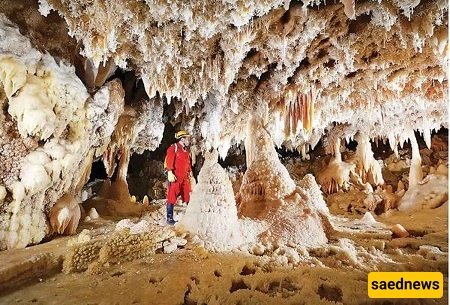
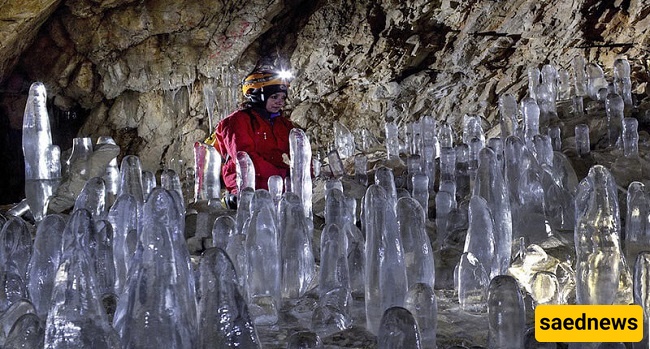
Inside the cave, marble-like stalactites create a stunning visual landscape that can resemble the famous Ali Sadr Cave in Hamedan at first glance. The cave has four entrances and is still geologically active, with ongoing chemical processes, classifying it as a “living limestone cave” in Iran.
During exploratory visits in 2008 (1387), a water reservoir measuring 6 by 2 meters was found inside the cave. Despite recent droughts, water still remains in the cave’s terminal pool. In late autumn, the water depth typically ranges between 20 to 40 centimeters.
Animal bone remains—including those of mountain goats, sheep, dogs, hyenas, and snakes—have also been discovered inside the cave, coated with a layer of calcite.
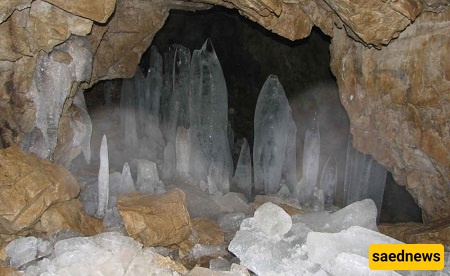
The cave also features unique geological formations such as white cauliflower-like structures, needle-shaped crystals, flowstone formations, sponges, and small drapery-like deposits, making it a significant geological attraction.
In 2015 (1394), marble extraction activities caused damage to the cave entrance, sparking widespread criticism from environmentalists and media outlets.
Although the Hell Cave is registered by the Iranian Speleology Association as a valuable natural heritage site, it is not considered to have archaeological or human habitation value. As a result, strict limitations on mining activities have been difficult to enforce.
Environmental efforts later led to a restriction banning mining within a one-kilometer radius of the cave entrance. However, despite these protections, permits for manganese and marble extraction were still issued nearby, and illegal mining activities reportedly caused severe damage to the cave entrance.