SAEDNEWS: Sardasht County is a Kurdish-populated border region in West Azerbaijan Province, located in the southwestern part of the province along the southern stretch of Lake Urmia. It shares its western border with northern Iraq and the Kurdistan Region of Iraq. The county’s administrative center is the city of Sardasht.
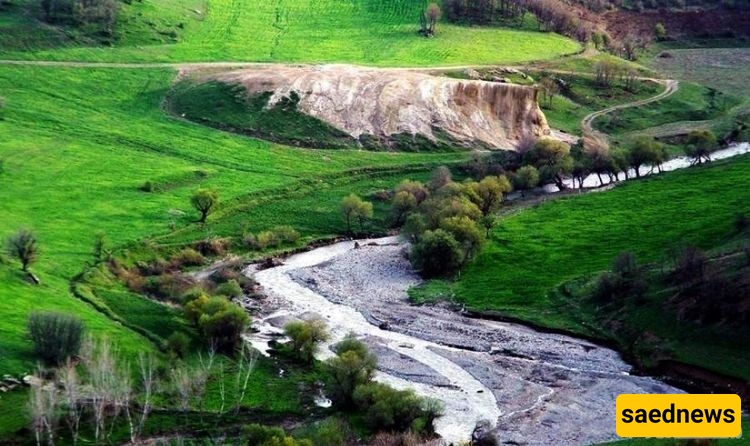
Sardasht is one of the Kurdish cities in West Azerbaijan Province, serving as the capital of Sardasht County. It is located in the southwestern part of the province, south of Urmia, and borders northern Iraq and the Kurdistan Region of Iraq. According to the 2016 census, the city had a population of 68,165. Its elevation is 1,480 meters above sea level.
The city lies at the foot of Gerde Sûr Mountain on a plain covering 2.5 square kilometers, with coordinates of 36.25°N latitude and 45.53°E longitude. Sardasht faces east toward the Kelo River, and the city’s drinking water, as well as irrigation for surrounding farmlands, comes from a spring originating in Gerde Sûr and the surrounding border mountains.
Sardasht is 105 km from Bukan via the main road, 130 km via the Bukan-Khalifan-Rabat route, 125 km from Mahabad, 90 km from Piranshahr, and 60 km from Baneh. Nestled in the border mountain range, it is 35 km from the Kurdistan Region of Iraq, with Qala Diza being the nearest Iraqi town.
The majority of Sardasht’s residents follow the Shafi‘i school of Sunni Islam. During the Iran-Iraq War, the city and some surrounding villages were subjected to chemical bombing by Iraqi forces. Sardasht County has three border markets: Kileh (official), Qasem Rash, and Ashkan (temporary).
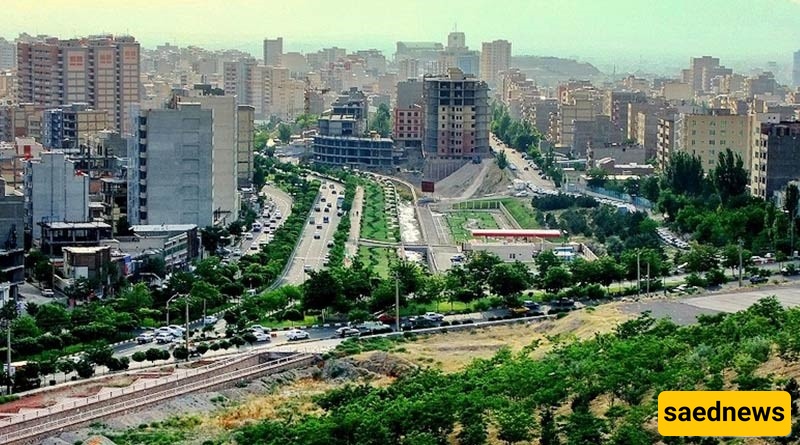
Before Islam, Sardasht was located northwest of the current city, next to a large spring. It was once called “Nizeh-ro” and had five fortifications with strong defenses, remnants of which still exist. Sardasht is a historically rich region with many unexplored or looted archaeological sites. Nearby, there are remains of a Parthian-era castle known as Varash Qazi Ava.
Sardasht spreads across the slopes of Gerde Sûr Mountain, with the Qandil Mountains to the northwest. It borders Piranshahr to the north, Mahabad and Bukan to the east, Baneh to the southeast (in Kurdistan Province), and to the west with Ranya, Qala Diza, and Erbil Province in Iraq. The south borders Sulaymaniyah, Sharbažir, and Mawat in Iraq. The city shares a 100 km border with the Kurdistan Region of Iraq.
The Sardasht region is mountainous, rugged, and forested, covering 1,660 square kilometers. Major mountains include:
Belfat
Hovine Mal (south of Qala Rahesh village)
Zahrdkeh (Alan region)
Sere Gum (behind Mirabad city)
Tarkhan
Ebrahim Jalal
Kuh Nistan
Lendi Sheikhan
Dashan Qala
Kaseh Bardin
Haji Ebrahim
Barde Sepian
Residents speak Sorani Kurdish with the Mokriani dialect. Sorani Kurdish is a branch of Northern Kurmanji and closely related to the Sorani dialects of Erbil (Hawler) and Sulaymaniyah (Babani) in Iraq. Mokrian historically refers to a Kurdish emirate, now encompassing parts of northwest Iran, including Sardasht and neighboring counties.
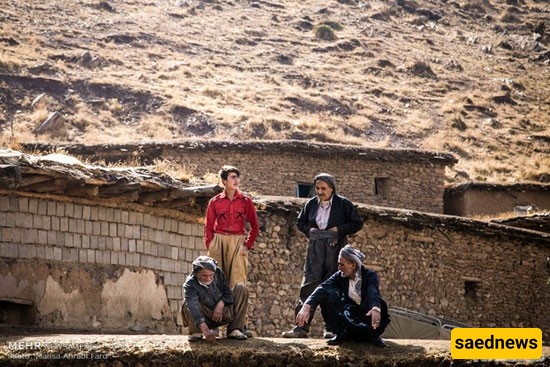
Zab River: A 400–440 km river originating in the Kurdistan Mountains, flowing west into Iraq, joining the Diyala River, Dukhan Dam, and eventually the Tigris. The Little Zab branch begins in the mountains northwest of Piranshahr and passes through Sardasht, gathering tributaries before forming the Iran-Iraq border near Alan.
Qalatasi Bridge: A historic bridge over the Little Zab River, originally constructed possibly in the mid-19th century under Sheikh Molana, connecting Mirabad to Mahabad. Its northern-southern columns are partly natural rock formations, reinforced with masonry.
Bistun Bathhouse: A Qajar-era bathhouse built inside Sardasht under the patronage of Kurdish politician Zaman Aziz Khan Mokri.
Sardasht is rich in undiscovered historical sites, offering potential for cultural, social, and economic development, making it a strong candidate for a model tourist region.