SAEDNEWS: Baleh Spring became the 64th national heritage site when it was registered on July 25, 2009, by Iran’s Cultural Heritage, Handicrafts, and Tourism Organization. This spring is one of the natural treasures of Kermanshah Province. Below, we explore the beauty and significance of this remarkable spring.
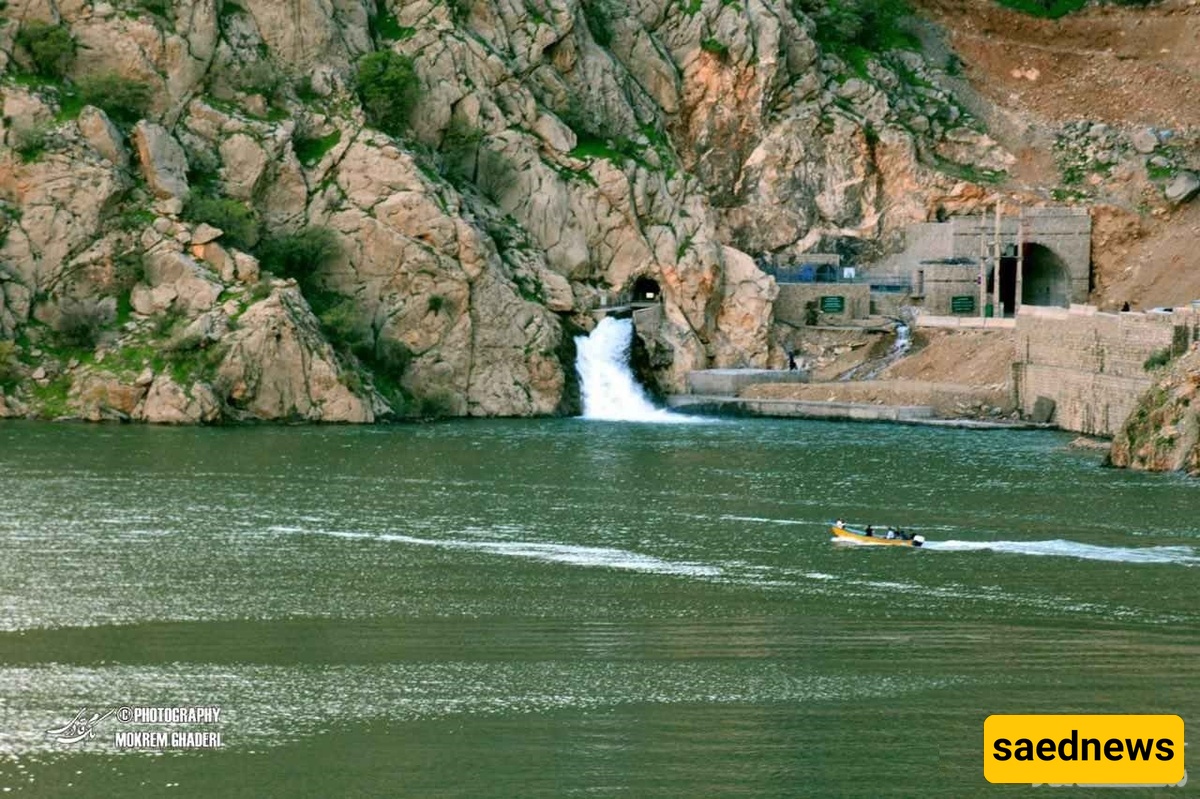
Bel Spring is one of Iran’s most astonishing natural attractions, located in the Uramanat region of Kurdistan. The Kani Bel Spring, known for its impressive water volume, lies near the villages of Nav and Hajij and flows into the Sirvan River. Fed by the heights of Takht Mountain, the spring is remarkably vigorous. With a length of just 15 meters, the Bel Spring and River are recognized as the “shortest river in the world.” Locally called Kani Bel in Kurdish, the spring likely derives its name from Bel, the ancient Babylonian god of water. Situated about two kilometers from Hajij and close to the Sirvan River, its waters emerge from the mountain, forming a powerful waterfall before joining the river.
The spring’s emergence from the mountain resembles the mouth of a cave partially blocked by collapse. Historically, despite its clarity and high flow (up to 4,000 liters per second during spring in wet years), the spring’s proximity to the Sirvan River limited its use to a single watermill. In recent years, however, three mineral water production units and a cold-water fish farm have been established. Plans are also underway to channel its water for drinking purposes in nearby villages.
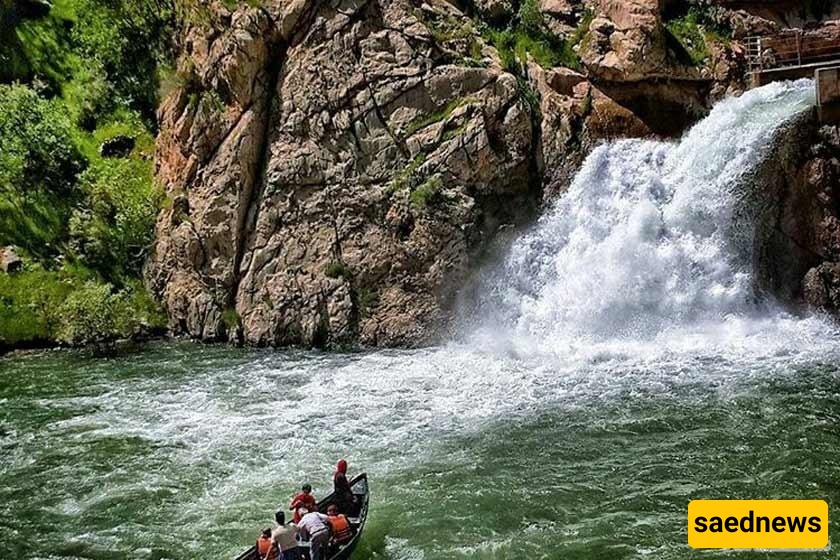
Researchers estimate that Bel Spring dates back around 60 million years to the Cretaceous period. It is the largest karst spring in the Middle East. Karst refers to the erosion and dissolution of carbonate rock formations. Studies show that Kani Bel’s mineral water ranks among the highest quality drinking waters chemically. Tests confirm that harmful elements such as arsenic, nitrate, and ammonia are absent.
The spring area supports aquatic plants like Hydrocotyle vulgaris, water ferns, and riparian vegetation such as seven-joint grass and cereals. Terrestrial plants include oak, yarrow, wheat flowers, wild poppies, and wild spinach. Oak and wild pistachio trees add unique beauty to the landscape, and medicinal plants are abundant.
Local wildlife includes the Iranian squirrel, which inhabits forests such as Matin Jungle and Shorkudaki. The Sirvan River’s banks provide habitat for diverse birds and fish, making the area ideal for recreational and tourist activities. The stretch from the villages of Aspriz to Hajij offers the best views of the Sirvan River, with its sandy roads alongside the river providing exceptional spots for relaxation, photography, and videography. The river’s strong currents also make it a prime location for canoeing competitions at provincial, national, and international levels.
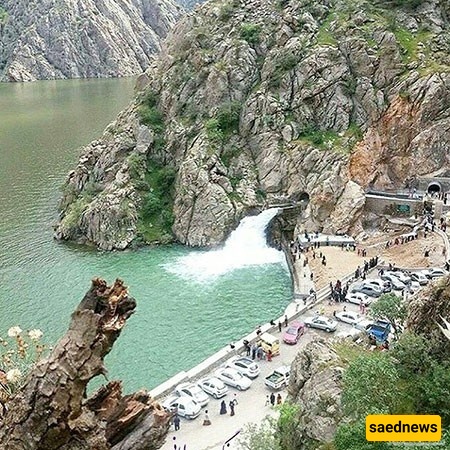
The construction of the Darian Dam, currently underway, will submerge Bel Spring under more than 100 meters of water, permanently eliminating its economic, environmental, and tourism benefits. In a water-scarce country like Iran, preserving high-quality drinking water sources is critical, and it would be unwise to destroy a spring that gushes directly from the mountain and bury it under a reservoir.
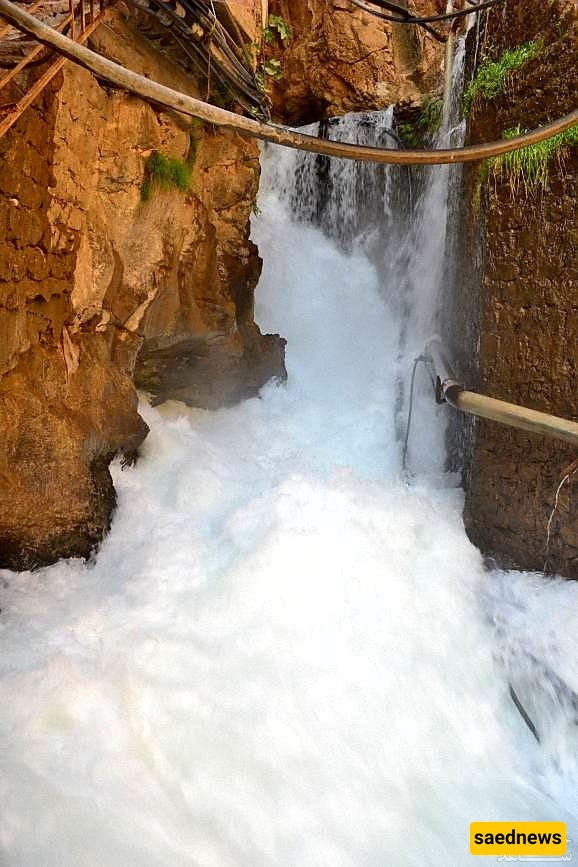
Uramanat is a vast area nestled in the mountains of western Kurdistan, bordering Iraq. Surrounded by high peaks, life thrives in its lush, water-rich valleys. The region features winding, deep valleys and numerous streams that together form the Sirvan and Lileh rivers, joining near Darule on the Iran-Iraq border. Among these springs, Bel Spring stands out as the most abundant, feeding the Sirvan River and forming the world’s shortest river. Visitors can explore Uramanat Takht, Balbar, Selin, Novin, Nav, and Hajij along this route.
Key routes in Uramanat include the roads from Marivan to Paveh, via Uramanat Takht, and the pass through Tehteh and Nusud leading to Paveh. Another main route runs from Paveh to Nowsheh. For overnight stays, Hajij is recommended for its terraced architecture, green surroundings, and small lake.
Bel Spring is located in northwestern Kermanshah Province, 14 kilometers from Nowsheh, next to the Imamzadeh Seyyed Ubaidollah shrine (linked to Imam Reza’s brother), locally known as “Kuse Hajij.” To reach the spring and waterfall, visitors typically travel via Kermanshah and Paveh, either through Sanandaj and Marivan or from Paveh to Hajij, enjoying natural oak forests along the way.
The spring, confirmed as mineral-rich, is situated two kilometers from Hajij along the main branch of the Sirvan River. It lies about 35 kilometers north of Paveh, with the Marivan-Paveh road passing nearby. While part of this road is unpaved, it remains accessible in winter. The paved section runs from Paveh to the village of Vara, with the rest under improvement. The route offers scenic views, especially of the Sirvan River, and the Hajij tourism village and “Kuse Hajij” shrine are just two kilometers west of the spring.