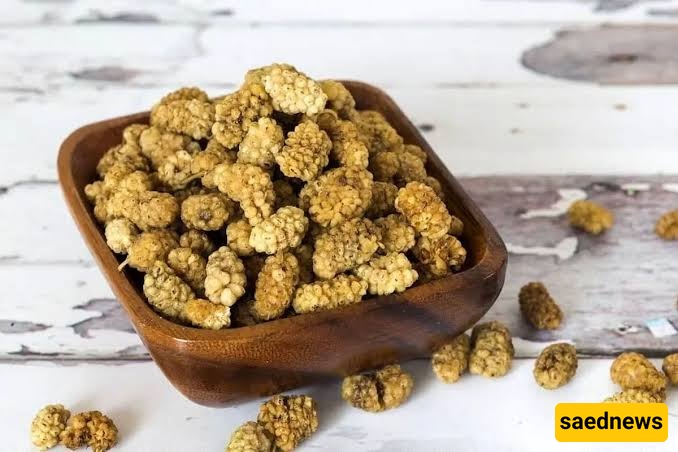
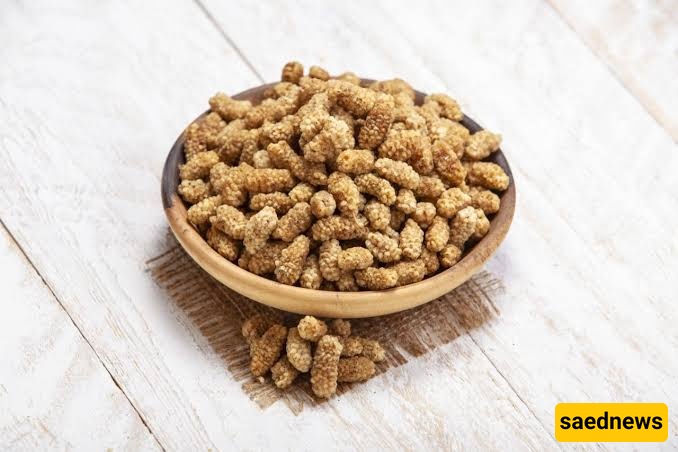
SAEDNEWS: Dried mulberries are a delicious and nutritious snack that many people enjoy with tea or alongside a variety of nuts. One of the key benefits of dried mulberries is their relatively low sugar content compared with many traditional sweet snacks, making them a popular alternative to sugar cubes when drinking tea.
According to Saednews, in traditional Chinese medicine, mulberries are considered particularly beneficial for the lungs. They have traditionally been used to support respiratory health and to help with persistent colds and chronic respiratory problems. They are also believed to contribute to healthy blood production.
In traditional Persian medicine, mulberries are described as having a warm and moist nature, which is considered an ideal temperament for the human body. Many nutritious foods, including bread, meat, figs, and grapes, are similarly classified as warm and moist. However, the warming quality of mulberries is considered mild, while their moistening quality is stronger, so they generally do not significantly alter a person's temperament.
Mulberries are traditionally believed to provide beneficial moisture to the body, particularly the brain. Because the brain is thought to require an appropriate and balanced level of moisture, this property is considered especially valuable. Mulberries are also traditionally regarded as supportive of lung health.
Natural sweet foods are traditionally considered helpful for dry, irritated throats, hoarseness, and wheezing. Mulberries may also be consumed on an empty stomach as a traditional laxative. They are believed to purify the blood and support the liver and spleen.
Because mulberries contain iron, they have traditionally been used to support people with iron deficiency and anemia. Mulberry leaves are considered cooling in traditional medicine and are believed to help reduce inflammation. Infusions made from the leaves have traditionally been used for eye irritation, blood purification, and rheumatic complaints.
Mulberries are also traditionally associated with relief from coughing and support for people with asthma. Dried mulberries contain calcium and phosphorus and have traditionally been considered beneficial for children's gums and a source of energy for older adults. Chewing mulberry-tree gum has traditionally been recommended to strengthen the gums and help prevent tooth decay.
Hakim Abu Nasr Heravi recommended eating mulberries when the stomach is empty. Traditional medical texts explain that when the stomach is relatively clear, mulberries pass through the digestive system more quickly and are less likely to disturb digestion.
Traditionally, the best times to eat mulberries are in the morning on an empty stomach or in the afternoon between lunch and dinner. Eating them after heavy meals, particularly meat-based meals, is believed to make digestion more difficult and may contribute to bloating and intestinal gas.
Dried mulberries contain water, carbohydrates, vitamins, carotenoids, and minerals. Traditional sources have associated these nutrients with supporting circulation and blood volume and have recommended mulberries as a beneficial food for people concerned about high blood pressure.
Mulberries contain plant compounds such as rutin and resveratrol. Rutin has been studied for its potential role in supporting vascular health and reducing oxidative stress. Resveratrol is another antioxidant compound found in mulberries and grapes that has attracted scientific interest because of its potential protective effects against cellular damage.
These compounds have led to research into the possible role of mulberries in supporting long-term health and reducing the risk of certain chronic diseases. However, traditional claims that dried mulberries can prevent or treat cancer should not be interpreted as established medical treatments.
Traditional medicine considers dried mulberries supportive of the liver and kidneys. They have been used to help nourish the blood, relieve thirst, support body fluids, and ease dryness.
Mulberries have also traditionally been used to help prevent constipation associated with inadequate fluids and dryness.
Traditional medical texts associate dried mulberries with supporting liver and kidney function and, consequently, with male sexual health. They have historically been recommended for problems such as reduced sexual function and premature ejaculation. These are traditional claims and should not be considered proven treatments.
In China, tea made from white mulberry leaves has traditionally been consumed for general health. Traditional practitioners have believed that mulberry-leaf tea may support vision and hearing.
Mulberry leaves are also traditionally considered cooling, anti-inflammatory, blood-cleansing, and blood-building. An infusion of the leaves has traditionally been used for rheumatism and inflammatory conditions.
Mulberry leaves and fruit have also been traditionally used for cough relief. The leaves may be prepared as an infusion, while dried mulberries can be consumed with hot water.
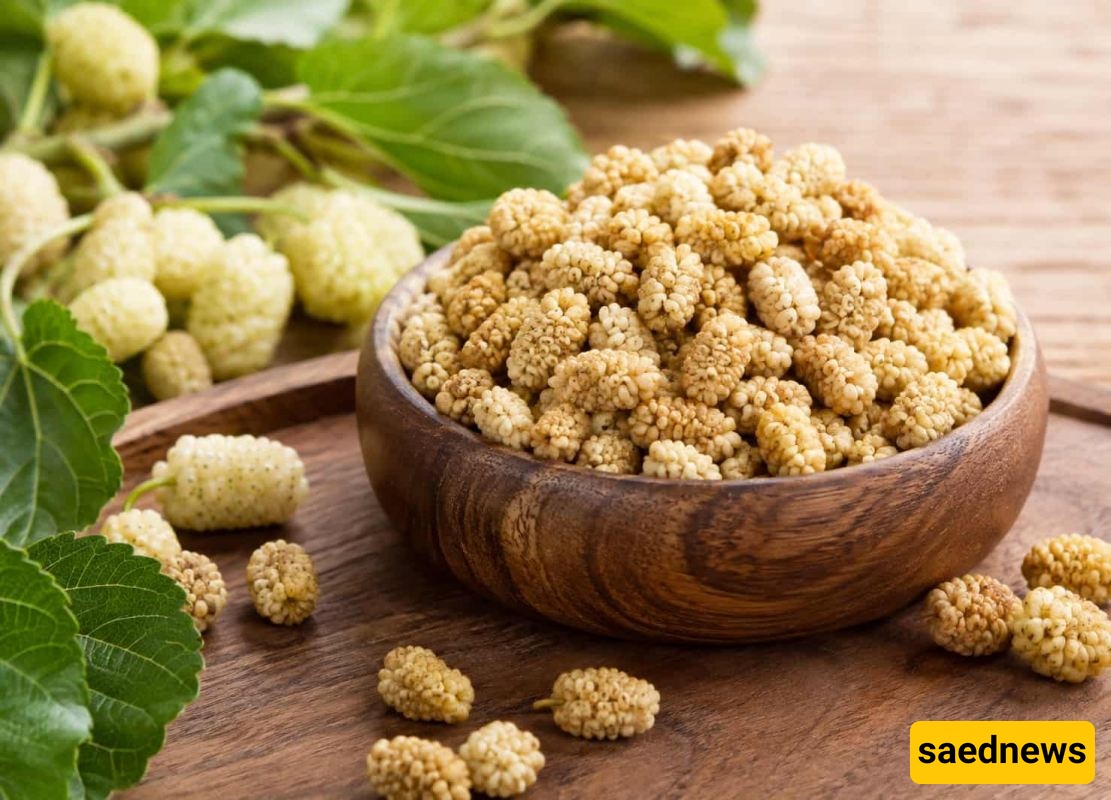
The parts of the mulberry plant traditionally used for food and medicine include:
Fruit
Leaves
Sap
Bark of young branches
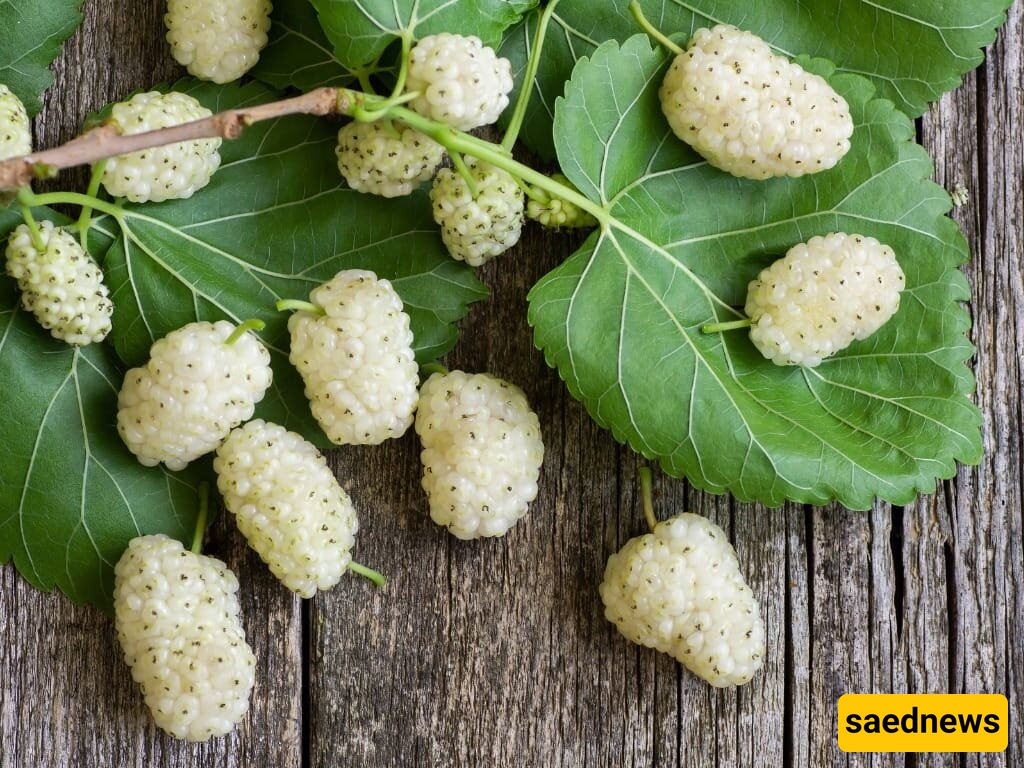
Fresh white mulberries are commonly eaten as fruit, while they can also be dried and consumed similarly to raisins. In Arabic, the white mulberry is known as “Tut al-Abyad.”
Mulberry juice is traditionally associated with vitamin C and has been used for colds and influenza. Traditional sources have also suggested mulberries for seasonal allergies, including symptoms such as itching, sneezing, watery eyes, and runny nose.
Some traditional accounts also claim benefits for allergic skin reactions such as hives. These claims, however, should not replace established allergy treatments.
In some traditional medical systems, mulberries have been used to support hair health and address premature graying. Their antioxidant content, including anthocyanins, may contribute to their nutritional value. Antioxidants in berries are also studied for their potential role in supporting cardiovascular health and maintaining healthy cholesterol levels.
Some traditional sources advise caution with fresh mulberries during pregnancy because of the possibility of allergic reactions. Other sources recommend dried mulberries instead.
Breastfeeding mothers have traditionally consumed both fresh and dried mulberries as a nutritious food. Nevertheless, pregnancy and breastfeeding are situations where individual dietary advice from a qualified healthcare professional is preferable.
Although dried mulberries are naturally sweet, they also contain dietary fiber. Fiber can increase satiety and may help reduce overall food intake.
A portion of dried mulberries can therefore be included as a nutritious snack, but dried fruit is concentrated in natural sugars and calories. Eating large quantities should not be considered a weight-loss strategy.
White mulberry leaves contain a compound known as DNJ (1-deoxynojirimycin), which has been studied for its ability to interfere with the digestion and absorption of carbohydrates. Research into mulberry leaves and blood-glucose regulation has therefore attracted considerable scientific interest.
Mulberry-leaf tea has traditionally been used to support blood-sugar control. However, dried mulberries themselves still contain natural sugars, so people with diabetes should not assume that they can consume unlimited amounts simply because mulberries are a natural food.
Replacing table sugar with a small portion of dried fruit may be preferable nutritionally, but portion size remains important. For people with diabetes, blood-glucose response can vary, and dietary choices should be discussed with a healthcare professional when necessary.
Fresh white mulberries generally contain less sugar per unit of weight than dried mulberries because drying concentrates their natural sugars. Therefore, moderation is particularly important when consuming the dried form.
Traditional sources advise people with a “hot” temperament to limit mulberry consumption. According to some traditional Persian medical texts, those who choose to eat them may consume a small amount of sekanjabin afterward.
Excessive consumption of mulberries may cause digestive discomfort, abdominal pain, bloating, or diarrhea. During pregnancy, berries should be consumed with appropriate caution, particularly by anyone with a history of food allergies.
Mulberries—fresh or dried—are nutritious fruits containing fiber, vitamins, minerals, and antioxidant compounds. Traditional Chinese and Persian medicine have attributed numerous benefits to the fruit, leaves, and other parts of the mulberry tree, particularly for respiratory, digestive, liver, and blood-related health.
However, traditional medical claims should be distinguished from modern clinical evidence. Mulberries can be part of a balanced diet, but they should not be considered a substitute for medical treatment, especially for conditions such as diabetes, asthma, hypertension, anemia, cancer, or chronic respiratory disease.