SAEDNEWS: Devil’s Breath: The Street Name for Scopolamine, a Powerful Drug Known for Its Destructive and “Zombie-Like” Effects
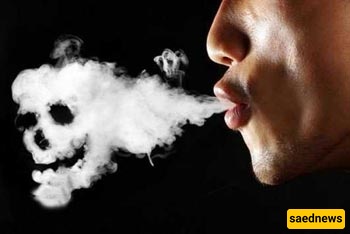
According to the SaedNews analytical report citing Khabar Online, when news of repeated use of “Devil’s Breath” in Paris spread in the summer of 2020, many media outlets were unsure whether the substance was real or simply a frightening fake news story. However, for authorities and law enforcement agencies familiar with the substance, the question was different: is Devil’s Breath the most terrifying drug in the world?
The plant family from which Devil’s Breath is derived has long been known under various names such as Hell’s Bell, Devil’s Trumpet, Angel’s Trumpet, Jimsonweed, White Angel’s Trumpet, and Datura. However, a more fitting name is the one used in Colombia: the “borrachero tree.” In Spanish, borrachero means “extreme intoxication” or more simply, a tree with intoxicating properties.

Despite its somewhat strange name, the plant does not look particularly frightening. These trees and shrubs are usually between less than 3 to up to 9 meters tall, with broad green leaves and delicate trumpet-shaped flowers that face upward or downward like bells. The flowers typically bloom in white, yellow, pink, and purple.

The spiny seed pods of the Datura plant open to reveal the seeds inside. While the spiky pods can look threatening, the flowers themselves often mask the plant’s toxic nature. These plants grow widely in North and South America and usually remain unnoticed by most people except experienced agents and specialists. In Colombia, trained operatives extract a white, odorless, and tasteless powder from the plant to use for illicit purposes.
Today, Colombians may be considered among the most notorious users of Devil’s Breath, but they were not the first to discover its harmful applications. Shortly after German scientist Albert Ladenburg successfully isolated scopolamine from the borrachero plant in 1880, doctors and government agencies began considering its use as a so-called “truth serum.”
According to CIA reports, the term “truth serum” first appeared in the findings of Dr. Robert House in 1922. House, a Texas obstetrician, was the first to use scopolamine for interrogating prisoners.
After early experiments appeared to show some success, House published numerous papers, and the concept of a “truth serum” entered both scientific literature and popular culture. Later, the CIA reported evidence that some law enforcement officers had repeatedly used the substance.
However, House’s own findings show that subjects under the influence were not simply truth-tellers. One report noted that an individual “was unable to lie” and also lacked “the ability to think or reason.” This undermined claims that scopolamine could reliably extract accurate information.
Although interest in scopolamine declined in some official circles, unethical experimentation reportedly continued. It is believed that both the CIA and the Soviet Union explored its use during Cold War interrogations, and there is also evidence of its use in former Czechoslovakia.
Even earlier, Nazi physician Josef Mengele is said to have used similar compounds in horrific experiments on prisoners. Historical accounts also mention Dr. Hawley Harvey Crippen, an American-British doctor executed in 1910 for the murder of his wife, who was associated with scopolamine use in high doses, which can be lethal.
The history of scopolamine stretches even further back. Ancient Greeks used Datura species for both recreational and medicinal purposes. Various cultures across Europe and Asia used it in hallucinogenic preparations as far back as the Bronze Age. Some witches prosecuted during the Spanish Inquisition were also believed to have used Datura in their potions.
There are also disturbing legends suggesting that scopolamine-containing mixtures were used in burial rituals in parts of Africa and Latin America, where individuals were allegedly drugged and buried alongside deceased leaders. Similar stories exist from pre-colonial Colombia.
The effects of scopolamine depend on its purity and dosage. Medically, it is an important compound used in sedatives, pain relievers, anesthetics, antihistamines, and treatments for motion sickness and nausea. It is also used to reduce saliva before surgery and relax muscle spasms.
However, in higher doses, scopolamine can make individuals highly susceptible to suggestion and severely impair memory. In simple terms, victims may become compliant and confused, often described in media reports as being in a “zombie-like” state. Criminals have reportedly used it to facilitate sexual assault and robbery. High doses can cause prolonged unconsciousness, and in extreme cases, death.
Scopolamine blocks neurotransmitters responsible for short-term memory formation. As a result, victims often do not remember anything that occurred while under its influence.