SAEDNEWS: Date Palm: A Tropical Palm That Thrives Above 10°C and Dies at −7°C
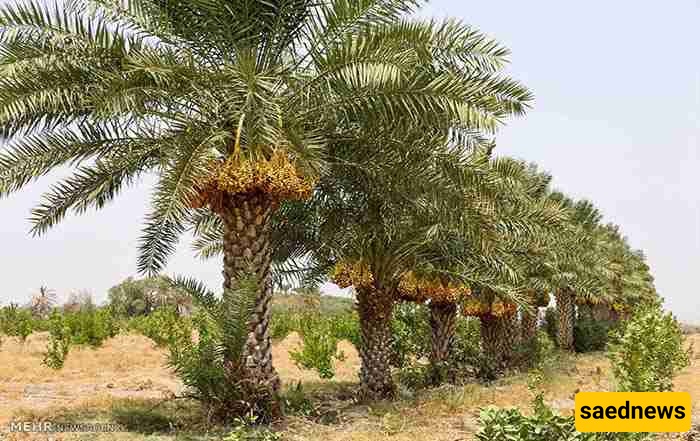
According to Saednews, Date palm is a member of the palm family and is considered a tropical tree. The minimum growth temperature for date palm is 10°C, and its trunk is damaged at −7°C; however, the terminal bud, which is protected by fibers, can tolerate temperatures down to −15°C. Date palm prefers hot and dry summers, especially during fruit ripening when warm and dry conditions are essential.
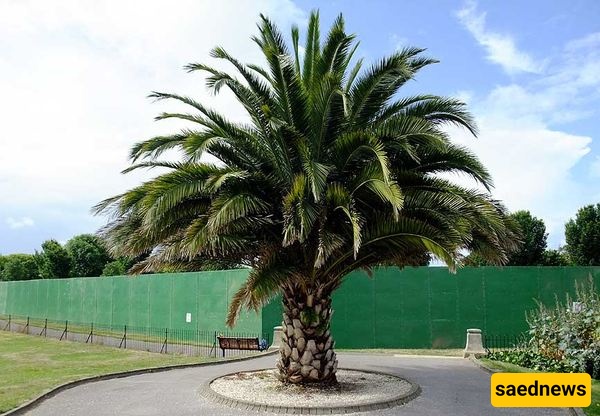
The roots are fibrous and penetrate deeply into the soil. Date palm is highly tolerant to drought, soil salinity, and waterlogging; however, sufficient soil moisture increases yield. The trunk is straight and unbranched, formed by the accumulation of leaf bases (petioles). Its diameter increases due to the lateral growth of these petioles.
Leaves, known as fronds, are arranged spirally around the trunk. They are compound and feather-like and typically live for 5 to 7 years. The terminal bud produces 10 to 25 new leaves annually. As new leaves emerge at the top, lower leaves dry out and must be pruned. A mature palm usually has 80 to 140 active leaves.
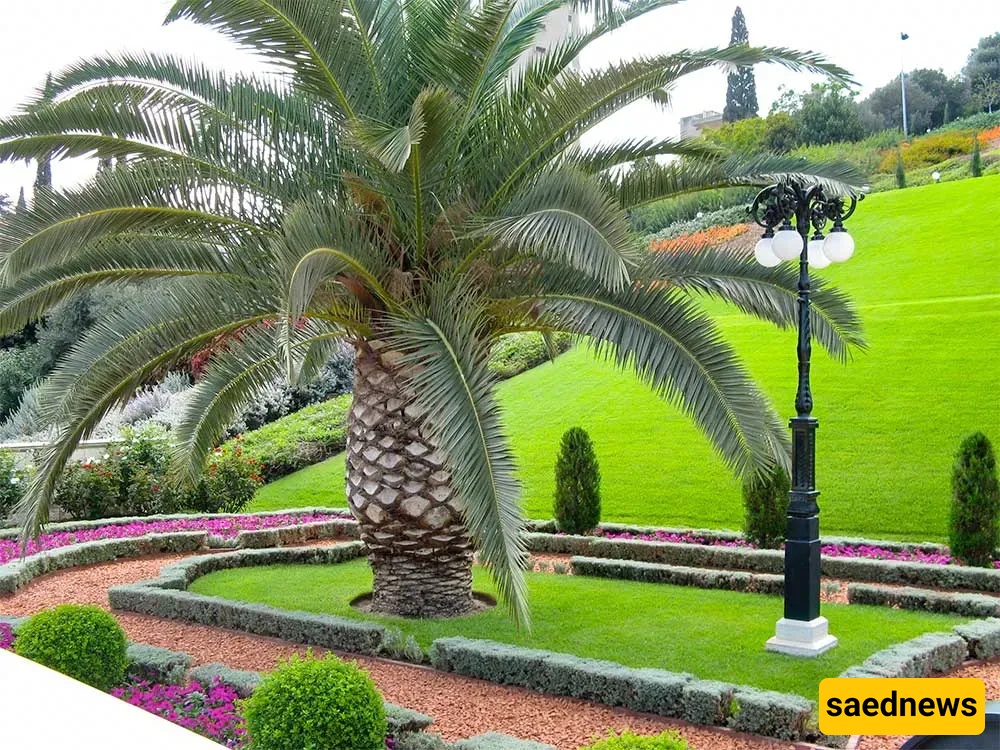
Flower clusters, called spathes or panicles, appear between the leaf bases and trunk when the tree reaches 6–10 years of age. Date palm is dioecious, meaning male and female flowers are borne on separate trees.
Male flowers consist of three sepals, three scale-like petals, and six stamens. Female flowers have three sepals, three petals, and a compact three-carpel pistil.
Pollination occurs naturally by wind, but manual pollination is widely used to increase yield. Male flower clusters are cut and shaken over female inflorescences. Typically, one male tree is sufficient for 30–50 female trees. The quality of pollen significantly influences fruit quality.
To improve fruit quality and reduce alternate bearing, thinning is necessary. Initially, one cluster is kept per 8–12 leaves, and extra clusters are removed. Later, central strands are cut, and remaining fruit strands are shortened. Finally, individual fruits are thinned, reducing 30–60% of total fruits.
Each cluster may retain 700–1200 fruits, weighing about 7–10 kg. A mature tree can produce 100–150 kg annually under good conditions, though in Iran average yield is about 15–20 kg per tree.
Date fruit is a drupe and develops through several stages:
Hababook (Kimri stage early): high acidity, green color
Kimri: rapid growth, weight and sugar increase
Khalal: yellow-green stage
Rutab: soft, brown stage
Tamar: fully ripe, highest sugar concentration, low moisture, ready for harvest
Rain during pollination is undesirable but light rain in early stages may be beneficial. Late-season humidity and rainfall can cause fruit damage and physiological disorders.
Date palms are propagated mainly through offshoots (suckers), which are shoots growing from the base of the mother plant. These are separated and planted after 3–4 years of growth.
Alternatively, tissue culture is used to produce disease-free, genetically uniform plants suitable for commercial orchards and export.
Before planting, the land is ploughed and planting holes (1–1.5 meters deep) are prepared. Offshoots are planted so that roots are properly covered with soil. Spacing between trees is typically 7–10 meters.
After planting, young offshoots are protected from sun and animals, often by covering them with palm leaves.
Irrigation methods vary by region:
In coastal southwestern Iran, tidal water is used through canals.
In other regions, river channels and traditional flood irrigation systems are used.
In arid regions, small basins are used for each tree.
In some areas, drip irrigation is now being adopted.
Organic manure (10–15 kg per tree every two years) is applied in autumn to late winter. Chemical fertilizers such as phosphorus, nitrogen, and potassium are also used depending on soil conditions.
Micronutrients like iron, zinc, boron, copper, manganese, and molybdenum are essential. Deficiency of micronutrients is a common issue in date palm cultivation. Foliar sprays are an efficient way to supply these nutrients.
Manual pollination is critical for high yield and fruit quality. Fresh pollen is preferred, and storage at low temperature improves viability. Typically, pollen is mixed with carriers like wheat bran or talc for efficient application.
Pollination is best performed between late morning and afternoon, and repeated if rain occurs shortly after.
After fruit set, heavy clusters are supported using lower leaves. Protective coverings such as woven palm leaves, cloth bags, or plastic nets are used to protect fruits from insects, birds, dust, sunburn, and rain damage.
Soil is periodically cultivated to control weeds and improve aeration. Intercropping with vegetables or grains is common in some regions.
Pruning includes removal of:
Dry leaves
Diseased leaves
Old petioles
Excess suckers
Dead flower stalks
Pruning improves ventilation, facilitates harvesting, and maintains balance between vegetative and reproductive growth.