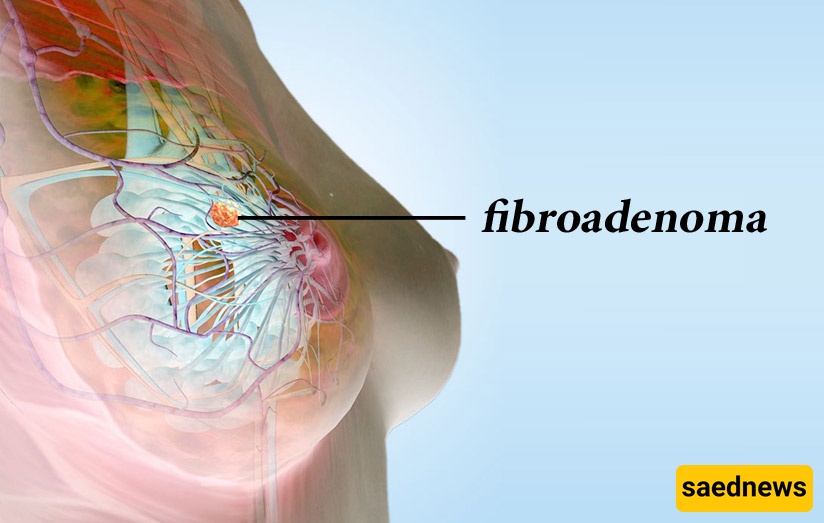
SAEDNEWS: Breast fibroadenoma is a benign breast tumor that is usually harmless but should be monitored. It may be small or grow large enough to change breast shape. Diagnosis is made with exam, ultrasound, or mammography, and treatment depends on symptoms and concern level.

According to Saednews, A breast lump can be alarming, but not all lumps and tumors are cancerous. One of the most common benign breast tumors is called a breast fibroma, more accurately known as a fibroadenoma. Although it is not dangerous, it may still require medical evaluation and monitoring.
Some fibroadenomas are very small and cannot be felt. When they grow larger, they may be detectable as a firm, smooth, and movable mass under the skin. They are typically rubbery in texture and can shift slightly when touched.
The exact cause of fibroadenoma is not known. However, hormones such as estrogen are believed to play an important role in their development and growth. The use of oral contraceptive pills before the age of 20 may also increase the likelihood of developing these tumors.
These tumors may grow during pregnancy due to hormonal changes. In contrast, during menopause, they often shrink and may even disappear without treatment.
Some patients report that avoiding foods and drinks such as tea, chocolate, soda, and coffee may improve symptoms, although this relationship has not been scientifically confirmed.
There are two main types of fibroadenoma:
Simple fibroadenomas do not increase the risk of breast cancer. Under a microscope, their structure appears uniform throughout.
Complex fibroadenomas may contain additional components such as macrocysts, which are large fluid-filled sacs that can sometimes be seen without a microscope. They may also contain calcium deposits.
Complex fibroadenomas are associated with a slightly increased risk of breast cancer. Women with complex fibroadenomas have approximately a 1.5 times higher risk compared to the general population.
Diagnosis usually begins with a physical breast examination, where a doctor manually checks for lumps. Additional tests may include:
Breast ultrasound: The patient lies down while a device called a transducer is moved over the breast to create images.
Mammography: An X-ray imaging technique in which the breast is compressed between two plates to capture detailed images.
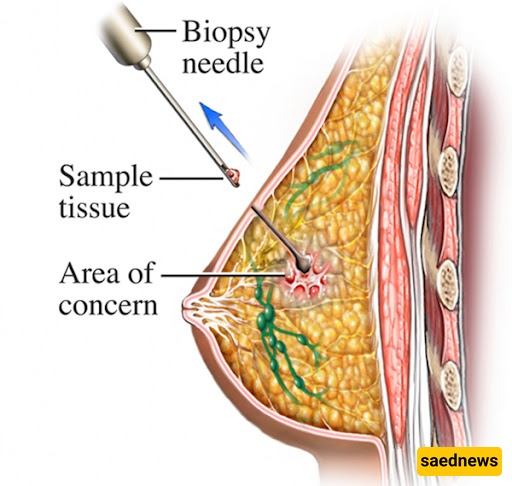
Biopsy: A small tissue sample is taken using a needle and sent to a laboratory to determine the exact nature of the lump.
Treatment is not always necessary for fibroadenomas. In many cases, doctors recommend regular monitoring instead of removal.
Surgical removal may be considered if:
The lump changes the natural shape of the breast
It causes pain or discomfort
There is significant anxiety about cancer risk
There is a strong family history of breast cancer
Biopsy results appear suspicious
In general, fibroadenomas do not grow aggressively and are not cancerous. Regular clinical check-ups and imaging tests such as ultrasound or mammography are usually sufficient to monitor them.