SAEDNEWS: Scientists analyzing an ancient alabaster vase in a university museum have detected chemical traces of opiates. Researchers say this is the strongest evidence to date indicating that opium consumption was widespread in ancient Egyptian society.

According to the Saednews Society Service, Andrew G. Koh, senior researcher of the project, says the results point to a strong possibility: similar alabaster vessels—including prominent examples found in the tomb of Pharaoh Tutankhamun, all carved from stone sourced from the same quarries in Egypt—may still preserve traces of ancient opiate substances.
He explains:
“Our findings, together with previous research, suggest that opium consumption in ancient Egypt and surrounding regions was not accidental or limited. It appears to have been, to some extent, part of everyday life. It is possible that the alabaster jars from Tutankhamun’s tomb also contained opium, as part of a tradition we are only now beginning to understand.”
The results of the study have been published in the journal Mediterranean Archaeology and were conducted in collaboration with researchers from the Babylonian Collection at Yale University.
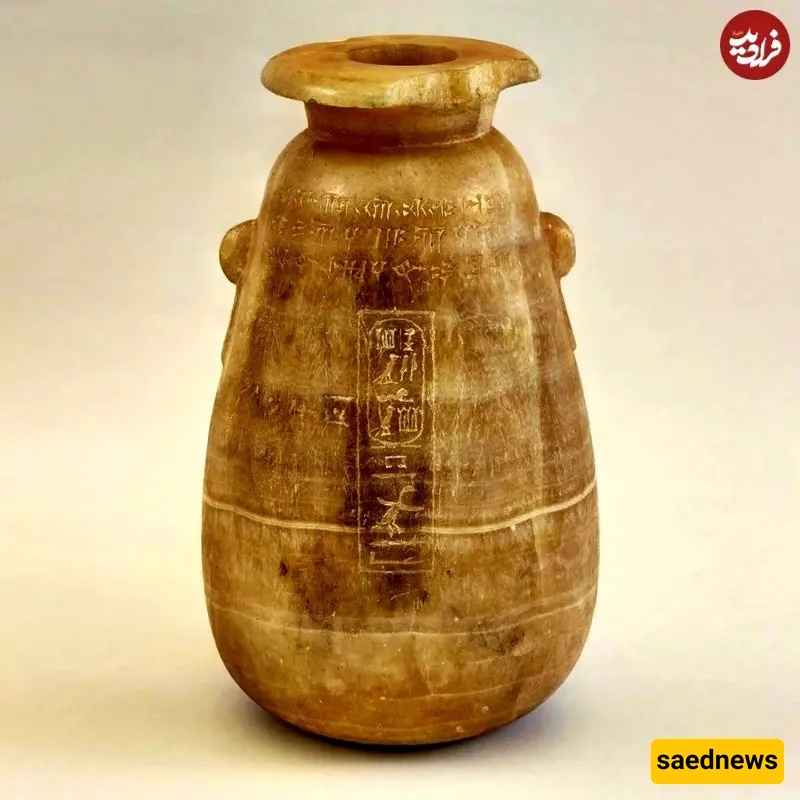
The alabaster vessel bears inscriptions in four ancient languages: Akkadian, Elamite, Old Persian, and Egyptian. The text is dedicated to Xerxes, the Achaemenid king (486–465 BCE). At the height of its power, his empire included Egypt, Mesopotamia, the Levant, Anatolia, and parts of eastern Arabia and Central Asia.
Another inscription on the vessel, written in Demotic script (a simplified form of Egyptian writing), indicates a capacity of approximately 1,200 milliliters. Researchers emphasize that intact inscribed Egyptian alabaster jars are extremely rare, with fewer than ten known examples in museums worldwide.
The new Yale research program combines ethnography, science, and technology to examine organic residues preserved in ancient containers. These residues can provide valuable insights into the food, medicine, and lifestyles of people thousands of years ago. The team has developed methods capable of analyzing even heavily degraded and contaminated residues.
According to Koh, most researchers admire ancient vessels for their beauty, but this project focuses on their functional use and the substances they once contained—offering a new window into ancient daily life.
Koh’s attention was drawn to a dark brown, aromatic substance found inside one of the jars. Laboratory analysis confirmed the presence of compounds such as morphine, thebaine, papaverine, and other key alkaloids known as definitive markers of opium.
These findings align with earlier studies that identified opiate residues in Egyptian alabaster vessels and Cypriot jars.
Koh notes that the discovery of these substances—spanning more than a thousand years and associated with different social classes—strengthens the possibility that opium may also have been present in alabaster jars from Tutankhamun’s tomb.
He adds that historical evidence of opium use in antiquity often extends beyond medicine into ritual and spiritual beliefs, from Mesopotamia to Egypt and the Aegean world. During Tutankhamun’s era, for example, the “Poppy Goddess” was referenced in ritual contexts in Crete. The poppy plant is also mentioned in numerous ancient texts.
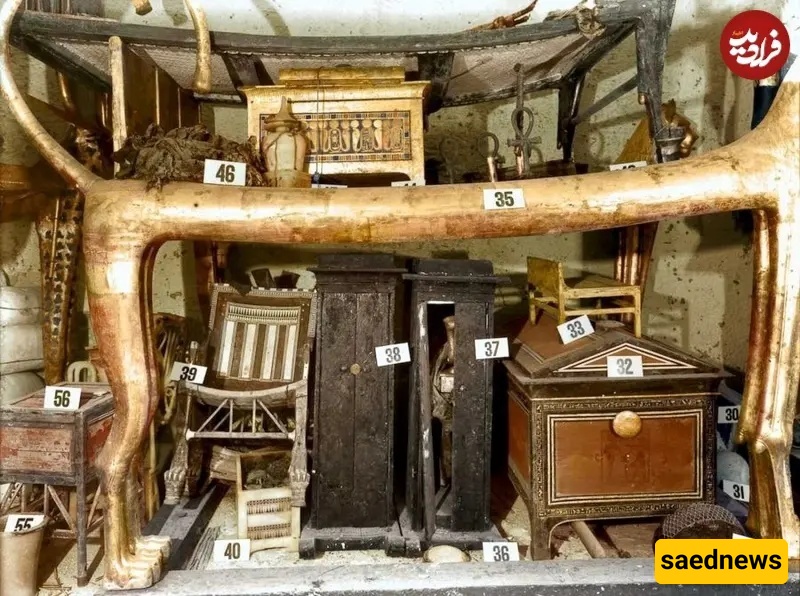
Tutankhamun’s tomb, discovered in 1922, contained a vast collection of artifacts, including finely crafted alabaster vessels. Earlier examinations showed that some of these jars contained sticky, brownish residues whose nature could not be identified at the time.
Researchers suggest that ancient tomb robbers were more interested in the contents of these vessels than in the objects themselves. Fingerprints found inside some jars indicate attempts to fully extract the material. According to Koh, this suggests the contents were valuable enough to be buried with the pharaoh and worth risking theft.
He concludes: “We now know that chemical signatures of opiates appear in alabaster vessels associated with ancient elites. Direct analysis of vessels from Tutankhamun’s tomb could further clarify the true role of opium in these ancient societies.”