SAEDNEWS: In the art of musical instrument making, the use of locally sourced materials, together with spiritual, psychological, and emotional needs, traditional rituals, and the keen and meticulous aesthetic sensibility of the Iranian people, plays a significant role in the creation of artistic works.
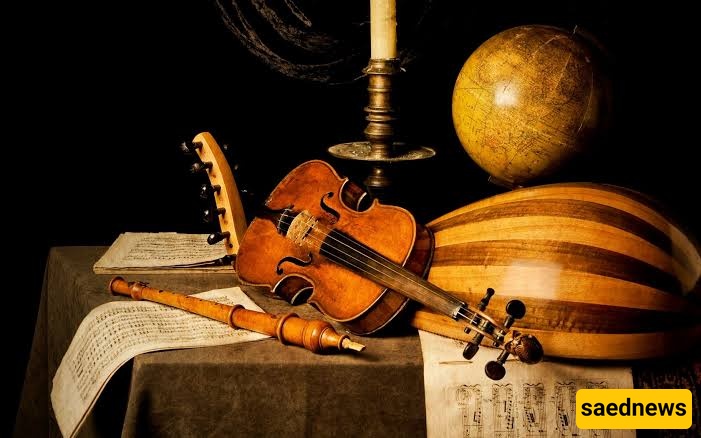
According to Saednews, The use of locally sourced and indigenous materials in traditional instrument making, together with spiritual, psychological, and emotional needs, cultural rituals, and the keen and meticulous artistic taste of the Iranian people, has played an important role in the creation of works of art. The sound of these instruments is a living testament to the taste, creativity, and refinement of our ancestors throughout the ages and centuries. The craftsmanship and techniques involved in this art represent a unique combination of functionality and aesthetics.
The twisted horns of rams from different regions of Iran, lambskin from various areas, walnuts from towering mountains and forests, mulberry wood from desert regions, shells from the northern and southern seas, and the shin bones of camels from the hot deserts—all can become part of an instrument whose beautiful voice carries the recorded history of our civilization.
The noble art of instrument making is, in its own way, a synthesis of several traditional crafts, including woodworking, goldsmithing, inlay work, and musical performance, placing it among the most practical and expressive forms of art. The melodies that emerge from the fingertips of a skilled musician and touch the soul are, in part, made possible by the dedication and craftsmanship of the instrument maker. The chisel of love raises a new “Bisotun” in our hearts with every stroke.
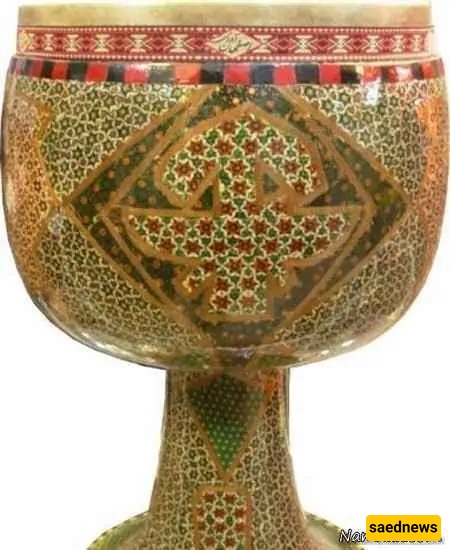
In the past, the body of the tombak was made from wood, pottery, and sometimes metal. Today, plywood and plastic may also be used, although most tombaks are still made from wood.
The best wood for making a tombak is traditionally considered to be the wood from an old walnut tree. Instrument makers prefer wood that has been naturally seasoned and rested in the shade long enough for much of its natural sap to disappear.
The main parts of the tombak include the large opening or bowl, over which the skin is stretched; the body; the neck or throat; and the smaller opening. The body is sometimes decorated with intricate inlay work. In other cases, grooves are carved into the body, allowing the musician to create distinctive and desirable sounds while playing.
In the past, the setar had three strings, as its name suggests. Today, it has four strings. The third and fourth strings are positioned close together and are played simultaneously; together, they are commonly referred to as the bass string.
Over time, figures such as Abu Nasr al-Farabi, Avicenna, Safi al-Din al-Urmawi, and, in more recent times, Abolhasan Saba recognized the need for an additional string. As a result, modern setars have four strings. Historically, the added string is considered the fourth string, although it is commonly referred to as the third string today.
The third string of the setar is known as the Moshtaq string. According to an account associated with Abolhasan Saba, a dervish named Moshtaq Ali Shah was the first person to add this string to the instrument.
Some people, particularly certain Sufi mystics, also refer to the instrument as Otar.
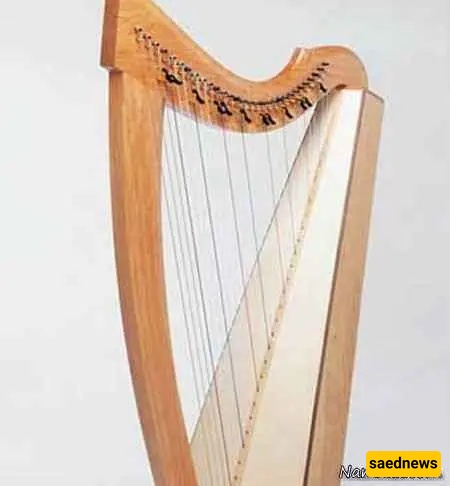
The harp is a stringed instrument played with the fingers. Around the world, harp-playing techniques generally involve eight fingers; however, according to information derived from ancient Iranian archaeological and historical documents, Iranian harpists traditionally used all ten fingers.
Harps, or harp-like instruments, can generally be divided into four categories: orchestral harps, traditional harps, ancient harps, and decorative harps.
In terms of appearance and design, these instruments can be further classified into 17 different patterns and forms, including the angular harp, curved harp, Van harp, and lyre.