SAEDNEWS: Cup vs. Glass Measurements in Cooking: Key Differences and Conversion Tips
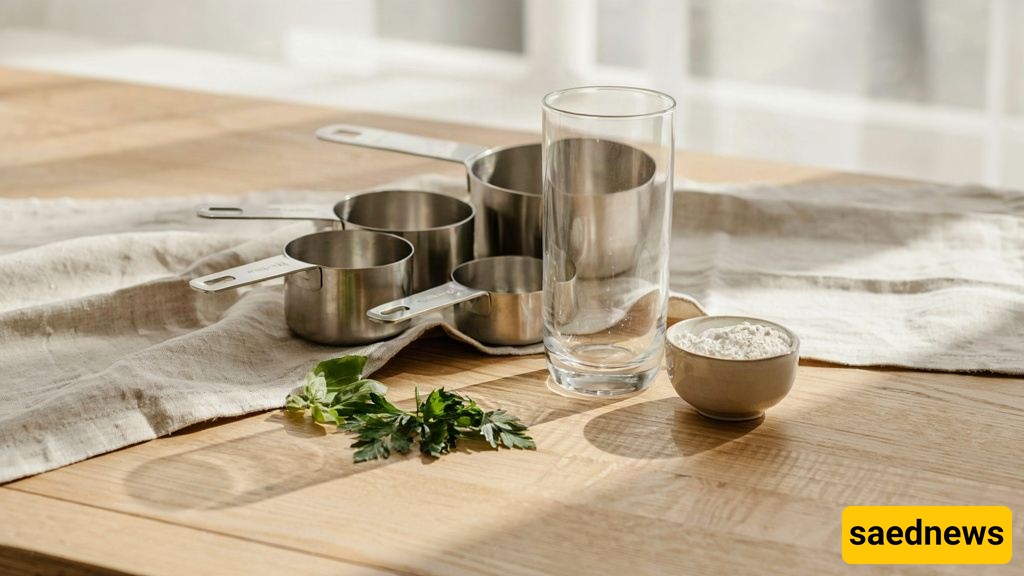
According to Saednews, If you have ever followed a baking recipe or a homemade cooking guide, you have probably come across measurements such as “cups,” “glasses,” “tea glasses,” and “tablespoons.” One of the most common questions in cooking is: How many glasses equal one cup? Many people, especially beginners, find it confusing to convert cups into glasses.
The short answer is that in many Iranian recipes, one measuring cup is considered equivalent to one standard glass. However, this rule is not always exact. The measurement depends on the type of measuring cup, the size of the glass, and even the ingredient being measured.
In this article, we will answer the question “How many glasses are in one cup?” in detail. We will provide conversion tables for cups, glasses, and milliliters, explain the difference between measuring by volume and weight, and share practical tips for measuring ingredients more accurately.
If you want to avoid mistakes when cooking and baking, read on.
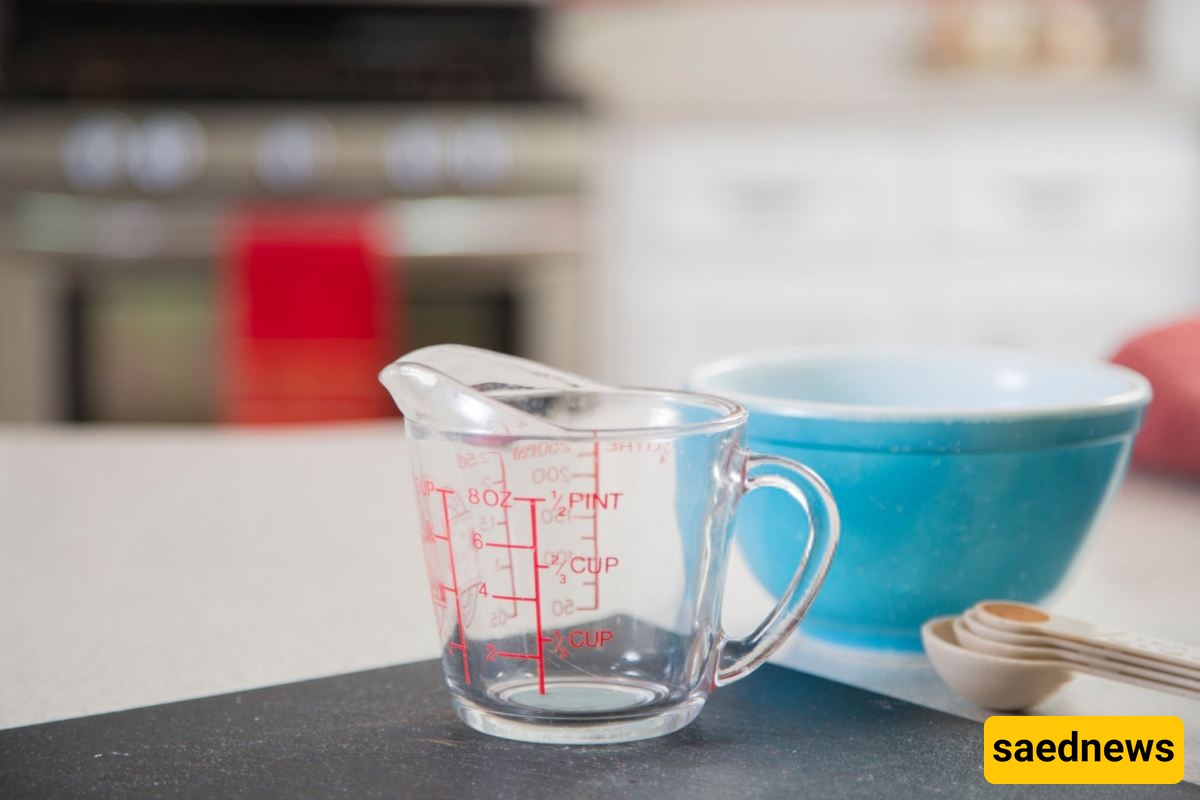
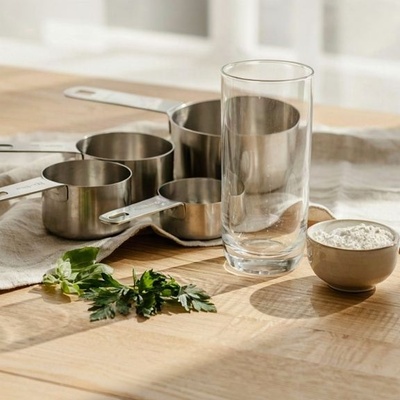
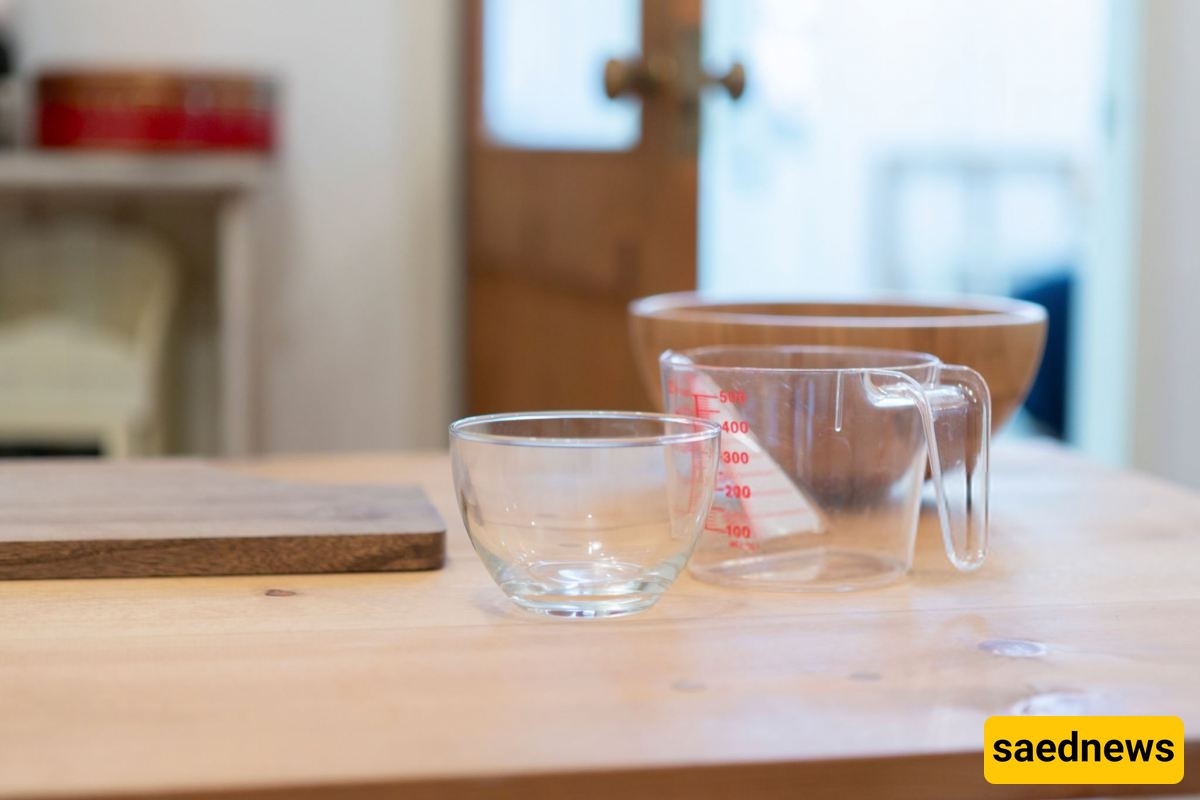
A measuring cup is a tool used to measure the volume of food ingredients. In many households, it is a graduated plastic or metal container marked with units such as milliliters, cups, and sometimes grams.
In traditional Iranian recipes, however, the word “cup” is often used without referring to a specific measuring tool. Instead, it usually means an ordinary handled drinking glass.
In Iranian cooking, a “glass” generally refers to a standard handled glass with a capacity of approximately 250 milliliters. Therefore, when a recipe calls for “one cup of flour,” it often means one standard handled glass.
However, some professional baking books and international recipes use a standardized measuring cup with a capacity of 240 milliliters, equivalent to a US customary cup. This small difference can affect the results of precise recipes, especially cakes and pastries.
The short answer is:
In most Iranian cooking recipes, one measuring cup equals one glass, or approximately 250 milliliters.
For example, if a recipe calls for two cups of milk, you can use two standard glasses of milk instead.
The same rule applies to flour, sugar, rice, oil, and other liquid or dry ingredients. The important point, however, is that this equivalence is based on volume, not weight.
In other words, one cup of flour and one cup of sugar occupy the same volume, but they do not weigh the same. We will explain this difference in more detail below.
Use the following table to measure ingredients more quickly and accurately. These conversions are based on one cup equaling 250 milliliters.
Measuring cup | Equivalent glass | Milliliters | Tablespoons |
|---|---|---|---|
1 cup | 1 glass | 250 ml | 16 tbsp |
3/4 cup | 3/4 glass | 180 ml | 12 tbsp |
2/3 cup | 2/3 glass | 160 ml | 10 tbsp + 2 tsp |
1/2 cup | 1/2 glass | 125 ml | 8 tbsp |
1/3 cup | 1/3 glass | 80 ml | 5 tbsp + 1 tsp |
1/4 cup | 1/4 glass | 60 ml | 4 tbsp |
This table can help you estimate ingredient quantities using a glass or spoon if you do not have a graduated measuring cup. Keep in mind that these measurements are approximate. For recipes that require precision, it is best to use a kitchen scale and measure ingredients by weight.
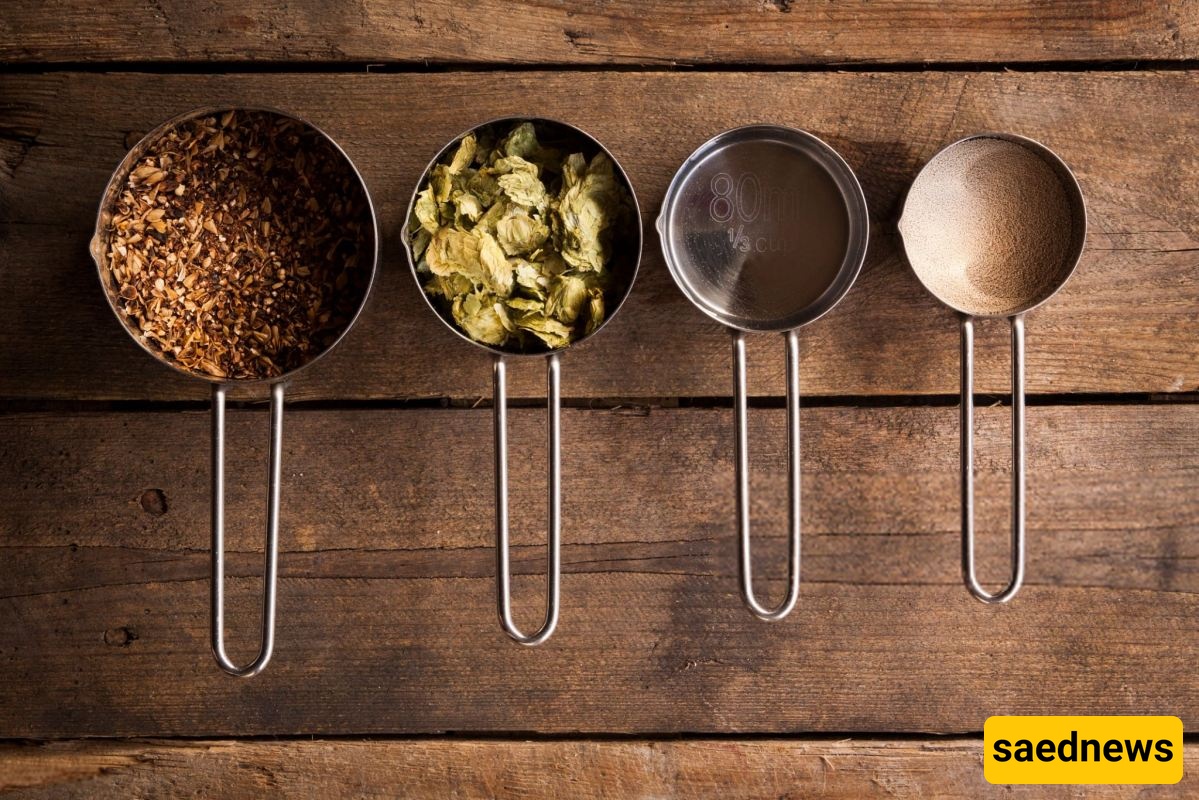
As mentioned earlier, the volume of one cup remains the same regardless of the ingredient, but the weight varies.
The table below shows the approximate weight of one 250-milliliter cup of commonly used cooking ingredients. This is particularly useful when a recipe specifies ingredients in grams but you only have a measuring cup.
Ingredient | Approximate weight per cup |
|---|---|
All-purpose flour | 125–130 g |
White sugar | 200 g |
Uncooked rice | 200 g |
Milk | 250 g |
Water | 250 g |
Vegetable oil | 225 g |
Cocoa powder | 100 g |
Cornstarch | 120 g |
Yogurt | 250 g |
Honey | 350 g |
As you can see, one cup of honey weighs almost three times as much as one cup of flour. This is why professional baking emphasizes weighing ingredients with a kitchen scale rather than measuring them only by volume.
One of the main causes of cooking errors, particularly in baking, is measuring ingredients by volume.
Powdered ingredients such as cocoa powder, flour, and sugar can be added to a measuring cup in different ways. Filling a cup and leveling the top with the back of a knife produces a different weight than pressing the ingredients down or scooping them directly from the package.
This difference can be as much as 20%, potentially changing the texture and outcome of a cake or pastry.
For this reason, if a recipe lists ingredients in grams, it is best to use a kitchen scale.
If a recipe uses cups, try to measure ingredients consistently. Spoon dry ingredients into the cup and level the surface without pressing them down.
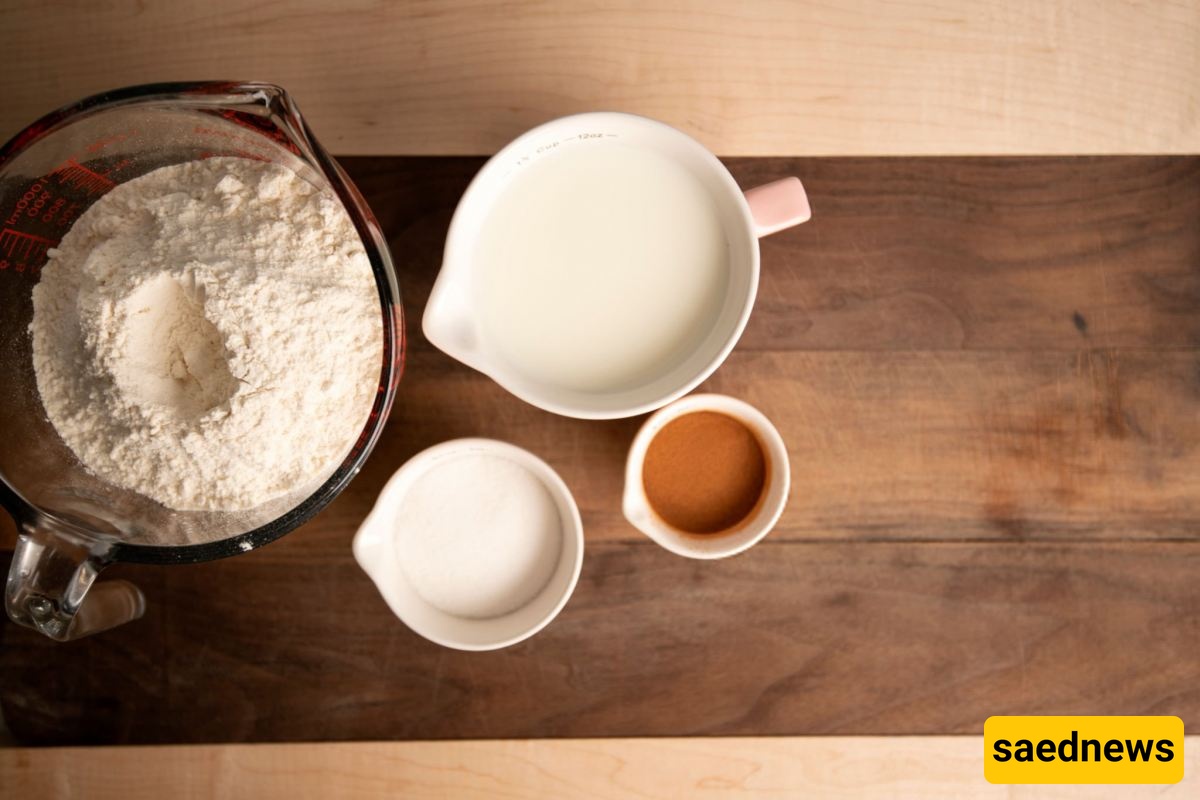
To make your cup-to-glass conversions more accurate, follow these practical tips:
1. Use the same measuring cup every time. If you have several glasses of different sizes, choose one and use it consistently to achieve reliable results.
2. Spoon dry ingredients into the cup. Pouring flour directly from the package can compact it and increase the amount you measure.
3. Level the ingredients. After filling the cup, use the back of a knife or another straight edge to level the surface.
4. Use a graduated measuring cup for liquids. A graduated glass measuring cup is ideal for liquids. Read the measurement at eye level.
5. Consider the temperature of the ingredients. Oil and honey may become thicker at lower temperatures, affecting how easily they flow. Measuring them at room temperature can make the process easier.
6. Check the units in international recipes. In many international recipes, one “cup” equals 240 milliliters rather than 250 milliliters. This small difference can matter in recipes that require precision.
Several common mistakes can affect the results of your cooking.
One of the most frequent is using a small tea glass instead of a standard drinking glass. A tea glass typically holds around 80–100 milliliters. If you use it instead of a 250-milliliter glass, you will measure significantly less than the recipe requires.
Another mistake is using glasses that are much larger or smaller than the standard 250-milliliter size.
A third mistake is assuming that weight and volume are interchangeable. Some people believe that one cup of flour weighs the same as one cup of sugar, but this is incorrect.
Finally, compacting ingredients inside the measuring cup can cause you to use more than the recipe requires.
Understanding these common errors can significantly improve your cooking accuracy.
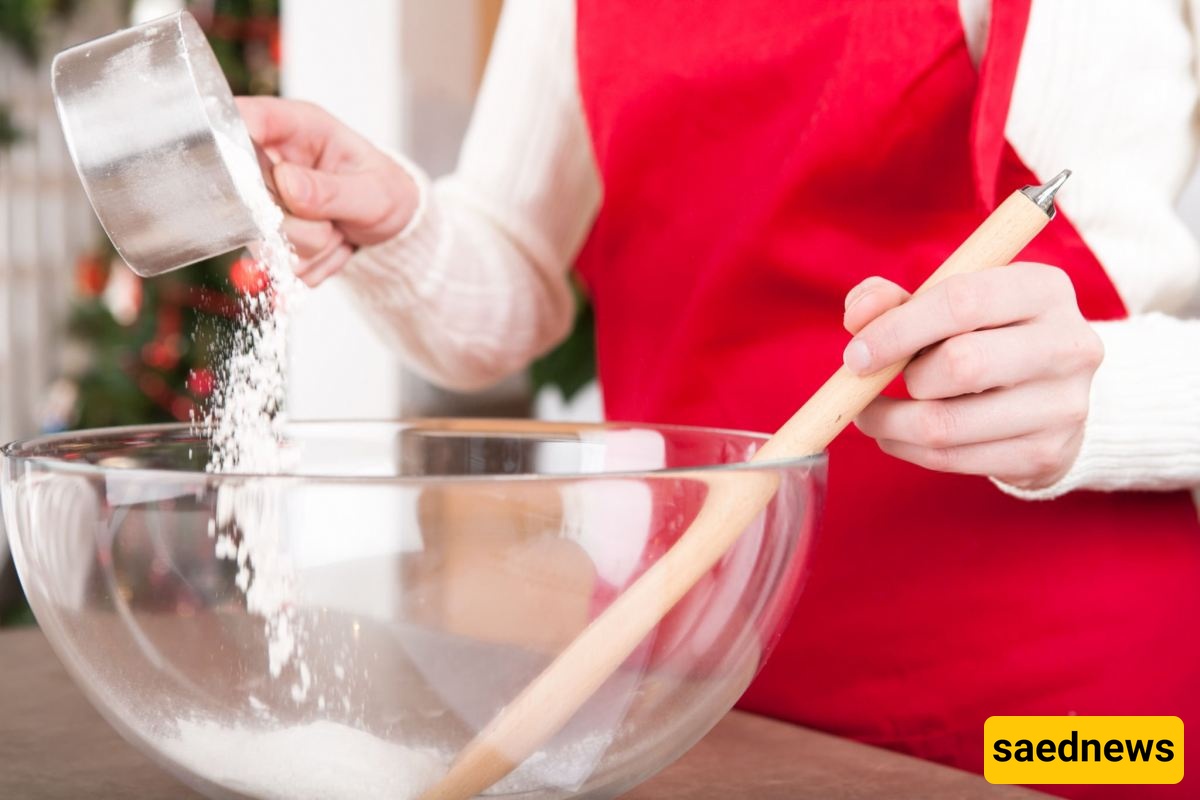
In most Iranian recipes, yes. However, professional and international recipes may define a cup as 240 milliliters, while a standard Iranian drinking glass is often considered to hold 250 milliliters. Always check the recipe's measurement system.
Assuming each tea glass holds approximately 100 milliliters, one 250-milliliter measuring cup equals about 2.5 tea glasses.
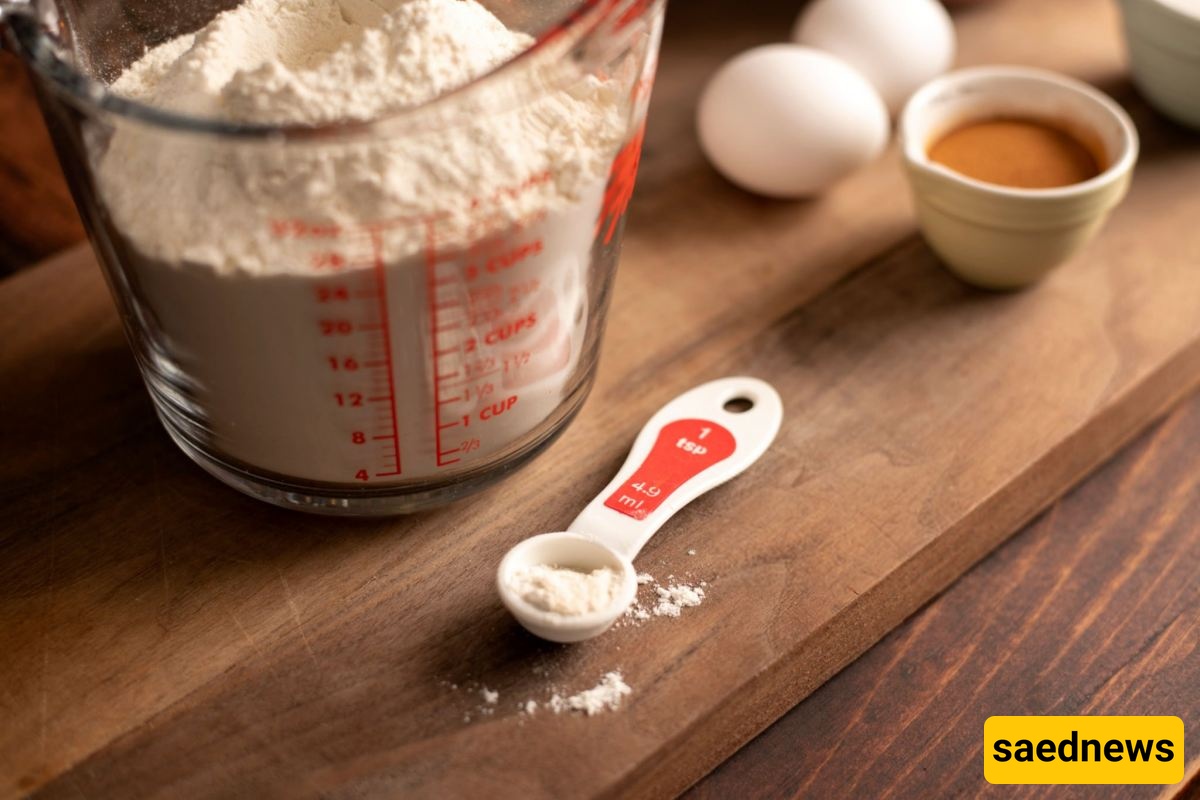
One standard 250-milliliter measuring cup is approximately equal to 16 tablespoons.
Yes, provided you use a standard glass with a consistent capacity. An ordinary handled glass holding approximately 250 milliliters is generally equivalent to one cup in many Iranian recipes.
However, if your glass is smaller or larger, the results may vary. For recipes that require precision, such as cakes, pastries, and bread, it is better to use a graduated measuring cup or a kitchen scale.
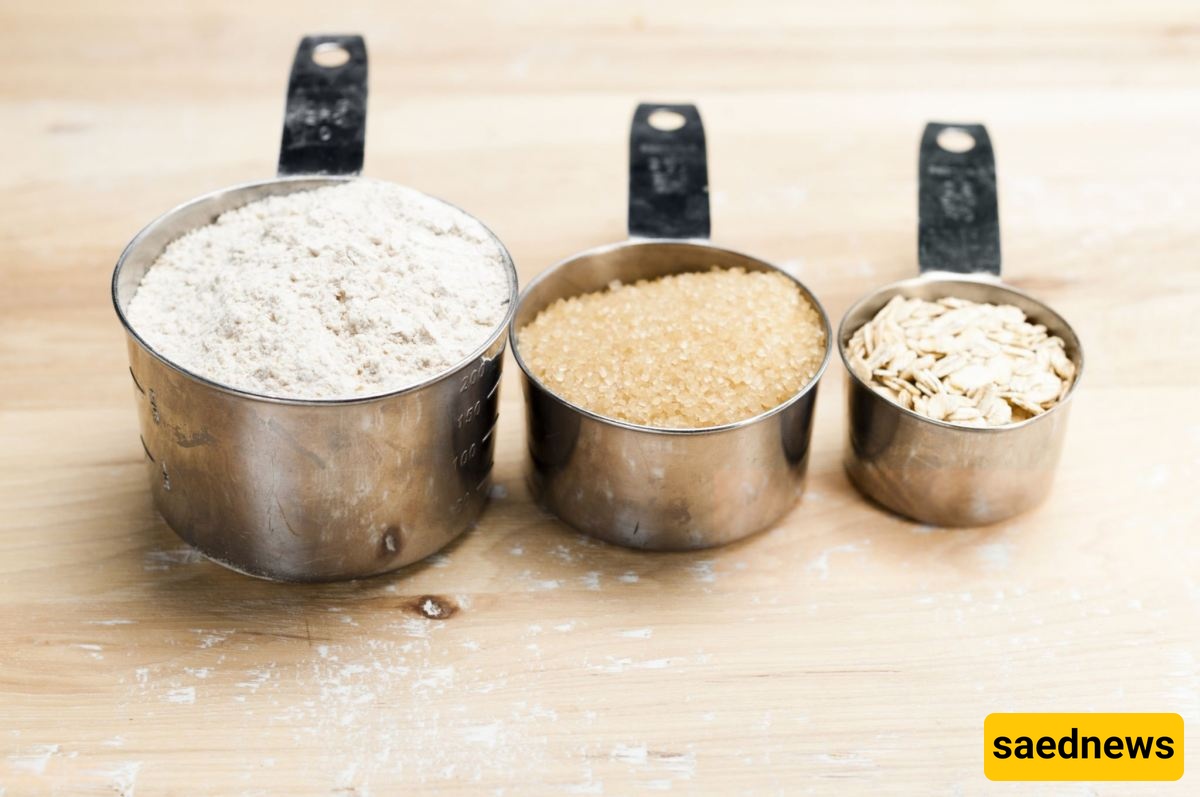
No. They occupy the same volume, but their weights differ.
For example, one cup of flour weighs approximately 125–130 grams, while one cup of sugar weighs about 200 grams. If a recipe specifies ingredients in grams, do not substitute volume measurements without accounting for the difference.
You can use a standard 250-milliliter glass. Alternatively, one cup is approximately equal to 16 tablespoons.
For smaller quantities:
Half a cup = approximately 8 tablespoons.
One-quarter cup = approximately 4 tablespoons.
Refer to the conversion table above for additional measurements.
It can be. Many international recipes use a cup measurement of 240 milliliters, whereas an Iranian drinking glass is often considered to hold 250 milliliters.
This 10-milliliter difference may not noticeably affect most everyday dishes, but it can influence the outcome of precise baking recipes.
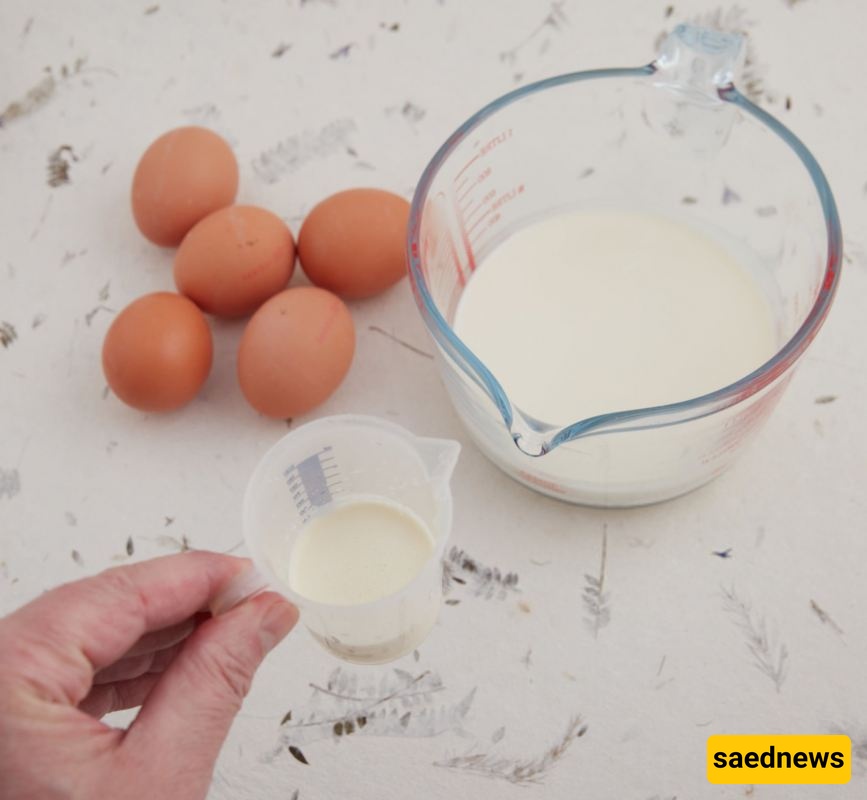
A graduated glass measuring cup is usually the best option. Read the liquid level at eye height and avoid overfilling the container.
For thicker ingredients such as oil and honey, measuring them at room temperature can make the process easier.
In most Iranian cooking recipes, one measuring cup is equivalent to one standard 250-milliliter glass.
For example, if a recipe calls for one cup of milk, you can use one standard glass of milk. One cup is also approximately equal to 16 tablespoons or 250 milliliters.
However, remember that a cup is a unit of volume, not weight. One cup of flour, sugar, honey, or oil occupies approximately the same volume, but each ingredient has a different weight.
For this reason, when preparing recipes that require precision, especially cakes and pastries, it is best to weigh ingredients in grams using a kitchen scale.
If you prefer using cups and glasses, always use the same measuring container, spoon dry ingredients into it, and level the surface without compacting the ingredients. These simple habits will help you achieve more consistent results.
Quick reference:
1 cup = 1 standard glass ≈ 250 ml
1 cup ≈ 16 tablespoons
1/2 cup = 1/2 glass ≈ 125 ml
1/4 cup = 1/4 glass ≈ 60 ml
For greater accuracy, especially in baking, use a kitchen scale.
By following these simple guidelines, you can prepare a wide range of homemade dishes and baked goods with greater confidence and fewer measurement errors.