SAEDNEWS: Learn How to Make Afghan Rosh with a Tried-and-Tested Recipe, from Choosing the Right Meat and Ingredients to Secrets for Tender, Juicy Results and Delicious Flavor.
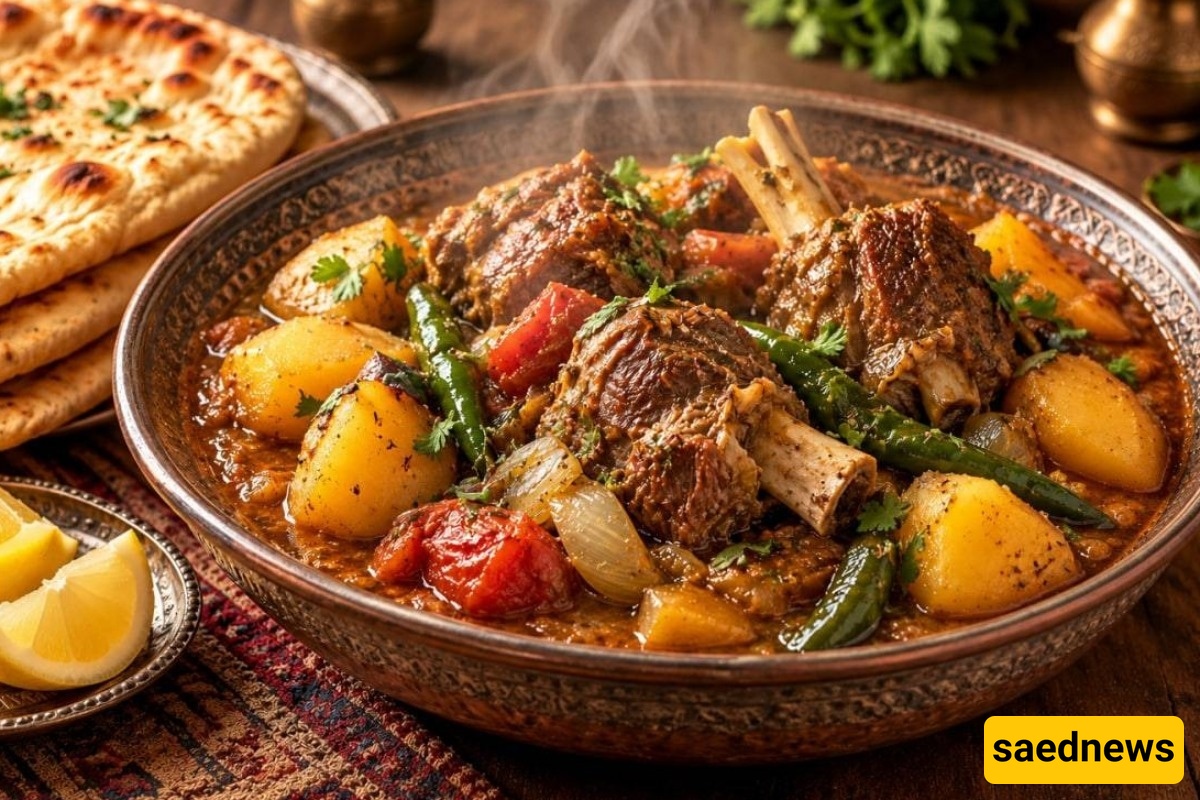
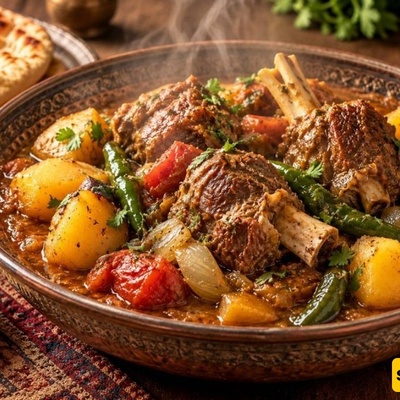
Afghan Rosh, also known as Afghan Rosh Kebab, is a traditional Afghan dish celebrated for its tender meat, natural flavor, and slow-cooking method. Unlike many meat dishes, Rosh relies on minimal seasoning, allowing the quality of the meat and the cooking technique to take center stage. When prepared using a traditional recipe, the result is juicy, flavorful lamb that retains its natural taste and becomes wonderfully tender.
This recipe serves approximately 4–5 people.
Ingredient | Quantity |
|---|---|
Bone-in lamb | 1 kg (2.2 lb) |
Lamb tail fat | 150–200 g |
Potatoes | 4–6 medium |
Onions | 2 medium |
Garlic | 5–6 cloves |
Fresh green chilies | 4–6 |
Tomatoes | 1–2, optional |
Fresh ginger | A small amount, optional |
Salt | To taste |
Water | As needed |
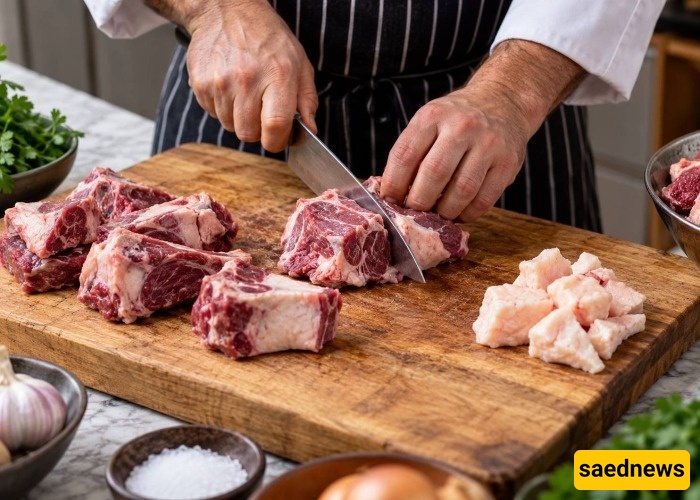
Cut the lamb into fairly large pieces. Bone-in, slightly fatty cuts produce the best results. Lamb shanks, shoulder, or leg are all suitable choices. If using lamb tail fat, cut it into smaller pieces so it can gradually release its fat during cooking.
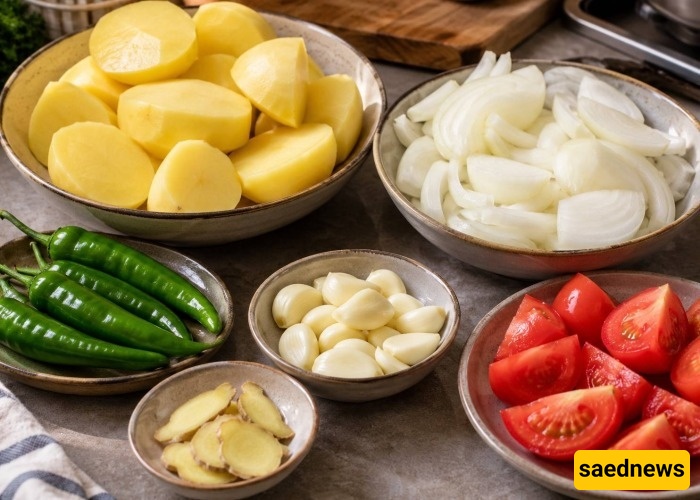
Peel the potatoes and halve any large ones. Slice the onions into rings or quarters. Peel the garlic cloves, wash the green chilies, and leave them whole. If using fresh ginger, peel it and cut it into thin slices. Wash the tomatoes and cut them into halves or quarters.
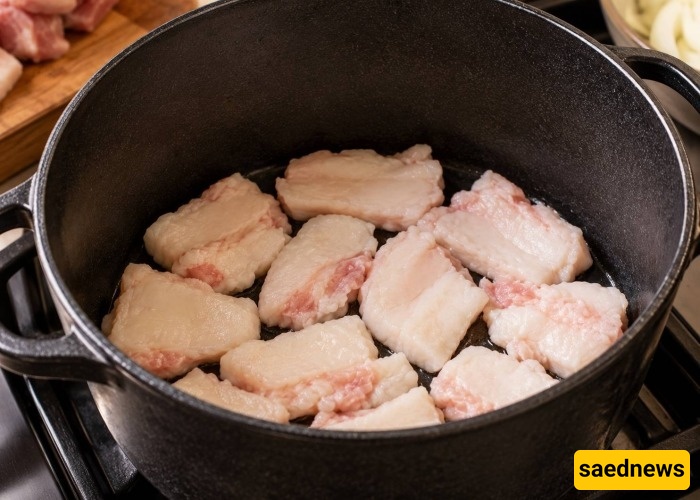
Choose a heavy-bottomed pot with a tight-fitting lid. Arrange the pieces of lamb tail fat across the bottom. As the fat melts, it creates a natural cooking base that helps keep the lamb tender and enhances the traditional flavor.
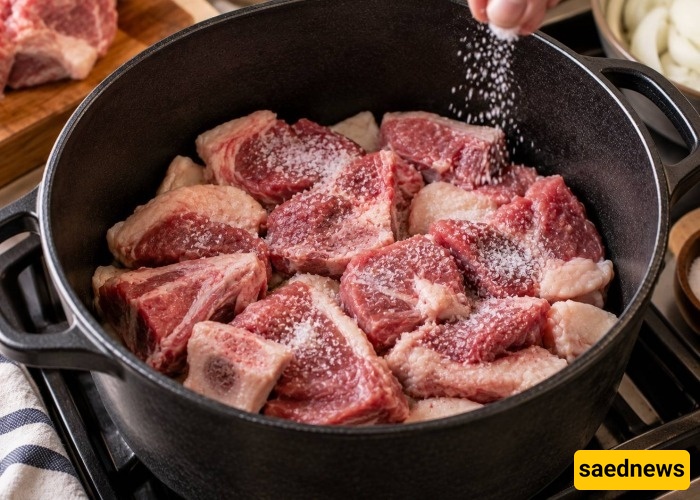
Place the lamb pieces over the fat and sprinkle salt evenly over the meat. Make sure the pieces are seasoned adequately for a balanced flavor.
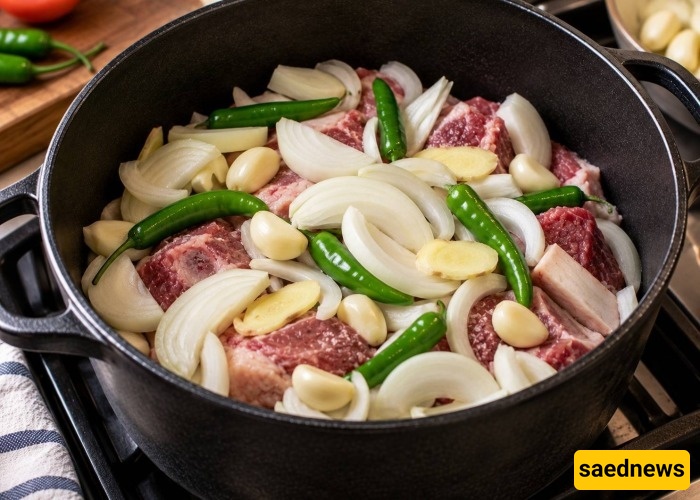
Spread the onions, garlic, and green chilies over the lamb. If desired, add a small amount of fresh ginger. These ingredients release their aroma during slow cooking without overpowering the natural taste of the meat.
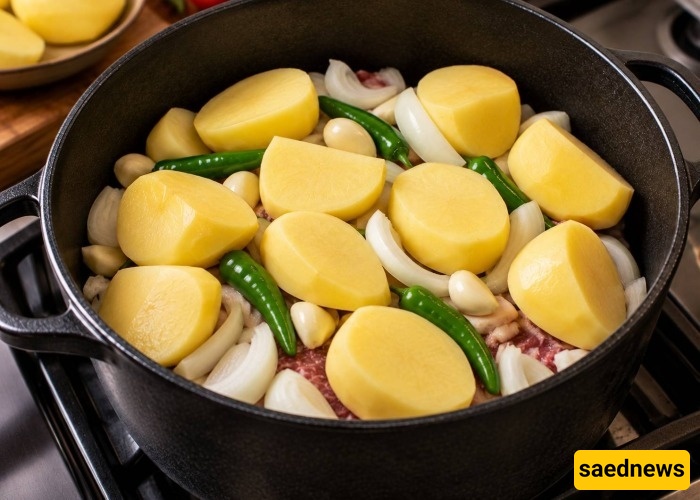
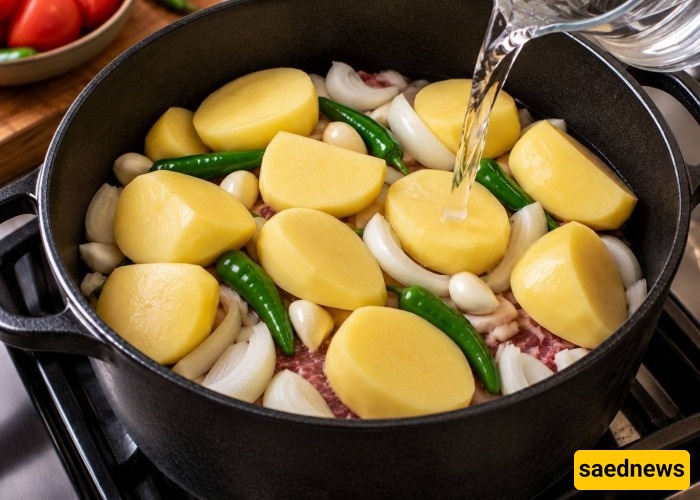
Arrange the potatoes on top of the other ingredients. Keeping them away from the bottom of the pot helps prevent them from breaking apart during the long cooking process.
Pour approximately ½ to 1 cup of water into the pot. Use only a small amount because Afghan Rosh is not intended to be a watery stew. The meat should cook slowly in the steam, its natural juices, and the fat released from the lamb tail fat.
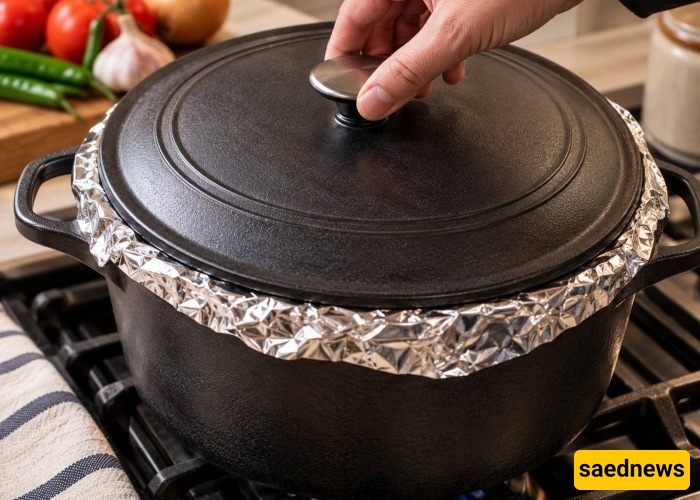
Secure the lid firmly to trap the steam inside. If the lid does not fit tightly, cover the pot with aluminum foil before placing the lid on top. This helps maintain moisture and allows the meat to cook evenly.
Place the pot over medium heat for a few minutes until steam begins to form and the ingredients heat through. Then reduce the heat to low.
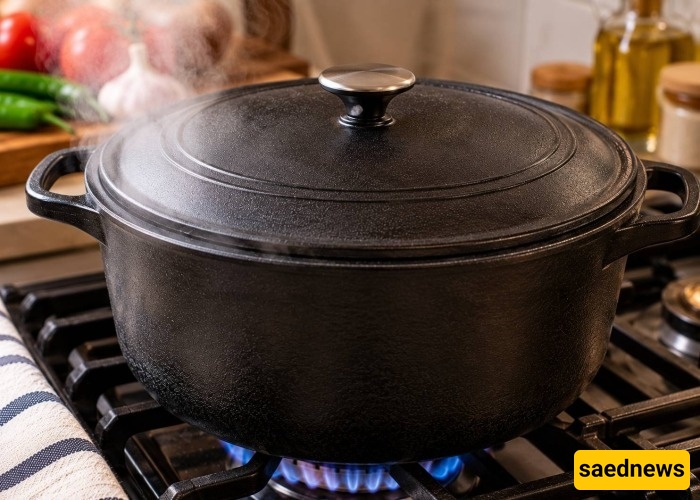
Allow the Rosh to cook gently for approximately 2 hours and 15 minutes. Avoid opening the lid frequently, as this releases steam and slows the cooking process.
The lamb should become very tender and separate easily from the bone while retaining its shape.
If using tomatoes, add them during the final 20–30 minutes of cooking. This allows them to contribute flavor without becoming completely mushy.
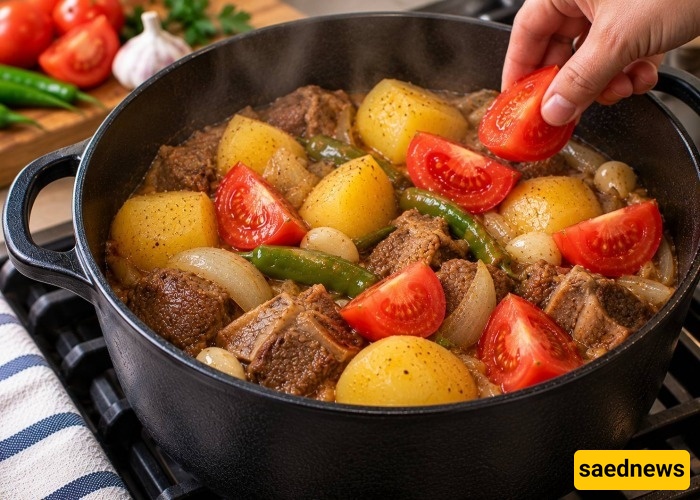
Once the cooking time is complete, open the pot and check the lamb and potatoes. If there is too much liquid, simmer uncovered over medium heat for a few minutes to reduce it.
Traditional Afghan Rosh should have a rich, concentrated appearance with very little excess liquid rather than the consistency of a thin stew.
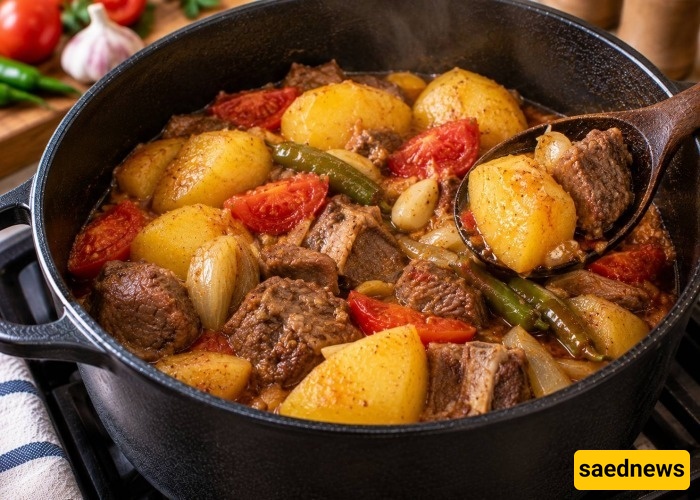
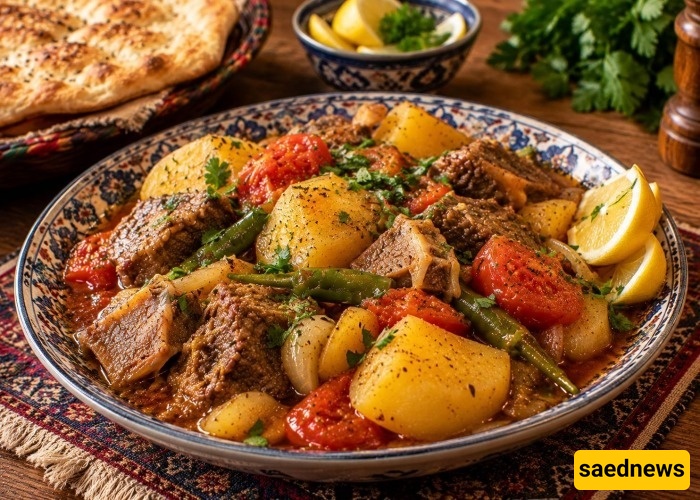
Transfer the lamb and potatoes to a serving dish. If desired, squeeze a little fresh lemon juice over the top.
Serve hot with Afghan bread. The ideal result is tender, juicy meat accompanied by fully cooked potatoes that still hold their shape.
To prepare Rosh in a pressure cooker, arrange the ingredients as described in the traditional recipe, using less water. Approximately ½ cup of water is usually sufficient for 1 kg of lamb, depending on the cooker.
Once the cooker reaches pressure, reduce the heat and cook for approximately 25–30 minutes. Allow the pressure to release completely before opening the lid.
If the meat is not yet tender, cook it under pressure for a few additional minutes. Add the tomatoes after opening the cooker and simmer uncovered for 10–15 minutes to help them retain their shape.
The pressure cooker significantly reduces cooking time. However, traditional slow cooking in a heavy pot offers greater control over the texture of the meat and potatoes and the final consistency of the dish.
Season the meat in advance: For deeper seasoning, sprinkle salt over the lamb and let it rest for 20–30 minutes before cooking.
Use whole black peppercorns: Some traditional variations include whole black peppercorns for additional aroma without substantially changing the original flavor.
Seal the pot with dough: In some traditional Shinwari and Pashtun-style preparations, dough is used to seal the lid, helping retain steam and moisture throughout the cooking process.
Add green chilies near the end: For a fresher chili aroma, add them during the final 5–10 minutes of cooking instead of at the beginning.
Choose a heavy-bottomed pot: A thick pot distributes heat more evenly and reduces the risk of the food sticking or burning during prolonged cooking.
Use a pressure cooker for a quicker version: Lamb may take approximately 30–35 minutes under pressure, depending on the cut and size of the pieces. The flavor and texture may differ from the traditional slow-cooked version.
Chicken Rosh is a lighter alternative to the traditional lamb version. Chicken thighs or drumsticks are preferable to breast meat because they tend to remain juicier during cooking.
Arrange the chicken pieces in a pot with onions, garlic, green chilies, potatoes, salt, and a little ginger if desired. Add approximately ½ cup of water.
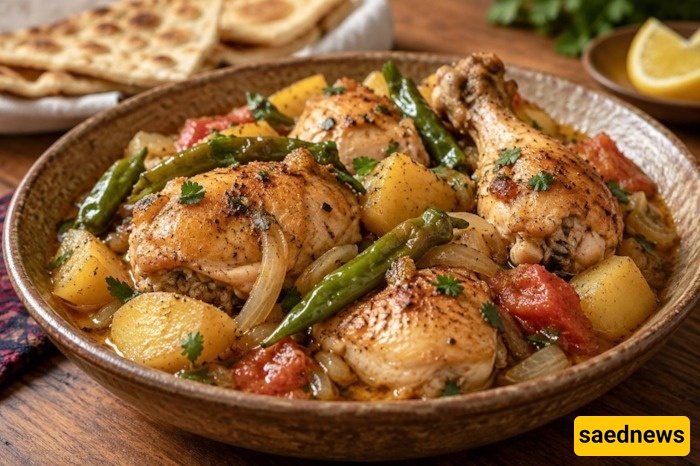
Cover the pot tightly and heat over medium heat for a few minutes until steam forms. Reduce the heat to low and cook for approximately 45–55 minutes, checking that the chicken is fully cooked and tender.
Unlike lamb, chicken should not be cooked for an unnecessarily long period, as it may begin to fall apart. If using tomatoes, add them during the final 15–20 minutes of cooking.
When ready, the liquid should be reduced, and the chicken should remain moist and tender without losing its structure.