SAEDNEWS: If you’re looking for an alternative to white flour in cake recipes, the right choice depends on the type of cake, your baking goals, and your level of experience.
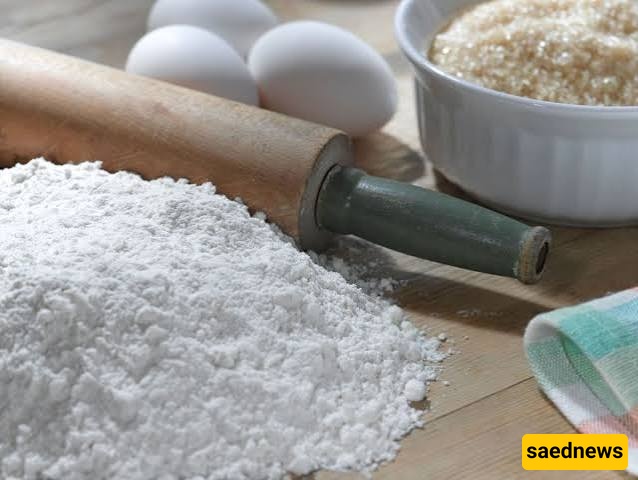
According to Saednews, White flour has been a staple ingredient in many cake and pastry recipes for years. Thanks to its suitable gluten content, delicate texture, and ability to help cakes rise well, it is a reliable choice for making light and flavorful cakes. However, today many people are looking for alternatives to white flour in cakes for various reasons, including health concerns, reducing their intake of refined flour, food sensitivities, or simply not having white flour at home.
The important thing to remember is that not every cake will produce the same results with every type of flour. If a substitute is not selected correctly and used in the right amount, your cake may turn out dry, dense, crumbly, or gummy.
Whole wheat flour is made from all parts of the wheat grain and contains more bran than white flour. It absorbs more water and has a coarser texture than refined flour.
To start, replace one-quarter of the white flour with whole wheat flour. In moist cakes such as carrot cake, banana cake, and chocolate cake, you can increase the amount to half of the total flour. For a recipe that calls for 2 cups of white flour, a combination of 1½ cups white flour and ½ cup whole wheat flour is a good starting point.
Using whole wheat flour will make the cake slightly darker and somewhat denser. Its mild wheat flavor is less noticeable in chocolate, cinnamon, banana, and carrot cakes.
Oat flour is one of the most accessible options for reducing the amount of white flour in a cake. If you do not have ready-made oat flour, you can blend rolled oats until they become a fine powder and then sift them.
For your first attempt, replace one-quarter to one-third of the white flour with oat flour. Oat flour absorbs more liquid than white flour, so if the batter becomes too thick, add one or two tablespoons of milk. The batter should be thick but still flow easily from a spoon or spatula.
Oat flour works particularly well in banana, carrot, apple, cinnamon, and chocolate cakes. For sponge cakes that need to be especially light and airy, it is better to use only a small amount.
Almond flour is made from finely ground almonds and contains more fat than white flour. As a result, it can make cakes softer and moister while adding a mild almond flavor.
In a standard recipe, you can replace about one-quarter of the white flour with almond flour. Since almond flour contains no gluten, it cannot provide the same structure as wheat flour on its own. Using too much in a conventional cake recipe may result in a cake that is overly soft, heavy, or crumbly.
Almond flour is a good choice for chocolate cakes, fruit cakes, and moist cakes. To see how it affects the texture, it is best to begin by replacing only one-quarter of the original flour.
Rice flour can be used in cakes, but replacing all the white flour with rice flour does not always produce good results in a standard recipe. Since rice flour contains no gluten, a cake made entirely with it may crumble when sliced.
For home baking, rice flour is best combined with cornstarch or another gluten-free flour. A blend of several flours generally produces a more balanced texture than rice flour alone. If you simply want to add a small amount of rice flour to a cake, you can replace one-quarter of the white flour with it.
Lotus Cheesecake Recipe: Baked and No-Bake Versions
Lotus cheesecake is a delicious and distinctive dessert made richer with the flavor of Lotus biscuits. It has a soft, creamy texture and can be prepared in two main ways: baked or no-bake.
Coconut flour absorbs significantly more liquid than white flour. Even a small amount can make cake batter considerably thicker. For this reason, you cannot substitute one cup of white flour with one cup of coconut flour.
The amount of eggs and liquid required for cakes made with coconut flour is usually different from that of standard cake recipes. Therefore, if you want to completely replace white flour with coconut flour, it is better to follow a recipe specifically developed for coconut flour.
Cornstarch is not a suitable replacement for all of the white flour in a cake. It can make up part of the flour mixture and help create a lighter texture, but it cannot provide the necessary structure for a conventional cake on its own.
If you do not have cake flour or finely milled pastry flour, you can use cornstarch to create a lighter flour mixture. For every cup of white flour, remove 2 tablespoons of flour and replace them with 2 tablespoons of cornstarch. Sift the flour and cornstarch together two or three times. This creates a lighter flour blend that works well for cakes.
Chickpea flour has a yellowish color and a distinctive flavor, so it is not suitable for every type of cake. A small amount can be used in chocolate, cinnamon, or spiced cakes because the flavors of cocoa and spices can balance its taste.
When using it for the first time, avoid replacing more than one-quarter of the white flour with chickpea flour. It is not a good choice for simple vanilla cakes, birthday cakes, or sponge cakes.
Choosing a white flour substitute for cake is not a one-size-fits-all decision. The right option depends on the type of cake, your reason for making the substitution, and your baking experience.
If you simply want to reduce the amount of white flour without dramatically changing the cake's texture, whole wheat flour or oat flour are among the easier options. For your first attempt, it is best to replace only one-quarter of the white flour with one of these alternatives.
Keep in mind that completely eliminating white flour is different from replacing only part of it. If you want to remove wheat flour entirely, it is better to use a recipe specifically designed to be white-flour-free or gluten-free. This will give you a more predictable result.
With a little experimentation and careful attention to the consistency of the batter, you can make delicious homemade cakes while using a wider variety of flour alternatives.