SAEDNEWS: With this complete guide, learn how to make homemade tomato paste step by step, achieving exceptional color and flavor while discovering the essential tips for preventing mold and keeping it fresh for longer.
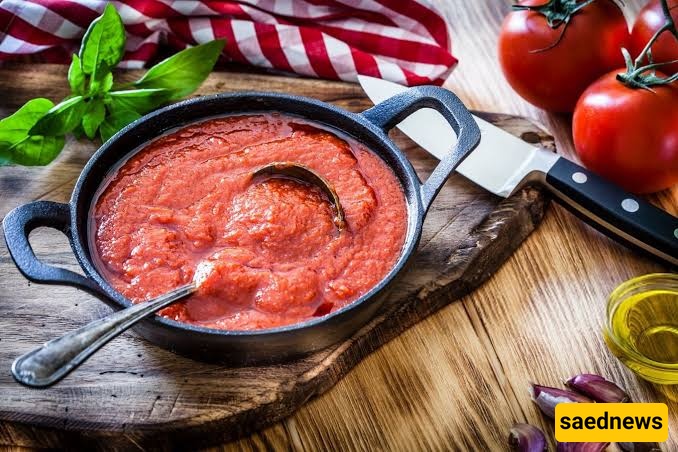
According to Saednews, Tomato paste is one of the most widely used food seasonings around the world. It is valued not only for adding flavor to dishes but also for giving them an appealing color and appetizing appearance. In Iranian cuisine, tomato paste has a particularly important role and is used in almost every type of stew, abgoosht, and many traditional dishes.
Although a wide variety of ready-made products are available, many families prefer making tomato paste at home using traditional methods. Homemade paste offers an exceptional aroma and flavor, while also allowing you to control the ingredients and preparation process. This guide explains how to make homemade tomato paste step by step, along with important tips for preventing mold and storing it for longer periods.
The quality of your tomato paste depends heavily on the tomatoes you use. For a rich and flavorful paste, choose tomatoes that are meaty, firm, fully ripe, and relatively low in water.
Watery tomatoes may taste good, but they produce less paste and require considerably more cooking time. Garden-grown and locally harvested tomatoes, especially those picked during the summer season, are excellent choices because they tend to have a rich aroma and vibrant color.
Avoid using tomatoes that are bruised, moldy, spoiled, or unripe. Besides negatively affecting the flavor, damaged tomatoes can increase the risk of spoilage and fungal growth.
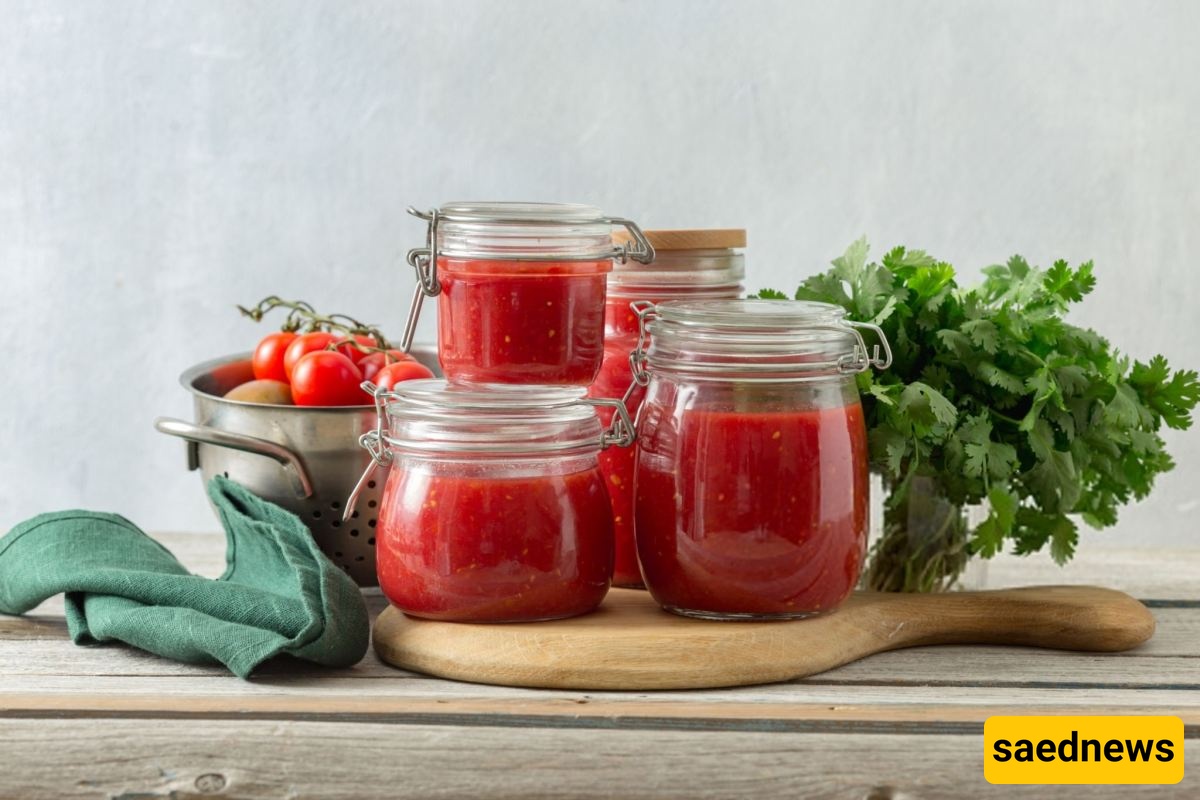
Follow these traditional steps to prepare tomato paste with a deep color, pleasant aroma, smooth texture, and good storage quality.
Wash the tomatoes thoroughly under cold water to remove dirt and surface impurities. Cut each tomato into halves or quarters with a sharp knife.
Cutting the tomatoes allows their juices to escape more quickly and helps shorten the initial cooking stage. If the tomatoes are particularly large, cut them into smaller pieces.
Place the chopped tomatoes in a large pot and cook them over relatively high heat. As they heat up, the tomatoes will release their juices and soften, making the skins easier to separate from the flesh.
Stir the tomatoes every few minutes to prevent them from sticking to the bottom of the pot and burning. Once they are completely soft and cooked, remove the pot from the heat and allow the mixture to cool slightly.
For smooth, uniform tomato paste, the skins and seeds need to be removed.
Place a fine-mesh metal strainer over a large pot. Add the cooked tomatoes in batches and press them through the strainer using the back of a spoon or your hand. Continue until only the skins and seeds remain.
Make sure as much of the tomato flesh and juice as possible passes through the strainer. Removing the skins and seeds also helps produce a smoother final texture.
Return the strained tomato juice to the pot and cook it over low to medium-low heat. Allow the excess water to evaporate gradually until the mixture becomes thick.
This stage can take several hours, so patience is important. Avoid using excessively high heat because it can cause the paste to stick to the bottom, burn, and develop a bitter flavor.
Stir the mixture regularly, particularly as it becomes thicker, to ensure even cooking and prevent sticking.
When the tomato mixture has reduced substantially and has started to thicken, add salt and mix well.
Salt enhances the flavor and can contribute to preservation. Near the end of cooking, a small amount of cooking oil can also be added if desired. It gives the paste a glossy appearance and can help create a protective layer on the surface.
To test whether the paste has reached the right consistency, draw a line through its surface with a spoon.
If the line quickly fills with liquid, the paste is still too thin and needs additional cooking. If the line remains visible and the paste has a thick, cohesive texture, it is ready.
Achieving sufficient thickness is particularly important for storage because excess moisture can contribute to faster spoilage.
After cooking, transfer the paste into clean, completely dry containers. Glass jars are a convenient choice.
Make sure there is no moisture or food residue inside the containers. Close the lids tightly and refrigerate or freeze the paste.
For safe long-term storage, refrigeration or freezing is preferable to keeping homemade tomato paste at room temperature.
Mold is one of the most common problems with homemade tomato paste. Proper preparation and storage can significantly reduce the risk.
Strain thoroughly: Remove the skins and seeds to create a smooth paste.
Cook it sufficiently: Avoid leaving the paste overly thin or watery.
Use clean, dry containers: Any moisture or contamination can accelerate spoilage.
Protect the surface: After taking some paste from a jar, smooth the remaining surface and, if desired, add a thin layer of oil.
Keep it refrigerated: Homemade tomato paste should generally be stored in the refrigerator rather than at room temperature.
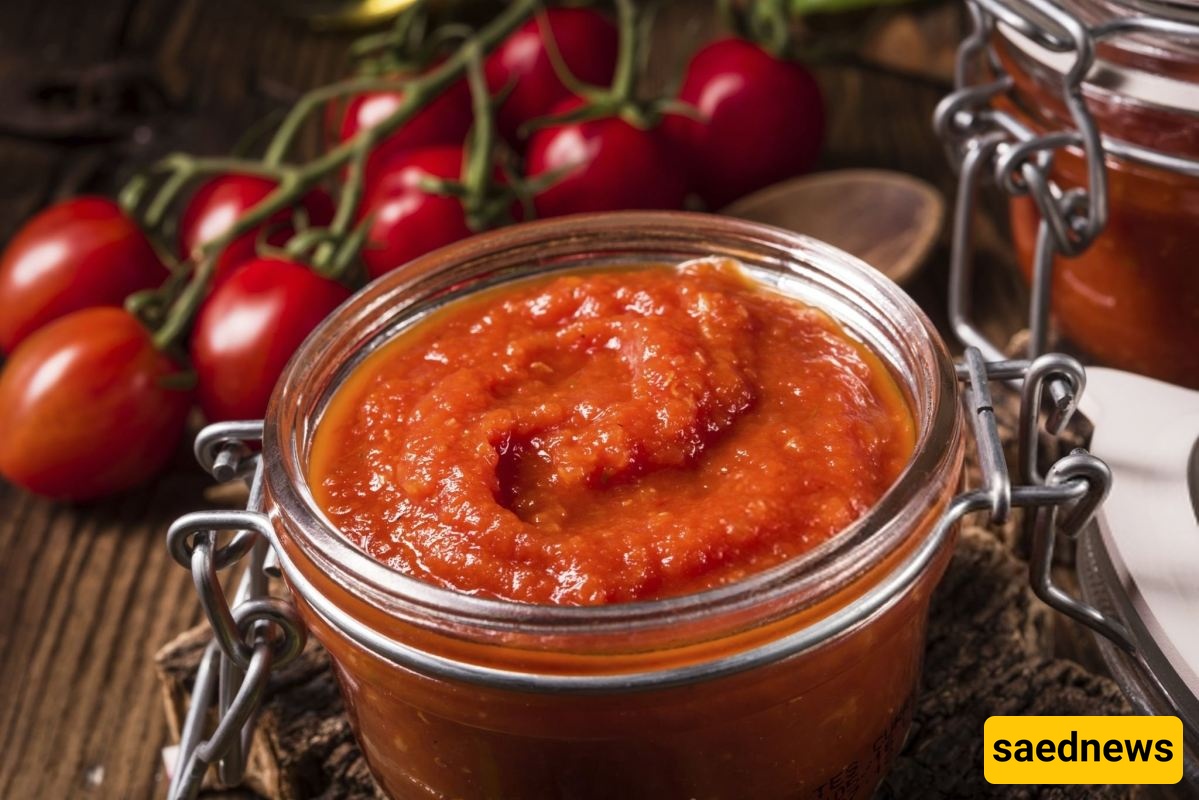
One of the most common questions when making tomato paste at home is how much finished paste to expect.
As a general estimate, about 4 kilograms of meaty tomatoes can produce approximately 1 kilogram of tomato paste. However, the exact yield varies according to the tomato variety and its water content.
Very watery tomatoes may require approximately 5–6 kilograms of tomatoes to produce 1 kilogram of paste. Using meaty, low-moisture tomatoes therefore saves both cooking time and raw ingredients.
If you want to preserve homemade tomato paste for several months, freezing is one of the simplest and most reliable options.
Divide the tomato paste into small portions and place them in ice-cube trays, freezer-safe containers, or individual freezer bags. Once frozen, individual portions can be removed whenever needed.
A thin layer of oil over the surface can reduce direct exposure to air while the paste is stored in the refrigerator. This can help protect the exposed surface, although proper refrigeration remains important.
Before filling the jars, wash and heat-sterilize suitable glass containers, then allow them to dry completely. The most important point is to avoid introducing moisture or contamination during packaging.
For the safest long-term storage, freeze the paste in small portions or follow a tested, food-safety-approved canning method rather than relying on room-temperature storage.
For the best results, focus on three things: high-quality ripe tomatoes, gradual reduction, and proper storage. Meaty tomatoes produce better yields, slow cooking develops a richer flavor and color, and clean, dry containers help maintain quality after preparation.
With the right technique, homemade tomato paste can become a flavorful staple for stews, soups, sauces, rice dishes, and countless other recipes.