SAEDNEWS: Stars are primarily composed of hydrogen and helium, which together account for about 98% of their mass. This article explores the three-layer structure of stars and explains the process of nuclear fusion.
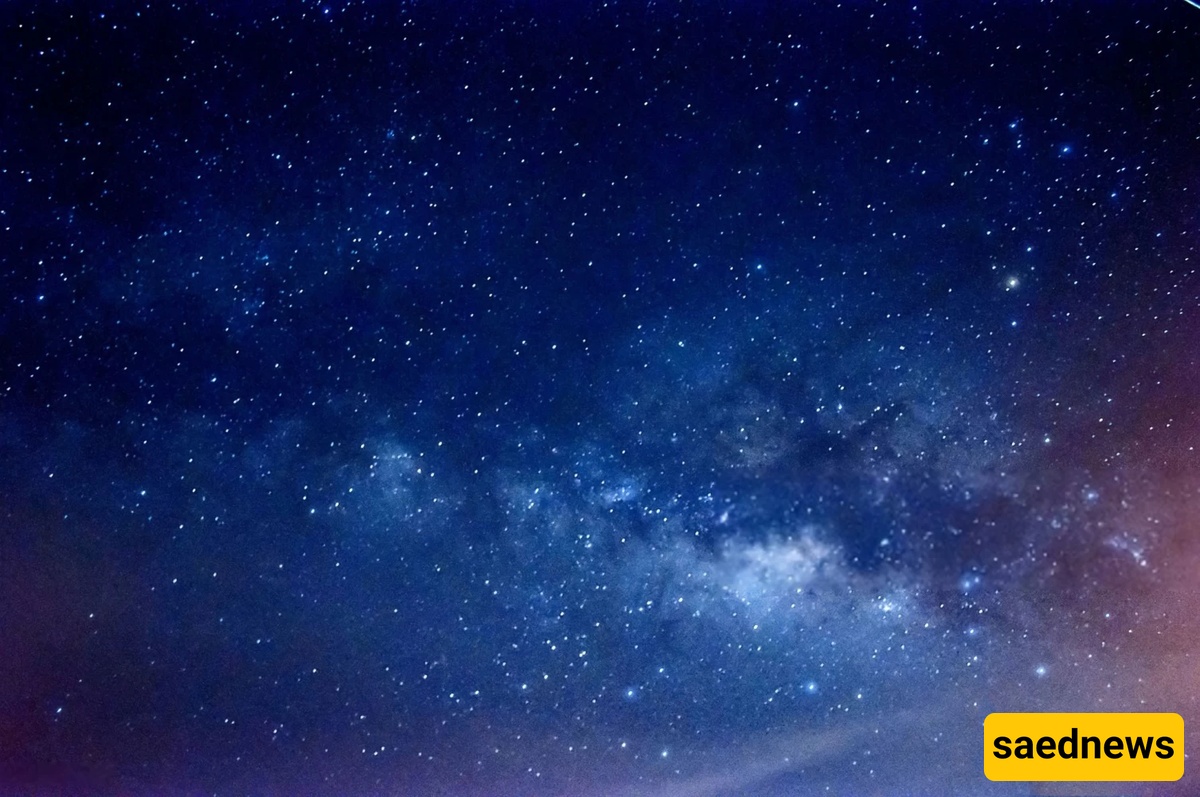
According to Saednews, Stars are among the most fascinating and luminous objects in the night sky. For centuries, humans have observed them and tried to understand their origins, structure, and composition. But what exactly are stars made of?
Stars are composed primarily of hydrogen and helium. These are the two most abundant elements in the universe and account for roughly 98% of the mass of most stars. A star can generally be divided into three major regions:
The core is the innermost region of a star and the site of nuclear reactions. Here, extremely high temperatures and pressures allow hydrogen nuclei to fuse together and form helium. This process, known as nuclear fusion, is the primary source of a star's energy.
The energy produced by fusion allows stars to emit light and heat while also helping maintain a balance between the inward pull of gravity and the outward pressure generated within the star.
Surrounding the core is the radiative zone, where energy produced in the core moves outward primarily through radiation. Because energy can be repeatedly absorbed and re-emitted by particles, its journey through this region can take an extremely long time, potentially millions of years.
As energy travels outward, temperatures gradually decrease.

Above the radiative zone lies the convective zone. Here, energy is transported through the physical movement of stellar material. Hotter material rises toward the surface, while cooler material sinks deeper into the star.
This continuous movement creates convection currents and helps transport heat toward the star's outer layers.
Although hydrogen and helium dominate the composition of stars, they also contain smaller amounts of heavier elements. These include carbon, nitrogen, oxygen, iron, and many others.
Hydrogen is the simplest and most abundant element in the universe. It makes up approximately 74% of the mass of a typical star.
Inside stellar cores, hydrogen undergoes nuclear fusion and is converted into helium. This process releases enormous amounts of energy, which powers the star.
Helium is the second most abundant element in stars, accounting for roughly 24% of their mass. Much of the helium found in stars is produced through hydrogen fusion.
Helium is particularly important in the evolution of stars because, as hydrogen in the core is depleted, helium can eventually become the fuel for later stages of nuclear fusion.
Stars also contain heavier elements such as carbon, nitrogen, oxygen, and iron, although these occur in much smaller quantities than hydrogen and helium.
Many of these elements are created through nuclear fusion inside massive stars, particularly during the later stages of stellar evolution. When massive stars eventually explode as supernovae, these elements can be dispersed into space and become part of future stars, planets, and other celestial objects.
A star's life can be divided into several stages, from its formation to its eventual death. Throughout this journey, its structure and chemical composition change as nuclear reactions take place.
Stars form inside enormous clouds of gas and dust known as molecular clouds. Within these clouds, gravity causes material to gather into increasingly dense regions.
As the material becomes more concentrated, temperature and pressure rise. Eventually, conditions in the forming star become hot and dense enough for nuclear fusion to begin.
Once sustained nuclear fusion begins, a new star is born. At this point, the star starts producing tremendous amounts of energy and becomes a stable source of light and heat.
The early stages of stellar formation can take millions of years as the star settles into a stable state.
During most of its lifetime, a star converts hydrogen into helium through nuclear fusion. This stage can last millions or even billions of years, depending largely on the star's mass.
As the supply of hydrogen in the core decreases, the star undergoes structural changes and may evolve into a giant star or, depending on its mass, eventually become a white dwarf.
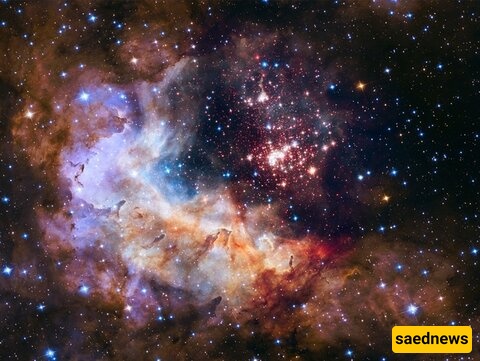
The final fate of a star depends primarily on its mass.
Massive stars can end their lives in spectacular supernova explosions. These explosions can produce and distribute heavy elements throughout space.
Smaller stars, such as the Sun, do not explode as supernovae. Instead, after passing through later stages of stellar evolution, they shed their outer layers and ultimately leave behind a dense white dwarf.
Stars are enormous spheres of extremely hot plasma made primarily of hydrogen and helium, with smaller quantities of heavier elements. Nuclear fusion in their cores produces the energy that makes them shine and drives their evolution.
From their formation in clouds of gas and dust to their eventual transformation into white dwarfs or supernova remnants, stars play a fundamental role in shaping the universe. In fact, many of the heavier elements found in planets—and even in living organisms—were forged inside stars or during their dramatic deaths.