Saed News: With the expansion of artificial intelligence chatbots and users becoming accustomed to receiving instant answers, researchers warn that excessive reliance on these tools may gradually weaken human abilities in searching, analyzing, and critical thinking.
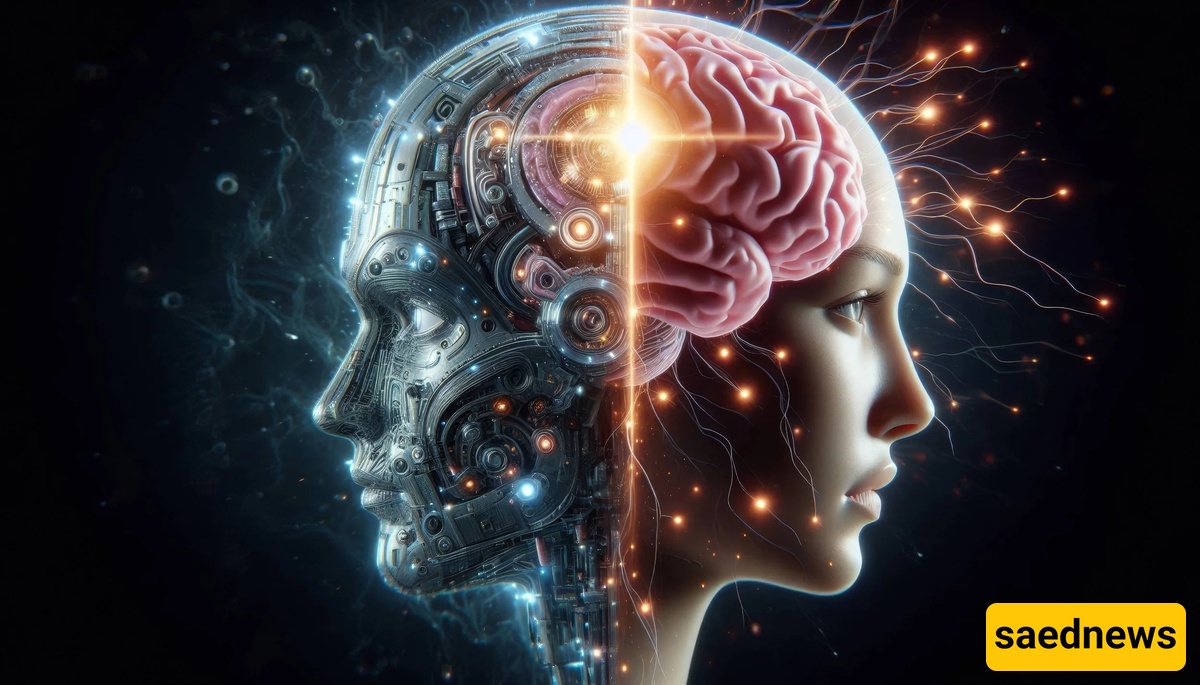
According to SAEDNEWS, citing Digital Trends, artificial intelligence is now so fast at responding that many users no longer even bother to conduct real searches. A question is typed, and within seconds a complete, neatly organized, and seemingly reliable answer appears on the screen. But behind this appealing convenience, a new concern is emerging: if machines do all the thinking work, what will happen to the human brain?
The Royal Observatory Greenwich, one of the oldest scientific institutions in the United Kingdom, has recently warned about the cultural and cognitive consequences of the expansion of AI chatbots. Experts at this institution believe that instant and ready-made AI responses can weaken users’ curiosity, accuracy, and ability to verify sources—skills that are essential for the formation of real knowledge.
According to these researchers, the main issue lies exactly in what makes AI attractive: “convenience.” Chatbots can speed up the research process, provide new ideas, and help users summarize information, but when the final answer is delivered without going through the process of searching and analysis, part of the learning process is removed.
Scientists say humans do not become smarter simply by receiving information; rather, it is the process of struggling with questions, comparing sources, doubting, and testing ideas that builds judgment and thinking. If this stage is removed, information may enter the mind, but it will not necessarily turn into “understanding.”
Paddy Rodgers, director of the Royal Museums Greenwich, believes that the history of science itself is the best example of the importance of deep and time-consuming exploration. He recalls that many scientific discoveries resulted from data that initially seemed to have no practical use.
For example, early astronomers spent centuries precisely recording the positions of stars and celestial bodies without knowing how future generations would use that data. According to researchers, an AI system focused only on “efficiency” and “immediate results” might never pursue such seemingly useless but historically crucial paths.
Meanwhile, recent remarks by Sam Altman, CEO of OpenAI, have added to these concerns. He previously stated that AI may in the future become a service similar to electricity or water—something users pay for based on consumption of “intelligence.”
Critics say that if thinking becomes a ready-made, purchasable service, humans may gradually practice independent reasoning and analytical skills less. In such a situation, polished and confident AI responses may be accepted as truth without verification, while users are often unaware of what information the system has removed, ignored, or misunderstood.
However, experts are not against using AI; rather, they emphasize that the way it is used must change. They suggest that instead of passively accepting answers, users should use AI to challenge their own ideas—for example, by asking the system to identify weaknesses in an argument or present opposing evidence.
Researchers believe AI will be useful when it expands the “scope of inquiry,” not when it becomes the end of human thinking. Ultimately, the most important part of cognition—final judgment—must remain in human hands.