SAEDNEWS: Egypt’s Pyramids and Other Mysterious Structures Such as Stonehenge Raise Questions About Ancient Peoples’ Knowledge of Astronomy

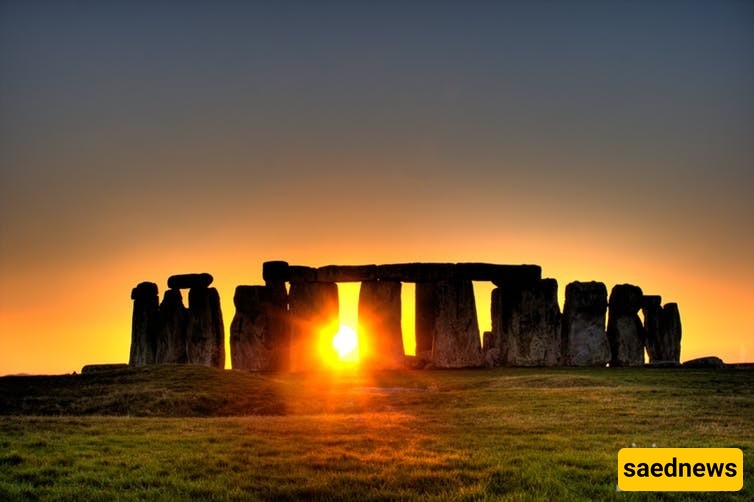
According to Saed News and quoted from Zoomit, ever since humans first looked up and became aware of the sky above them, they have been fascinated by its beauty and hidden mysteries. For this reason, astronomy is considered one of the oldest sciences that has accompanied humanity for thousands of years. Celestial phenomena can even be seen in prehistoric cave paintings. Structures such as the Egyptian pyramids and Stonehenge also appear to have been built with attention to the position of celestial bodies such as the Moon, the Sun, and the stars.
The idea of how ancient people achieved such precise constructions is still difficult for us to fully understand, leading to many different hypotheses. Some believe that ancient civilizations possessed advanced knowledge of mathematics and related sciences. Others argue that extraterrestrials may have shown them how to build these structures.

But what do we actually know about how ancient people understood the sky and cosmology? In this context, a field known as archaeoastronomy, or cultural astronomy, emerged in the 1970s to investigate these questions. Archaeoastronomy combines disciplines such as astronomy, archaeology, anthropology, and ethnoastronomy.
One of the most remarkable ancient structures is the Egyptian pyramids, built with extraordinary precision. The Egyptologist Flinders Petrie made one of the first accurate measurements of these structures in the 19th century. According to his findings, all four sides of the pyramids are aligned closely with the cardinal directions, forming nearly perfect right angles.
But how did the ancient Egyptians know this? Recently, engineer Glen Dash proposed a hypothesis based on a method known as the “Indian circle.” This technique allows direction to be determined using a simple shadow-casting device to find the east–west line. Dash explained how such a method could have been used by the Egyptians.
However, is this explanation sufficient? While it is not impossible that the Egyptians used such a method, it risks projecting modern assumptions onto the past. A better understanding may come from studying their mythology and the tools and methods actually used at the time.
This is not the first time scientists have used modern interpretations to explain ancient phenomena. A similar approach was once applied to Stonehenge. In 1964, astronomer Gerald Hawkins proposed a complex system involving pits and markers that could predict eclipses at Stonehenge. However, this explanation is not considered definitive evidence of how the monument was actually used.
To better understand the past, multiple lines of evidence must be combined. There is rarely only one explanation for how ancient structures were designed or used. So how can cultural astronomy help explain the precision of the pyramids? One study suggests that two stars in Ursa Major may hold part of the answer. These stars are visible throughout the night, and by observing their position and movement, ancient Egyptians may have been able to determine true north. They may have used a device called a “merkhet,” a timekeeping instrument consisting of a plumb line attached to a wooden handle used to track stellar alignment.
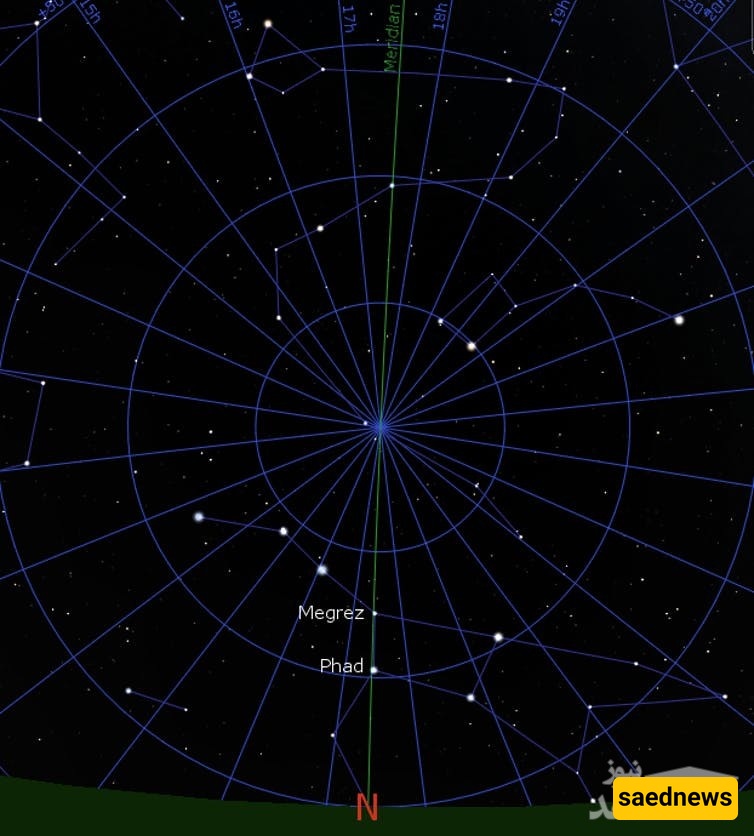
Such interpretations are more convincing because they align with evidence found in inscriptions at the Temple of Horus in Edfu. According to these records, the use of the merkhet may indeed explain how directions were determined. References in hieroglyphic texts even resemble the foreleg of a bull, possibly symbolizing the constellation Ursa Major and its position in the sky.
Similar astronomical interpretations have been proposed for Stonehenge as well. Researchers have identified unusual wooden circles near the site, suggesting symbolic meanings such as life represented by wood and death by stone. Similar patterns have also been found in Madagascar, indicating shared symbolic systems across ancient cultures. Others suggest that Stonehenge and its alignments may have had a ritual connection to the path of the Moon or the journey to the afterlife.
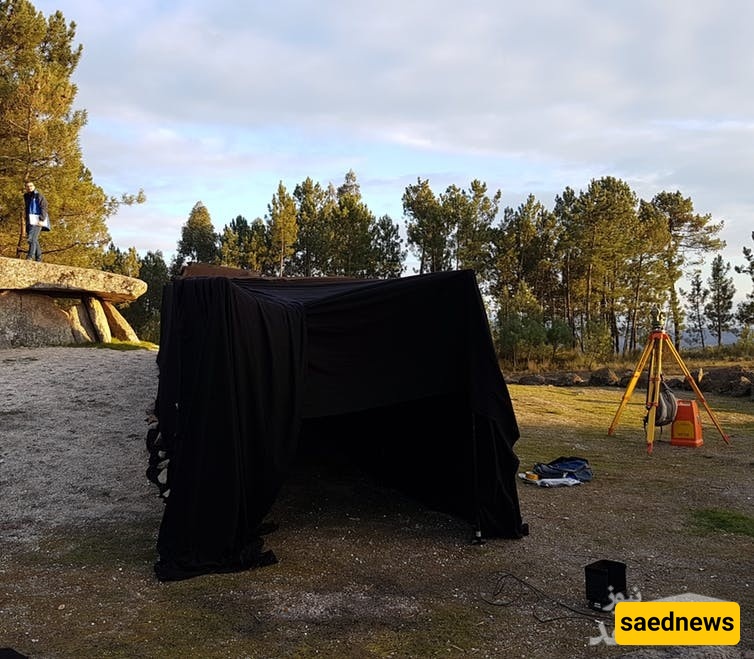
Cultural astronomy has also been applied to 6,000-year-old tombs in Portugal. Archaeologist Fabio Silva demonstrated how the alignment of tomb entrances may correspond to the rising of the star Aldebaran over a mountain range. Such alignments may have held ritual significance for both the living and the dead.
Further interpretations suggest that this mountain region may have been associated with seasonal migration. In local folklore, a shepherd is said to have been so impressed by the brilliance of Aldebaran that he named both the star and his dog after it.
Fieldwork in one of the Portuguese dolmen tombs supports this idea, showing that the long and narrow entrance could have improved the visibility of the star from inside the structure.
Ultimately, while it is tempting to imagine ancient people as highly advanced astronomers, we must remember that such interpretations often reflect our own modern perspective on astronomy. Cultural astronomy shows us the importance of the sky in ancient life, but many mysteries remain. A careful approach that combines evidence and plausible context remains the most reliable way to understand the past.