SAEDNEWS: There is a cemetery in Krit where, unlike the usual tradition, the graves are created on the ground instead of being dug underground. These graves in the Krit cemetery are referred to as “Separdani” in local terminology.
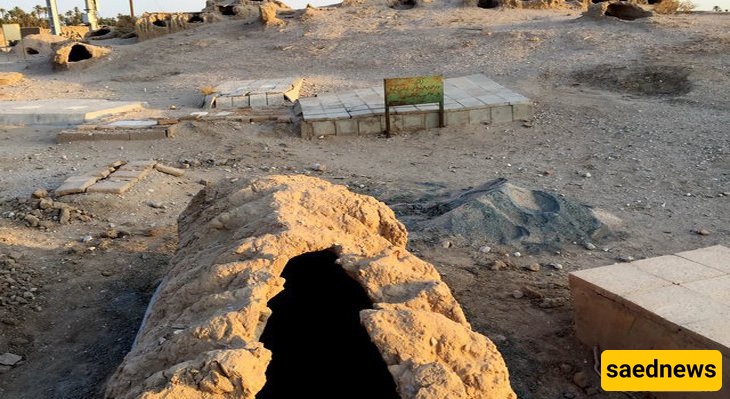
According to Saed News, citing Eli Gasht: In a village called “Keryt,” near the city of Tabas and among the ruins left by the devastating earthquake of September 1978, skeletal remains can be seen emerging from the soil. These bones speak of the long and ancient history of this abandoned region. In the highlands of this village—whose history predates Islam—there is a cemetery where, unlike conventional burial practices, graves were built above the ground instead of being dug into it. These graves are locally known as “Separdani” (temporary burial structures).
The story of these graves has been passed down orally among local residents for generations, and is now told to visitors who travel to the area. Join us as we explore this mysterious and intriguing legend.
It is said that in the past, the route to Karbala passed through the village of Keryt in Tabas, and pilgrims would spend many months on their journey to visit Imam Hussein (peace be upon him). Some of them died during this difficult and exhausting journey. The bodies of these caravan travelers were temporarily buried in the Keryt cemetery, to be later retrieved when the caravan returned and transported back to their homeland.
A cultural heritage expert from Tabas has written about this cemetery: “Unlike other graves that are dug into the ground, these graves were located at ground level. The deceased were placed on the surface, and a small chamber of mud-brick or clay was built over each body. After one or several years, when arrangements for transport were made again, the structure would be dismantled and the remains would be moved.”
Three main reasons are suggested:
First, dismantling above-ground graves is much easier than digging up traditional underground graves.
Second, it indicated that the deceased did not belong to the village and were only temporarily placed there before being transferred elsewhere.
Third, exposure to air caused the bodies to decompose more quickly.
When caravan travelers returned from their journey, they would collect the remains of their relatives in special bags and carry them to their final destination. It remains unclear why some of these remains were never transferred—perhaps their relatives had also passed away or lacked the financial means to move them.
The exact age of this cemetery is unknown. In historical travel accounts by Swedish geographer Sven Hedin, Keryt is mentioned as a stopping point where caravans would rest and resupply. Some locals also claim that well-preserved, shrouded skeletons were once found in these graves and were taken by medical students from Tabas University for use in anatomy classes.
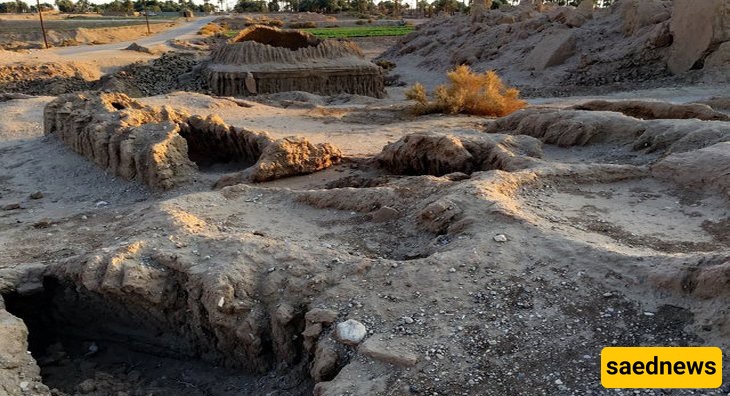
Given that these remains are threatened both by illegal excavations and harsh environmental conditions, there is a strong need for responsible institutions and individuals to take action to preserve this valuable heritage.
According to the manager of the historic caravanserai in Keryt village, many domestic and international tourists visit the site and are surprised that these graves are not being properly protected. He mentioned that funds were spent to install protective glass over one of the graves to preserve it, and that the governor of Tabas had also agreed to cover the cost of protecting five graves, although this has not yet been implemented.