SAEDNEWS: An experimental tool may boost skin injury recovery by about 30%. Using a camera linked to a computer, it monitors wounds and times controlled electrical shocks or drug release for optimal healing.
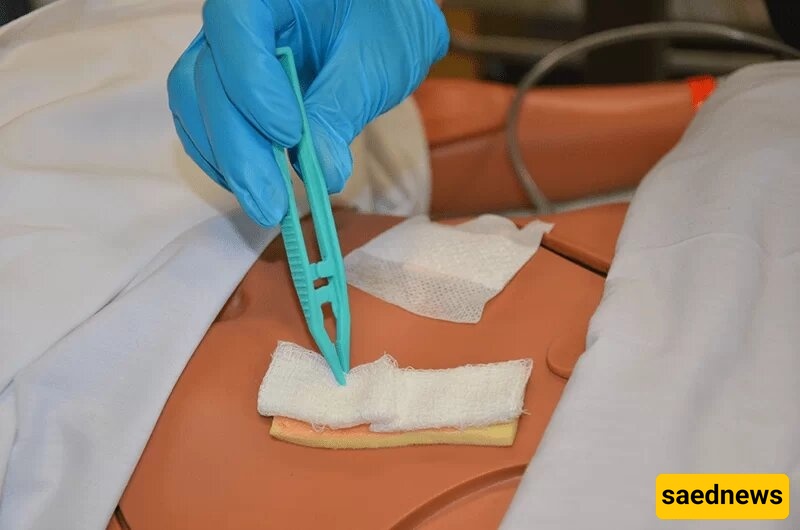
According to the Science and Technology Desk of Saed News, citing Hamshahri, medical treatments today are undergoing fundamental transformations—so much so that even the process of wound healing is experiencing remarkable changes. Traditional bandages are gradually being replaced by advanced technologies that combine artificial intelligence with camera imaging to intelligently accelerate patients’ recovery.
A team of researchers led by Professor Marco Rolandi at the University of California, Santa Cruz, has developed a smart device called “a-Heal.” The system includes:
A miniature fluorescent camera to capture images of wounds.
A ring of 12 LED lights to provide illumination for imaging.
Electrodes to deliver electrical stimulation to damaged tissue.
Bioelectronic reservoirs and actuators for targeted storage and delivery of liquid medications.
Once applied to a wound, the device captures images of the injured area every two hours and wirelessly sends them to a nearby computer system. AI algorithms then analyze the images and compare the healing progress with ideal recovery conditions.
If the AI detects that the wound is healing too slowly, it issues commands to the device to generate an appropriate electric field at the injury site. This stimulates cellular activity, promoting faster wound closure, or, if needed, delivers precise doses of medication directly to the affected area. In animal trials, the use of fluoxetine—a selective serotonin reuptake inhibitor—effectively enhanced tissue formation and wound repair by reducing inflammation.
Ultimately, researchers hope that this hybrid technology will soon provide an efficient solution for saving lives in remote areas and high-risk situations, such as war zones, where immediate access to modern medical facilities is limited.