SAEDNEWS: In 1609, Galileo peered at the moon through his telescope for the first time and sketched its surface. These drawings, capturing the shadows and irregularities of the lunar landscape, marked the dawn of a new era in both science and art. With this discovery, Galileo forever transformed humanity’s view of the heavens.
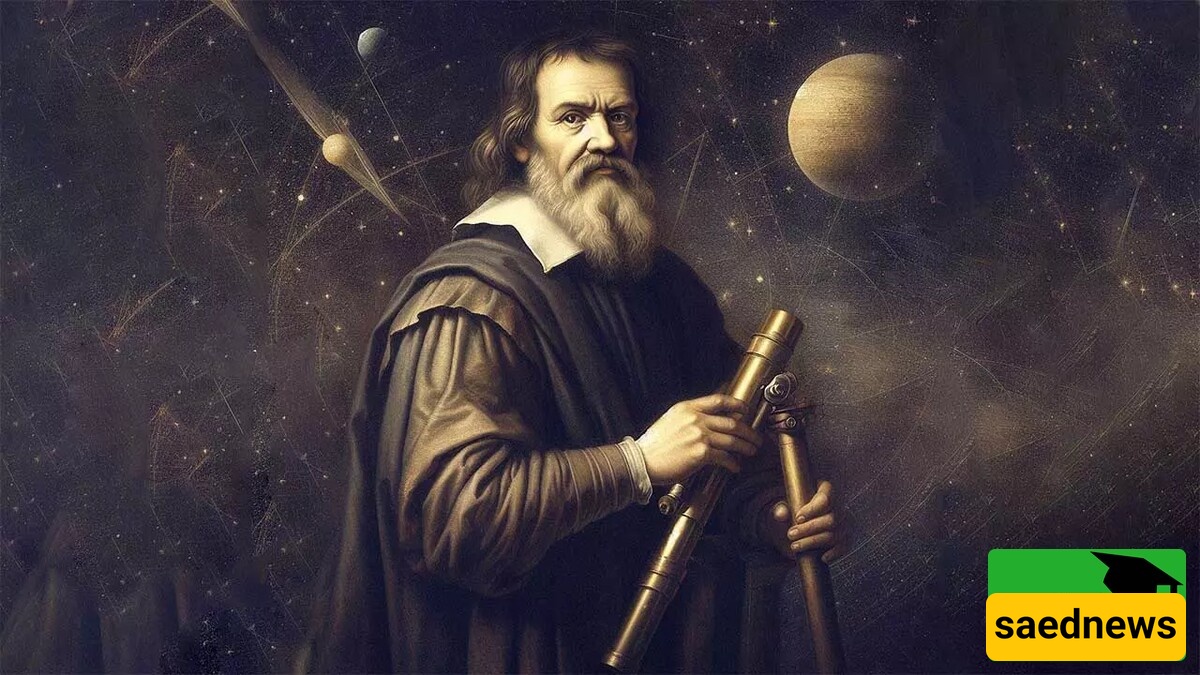
According to the Science Desk of SaedNews, Galileo, the renowned Italian scientist and astronomer, made unprecedented observations of the sky in 1609 by building and using one of the earliest advanced telescopes. As the first person to examine the Moon’s surface in detail, he played a crucial role in transforming astronomy. His observations helped overturn the long-held belief that the Moon was a perfectly smooth and flawless celestial body.
Paintings That Changed History
Through his telescope, Galileo observed mountain peaks, valleys, and craters on the Moon for the first time, capturing them in his drawings. These illustrations, published in his famous book Sidereus Nuncius (The Starry Messenger), presented a realistic portrayal of the lunar surface. By depicting shadows and highlights, he was able to accurately represent the Moon’s elevations and depressions.
Challenging Ancient Beliefs
Before Galileo, many scholars believed that the heavens and celestial bodies were flawless and eternal. His drawings demonstrated that, contrary to Aristotelian thought, the Moon had a rugged, Earth-like surface. This discovery questioned the philosophical and scientific foundations of the past and paved the way for a more modern understanding of the universe.
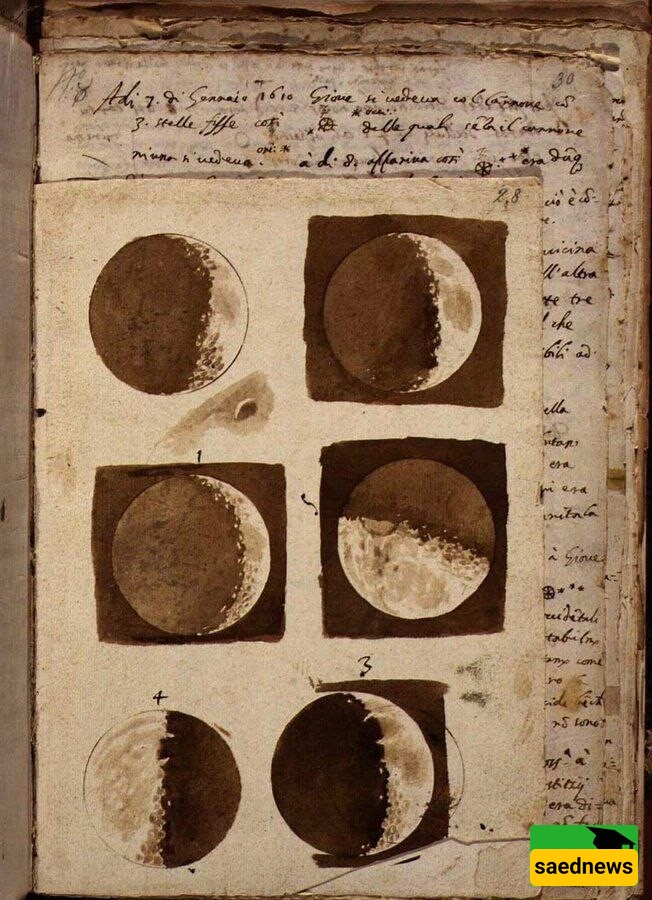
Galileo’s Lunar Drawings
Lasting Impact on Science
Galileo’s Moon drawings were not only scientifically significant but also inspired artists and thinkers. By combining art and science, he expanded the boundaries of human knowledge and laid the groundwork for a revolution in studying the cosmos. These works remain one of humanity’s first successful attempts to explore the unknowns of the universe in the history of science.