Saed News: Denmark, archaeologists have once again revisited one of the most mysterious and perhaps terrifying Stone Age cases in the country: around 160 scattered human bones from the “Dyrholm” site, many of which show cut marks, fractures, and signs of unusual treatment of the dead.
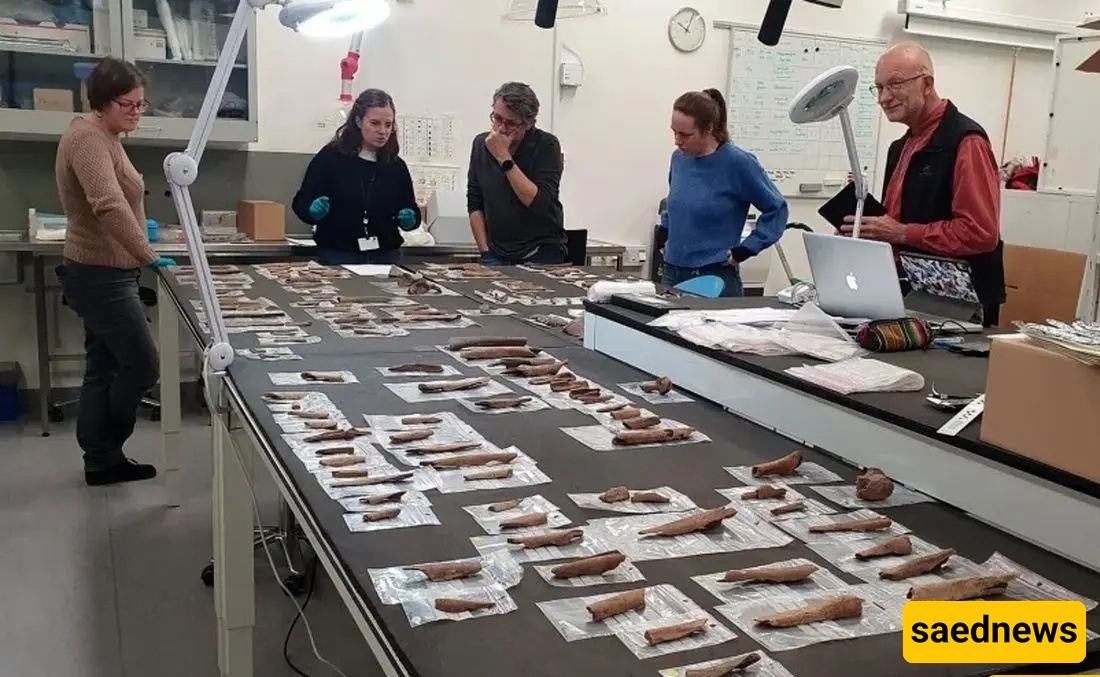
According to SAEDNEWS, these human remains were first excavated in the 1920s and 1930s and again in the 1970s, but the ROOTS research cluster affiliated with the University of Kiel believes it is now time to re-examine them using modern methods.
Dyrholm was inhabited for a long period, from the late Ertebølle culture of the Mesolithic period (around 5400–3950 BC) to the early Funnel Beaker culture of the Neolithic period (around 3950–3400 BC). This makes the site extremely important, as it relates to one of the major transformations in northern Europe: the shift from a lifestyle based on hunting, fishing, and gathering to farming societies.
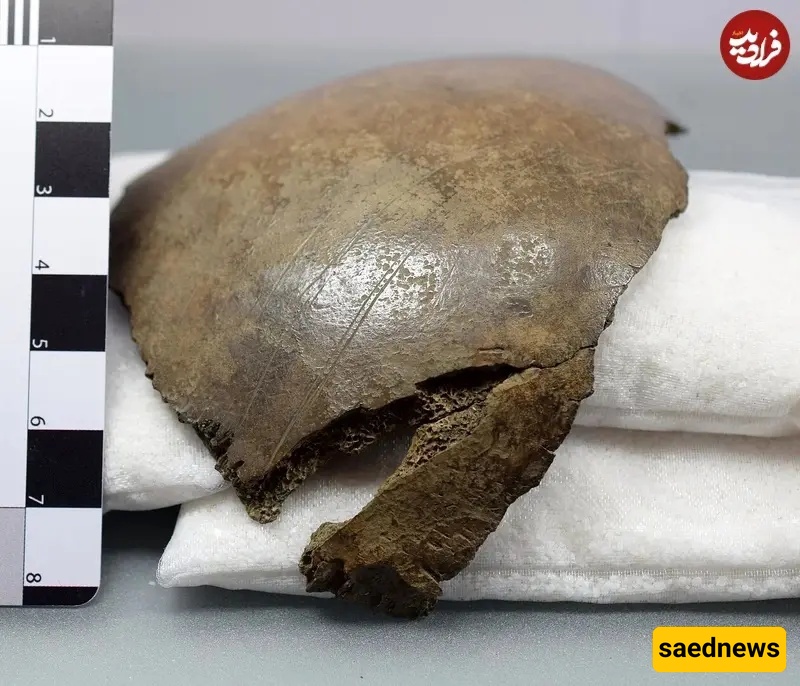
The human bones were not found as complete burials but scattered across a wide area of the excavation site and mixed with rich layers of animal remains. Radiocarbon dating shows that these remains were not buried in a single event but likely accumulated over several hundred years.
What makes Dyrholm astonishing and disturbing is not only the presence of human remains, but also the way these bodies were treated. According to ROOTS researchers, many bones show cut marks, impact damage, defleshing, longitudinal splitting, and fractures—signs that may indicate marrow extraction. A child’s skull also shows marks that may suggest scalping. Some bones also bear traces of carnivore bites, further complicating the case.
Such evidence once led some researchers to propose cannibalism at Dyrholm. However, although this is a shocking hypothesis, it is not easy to prove. Cut marks and fractures could also indicate violent death, dismemberment, ritual practices, post-mortem manipulation, animal activity, or a combination of these factors.
For this reason, the new project is important. The University of Kiel team does not aim to label Dyrholm simply as a “cannibalism site,” but rather to re-examine all evidence using modern scientific methods and a broader perspective.
The cannibalism hypothesis has a long history in Danish archaeology. A 2023 study on scattered human bones from the Mesolithic period showed that this issue has been debated for over 150 years. Earlier explanations usually suggested either disturbed graves or cannibalism. However, newer interpretations also include ritual behavior and post-mortem body manipulation.
This broader view is important for Dyrholm. The remains may reflect rituals very different from modern burial concepts. In some Mesolithic societies, bodies may have been exposed, moved, dismembered, or transferred to symbolic locations.
Research by Sørensen suggests that limiting interpretation to disturbed graves or cannibalism is too narrow, and that other burial practices—such as placing bodies on platforms or in trees—should also be considered.
The geographical setting of Dyrholm supports this idea. Coastal areas, river mouths, and fjords were not only places of settlement and food gathering but also held symbolic and sacred significance in many prehistoric societies.
Dyrholm also lies at the boundary between two major cultures. The Ertebølle world was based on hunting, fishing, and foraging, while the Funnel Beaker culture introduced pottery, agriculture, domesticated animals, and new rituals.
Studies of organic residues in early Neolithic pottery in Denmark show that dairy fats appeared with the start of the Funnel Beaker culture, while seafood continued to be processed in pottery for another thousand years. This suggests that the transition to farming was gradual, not sudden.
Thus, the bones from Dyrholm are not just an ancient crime mystery. They may reveal how people at the time understood bodies, death, and ancestors during a period of profound social transformation.
At present, Dyrholm offers no simple answer—and that is exactly what makes it so fascinating. The bones may reflect violence, ritual, survival strategies, respect for the dead, fear, or all of these at once. What they clearly show is that Stone Age Denmark was not a simple, peaceful world of coastal hunters, but a complex, symbolic, and sometimes deeply unsettling human society.