SAEDNEWS: Anniversary of the Killing of Mohammad Khan Qajar, Founder of the Qajar Dynasty (23 Khordad 1176 SH)
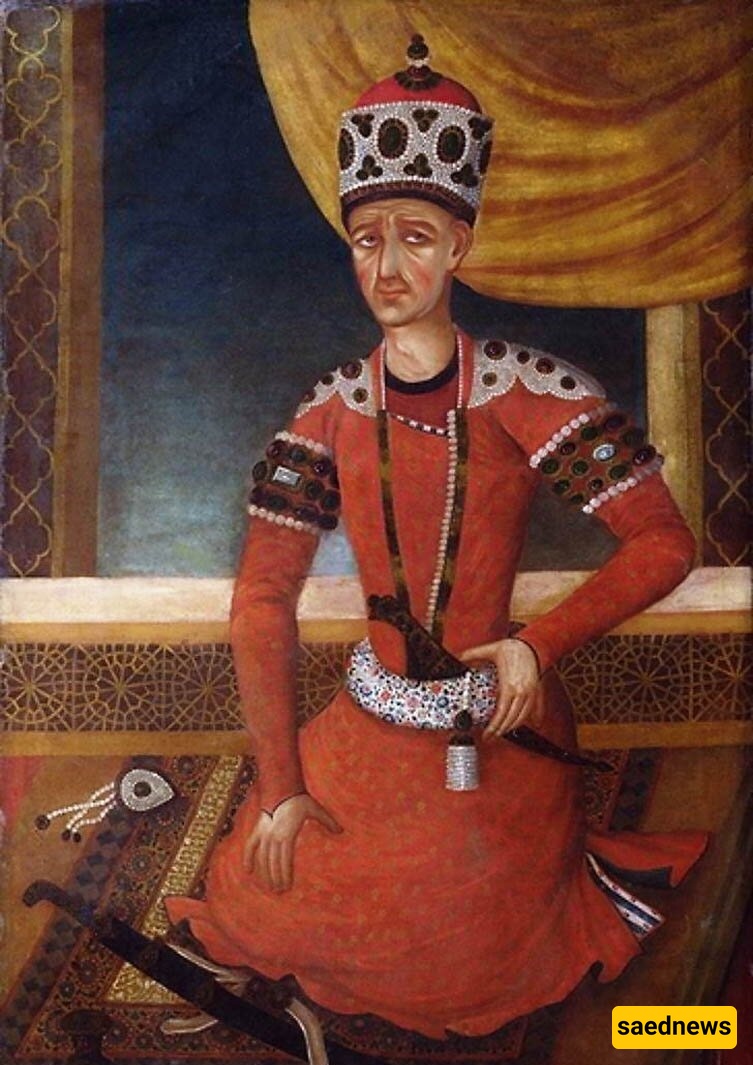
According to a report from Saed News Agency, citing Khabar Online, if one looks at the only known portrait of Mohammad Khan Qajar, unlike other Qajar kings who are typically depicted with long beards, masculine mustaches, and full faces, he appears gaunt, deeply wrinkled, and completely beardless. This raises questions about whether the Qajar king suffered from a disease or other physical condition.
Historical records state that this figure was a man who had been castrated (an “Agha”). History books mention that Agha Mohammad Khan was castrated at the age of eleven. It is said that due to his attractive appearance, he was caught by the eunuchs of the royal harem of Adil Shah, the ruler of Mashhad, while he was allegedly engaging in an affair with one of the ruler’s wives. On the order of Adil Shah—who was related to Mahmud Afghan, and in some accounts said to be his cousin—he was castrated.
Castration refers to the removal of the sexual glands. In Europe, Asia, India, and Africa, prisoners of war and sometimes soldiers were castrated to eliminate any desire to return to their families. Boys and men intended to serve in royal harems were also castrated and were called eunuchs. This practice was common in the Ottoman Empire, Europe, and Iran.
Historical sources state:
What is clear about Agha Mohammad Khan Qajar is that he was castrated before puberty. Although he reportedly had no sexual desire, he maintained a large harem. His calm and somewhat depressive temperament may have led him to read extensively, and he even carried his personal library with him during military campaigns. He was described as highly rigid, fanatical, extremely cruel, and merciless—traits that some historians speculate may have been influenced by repressed psychological and sexual trauma.
It is suggested that his castration may have contributed to the atrocities committed in the city of Kerman. Historical narratives describe the event as follows:
In the late summer of that year, Agha Mohammad Khan’s army approached Kerman. The people of Kerman believed that the Qajar forces would not survive the winter cold and would eventually be forced to retreat. As a result, every night people would stand on the rooftops, singing poems and insulting the Qajar king with harsh and offensive language, mocking him repeatedly. These insults further enraged him.
From outside the city gates, he repeatedly threatened the inhabitants that if they continued their behavior, he would launch a devastating attack unlike anything before. Agha Mohammad Khan became so enraged that after entering the city—reportedly due to betrayal by some of the guards—he ordered a tower to be built from the eyes of the people of Kerman in front of him.
By his command, all the men of the city were blinded, and twenty thousand pairs of eyes were presented to the Qajar ruler by his army (Sir Percy Sykes estimates the number at seventy thousand pairs). He also allowed his soldiers to assault the women of the city, resulting in widespread atrocities. Property was looted, and even children were taken into captivity.