SAEDNEWS: Striking images of a 2,000-year-old Parthian relic that challenged ideas about ancient art. This lion-shaped rhyton, with ruby-like eyes that seem to stare into the human soul, reflects the peak of ancient Iranian craftsmanship.
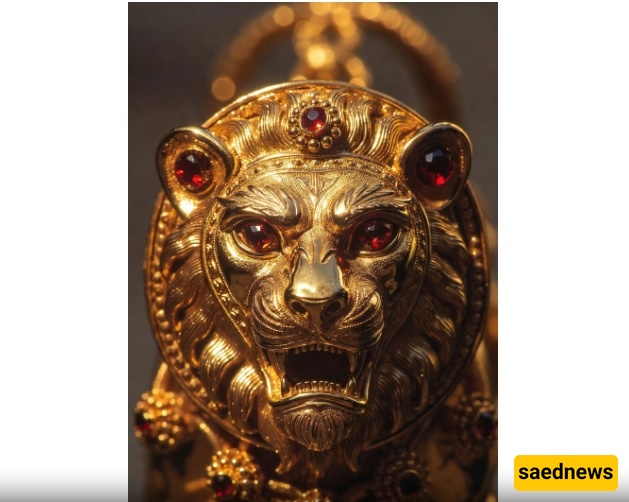
According to the History and Culture Service of Saed News, the têkok or lion-headed rhyton with inlaid gemstone eyes (such as garnet) is one of the masterpieces of ancient Iranian metalwork, particularly from the Achaemenid and Parthian periods. These vessels were used for drinking during special ceremonies and represent a sophisticated blend of advanced goldsmithing and casting techniques.
Eye Decoration: In many exquisite rhytons, the lion’s eye sockets were crafted in a hollow form and filled with precious or semi-precious stones such as garnet (red ruby), lapis lazuli, or colored glass, giving the animal a vivid and powerful appearance.
Structure: These rhytons typically consist of two main parts: a conical cup or funnel used for pouring liquids, and a frontal section (protome) shaped as the head and sometimes part of the body of a lion.
Artistic Detail: The lion’s mane, facial muscles, and body contours were rendered with exceptional precision, sometimes enhanced with fine gold wire techniques (filigree work).
Gold Rhyton in the Metropolitan Museum of Art: One of the most famous Achaemenid examples, approximately 17 cm in height, made of pure gold. It was discovered in Ecbatana (modern Hamadan) and demonstrates extraordinary soldering craftsmanship.
Lion Rhyton in the J. Paul Getty Museum: This piece dates to the late Achaemenid or early Parthian period and reflects Hellenistic (Seleucid) artistic influence in its floral ornamentation.
In ancient Iranian culture, the lion symbolized power, kingship, and the sun. Drinking from a rhyton shaped like a lion was believed to symbolically transfer the animal’s strength and courage to the drinker.