SAEDNEWS: This legendary Achaemenid ibex is more than an artwork; it reflects the power and brilliance of one of history’s greatest empires. Preserved in the Marble Palace Museum, it stands as a reminder that Iranian identity endures through time.
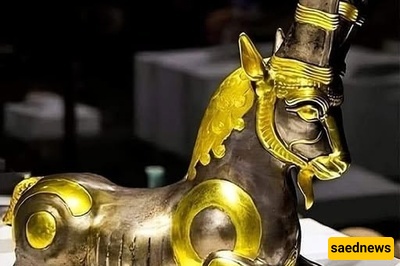
According to the history and culture service of Saed News Agency, among the halls of Tehran’s Marble Palace Museum lies a treasure that seems to have paused time at a golden moment: the Achaemenid mountain goat sculpture. Made of silver and adorned with gold, this artifact is a tangible embodiment of a glory that has survived from the depths of history and remains strikingly captivating today.
Far more than an ancient object, this piece is a precise narrative of power, faith, and the brilliance of a civilization that once governed the world’s largest empire. The Achaemenids, using precious metals, created an art form that served as a language of authority. In it, every delicate curve of the horns and every detail of the body carries meaning beyond mere beauty, transforming stone and metal into a lasting poetic tribute to identity and authenticity.
When examining the details of this masterpiece, one can sense a genius that transcends the boundaries of time and place. It represents a culture that even the passage of millennia has not diminished in pride or grandeur—a legacy that does not age or fade from relevance, but shines eternally like an everlasting sun. The precision in the design of this mythical goat reveals how Iranian civilization used art not merely for observation, but as a means of preserving its identity for eternity.
Contemplating this magnificence is a reminder of the footsteps that once shaped the world, and it tells us that Iran’s rich history cannot simply be recreated—it must be fully and sincerely narrated so that the world understands how deeply these roots are embedded in the soil of history.