SAEDNEWS: A cemetery dating back to the Achaemenid period, discovered in Semnan Province, offers an unprecedented and intimate glimpse into the lives and deaths of ordinary people in one of the largest empires of the ancient world.
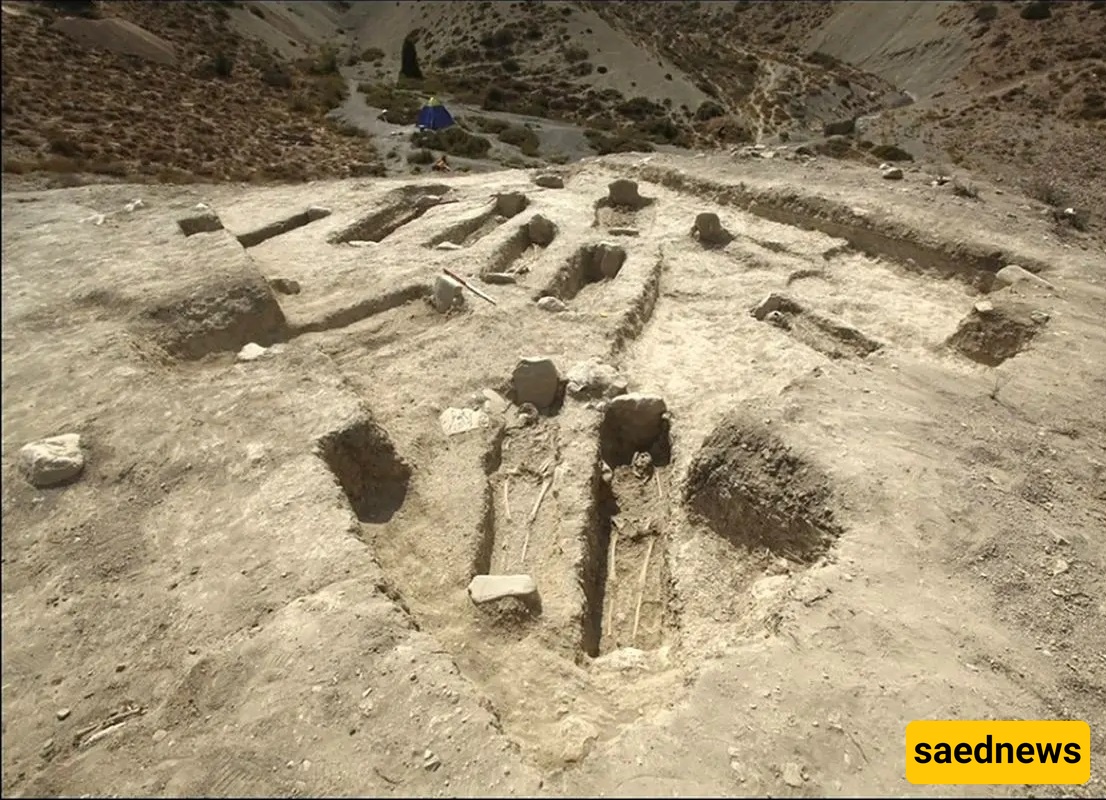
According to Saed News’ , the cemetery known as Mersin, excavated over the past decade near the village of Talajim in Semnan Province, occupies a striking natural setting: atop a rise overlooking the Sefidrud River, where the Alborz Mountains gradually fade into the vast expanse of the Dasht-e Kavir desert. This location was no accident; it likely served as a transit point, linking local communities to broader regional networks.
Archaeologists first encountered the site during salvage excavations prompted by the construction of a dam. What began as an emergency operation quickly became one of the most significant Achaemenid-period discoveries in the region.
Between 2014 and 2024, multiple excavation seasons uncovered 34 graves, many remarkably well-preserved. Radiocarbon dating indicates the cemetery was in use from 519 to 358 BCE—right in the heart of the Achaemenid era.
Yet the most striking feature is not merely its age but its remarkable uniformity.
At first glance, the burials appear highly standardized. Bodies were placed in rectangular pits, usually oriented northwest to southeast, in a supine position. Many graves included stones at the head and feet, while grave coverings ranged from simple earth to slabs or wooden planks.
This repetition suggests a cohesive society with shared burial practices, likely using the cemetery for only one or two generations.
But within this uniformity, subtle and deliberate differences emerge. Some graves contained no objects, while others were enriched with pottery, jewelry, or weapons. These variations were not random; they reflect social roles, gender identities, and individual status within the community.
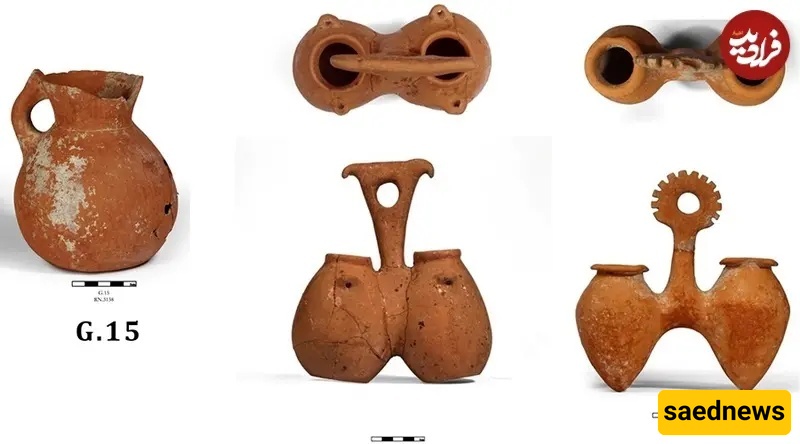
Pottery was nearly universal in graves containing objects, forming the core of the burial ritual. Bowls, jars, and spouted vessels recur consistently, creating a kind of “standard burial package.” Beyond this baseline, differences appear.
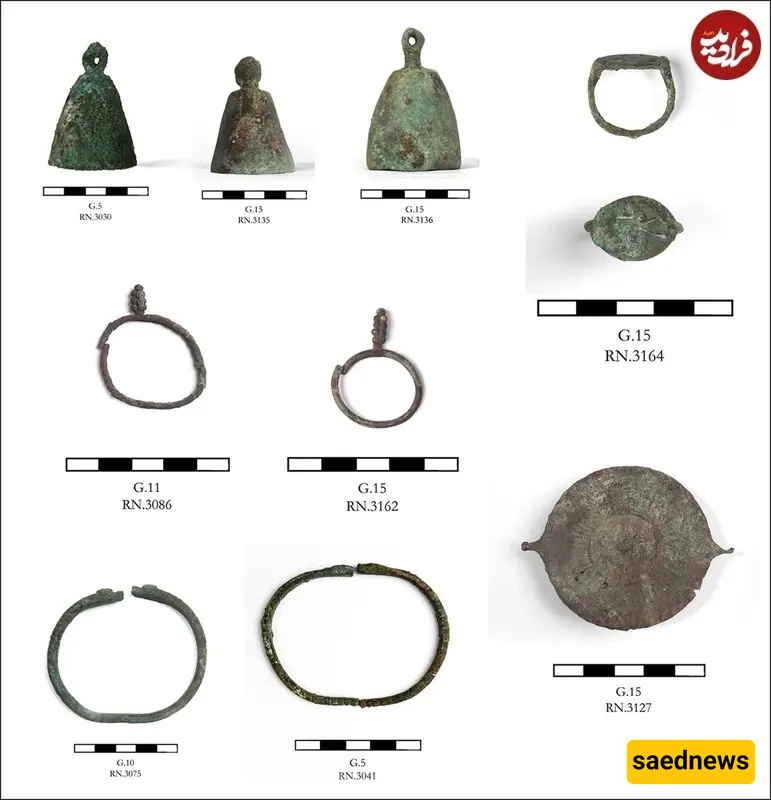
Personal adornments—bracelets, earrings, beads—appear in about one-third of the graves, while iron weapons such as blades and spearheads are found in roughly one-quarter. These items speak more to personal identity than wealth.
One intriguing detail is bracelets featuring animal heads. These designs echo the elite metalwork of the Achaemenids, but here they are cast in bronze rather than precious metals, indicating that local artisans reinterpreted imperial styles in their own material language—a cultural translation rather than mere imitation.
The cemetery also provides rare insight into how gender was represented in burial rituals. Graves identified as female are generally richer, containing jewelry, beads, and spindle whorls for spinning thread, whereas male graves tend to contain iron weapons and are comparatively simpler.
Yet one grave defies this pattern: the only burial containing horse tack belongs to a woman. This unexpected combination suggests that social roles did not always align with contemporary notions of gender, reflecting flexibility and fluidity in societal identity.
Despite the presence of weapons, the cemetery does not indicate a militarized society. Archaeologists interpret these items primarily as symbols of status or social role rather than evidence of warfare.
No clear settlement has been found nearby, and certain markers of elite Achaemenid material culture—such as triangular pottery—are absent, suggesting this community occupied an intermediate position in the imperial hierarchy: neither fully aristocratic nor isolated.
The true significance of the Mersin cemetery lies in its location—far from power centers like Persepolis or Pasargadae. Sites like this are particularly rare in the northeastern Achaemenid world.
Here, the archaeological record captures something often overlooked in imperial histories: the lived experience of ordinary people. The inhabitants of this cemetery appear to have selectively integrated elements of imperial culture—such as jewelry styles or certain objects—into local traditions. The result is a cultural landscape shaped not by imposition but by interaction and adaptation.