SAEDNEWS: A political analyst stated that the statement released by the heads of the three branches of government and several officials following the cancellation of this round of negotiations indicates that Mr. Araghchi is carrying Iran’s broad proposals, conditions, or red lines into the next round of talks.
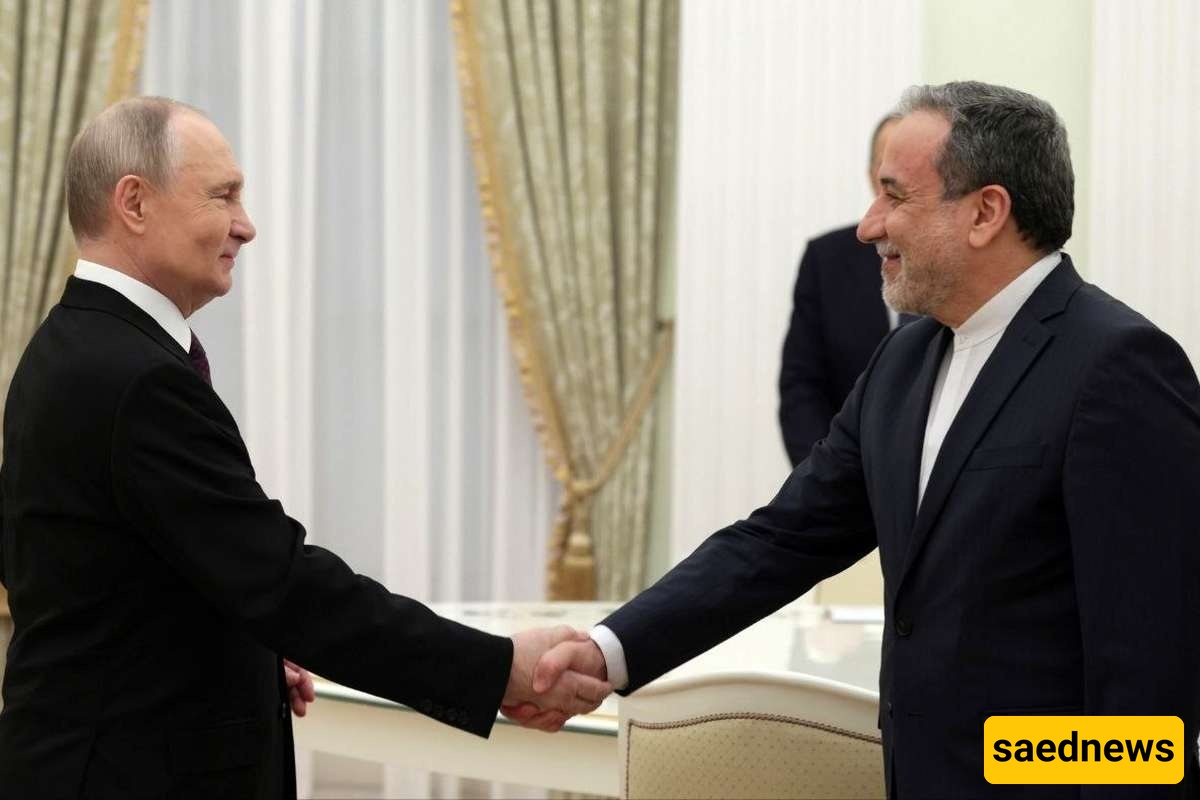
According to a report from SaedNews’ political desk, Rahman Ghahremanpour, a political analyst, shared his assessment of Iran’s foreign minister’s recent visits to Islamabad, Muscat, and Moscow.
He explained that these trips took place after the cancellation of the second round of Iran–U.S. negotiations in Islamabad. U.S. officials had claimed that internal disagreements within Iran led to the cancellation. However, a statement issued by the heads of Iran’s three branches of government and other officials suggests that Foreign Minister Abbas Araghchi was carrying comprehensive proposals, conditions, or red lines from Iran for a new round of negotiations. It appears that, this time, Iran’s leadership is united and collectively determined to clearly define its red lines.
Ghahremanpour added that Iran has made the continuation of negotiations conditional upon the lifting of the naval blockade and possibly the recognition of its right to uranium enrichment. These remain key points of contention between Iran and the United States. He believes Araghchi’s regional visits were intended both to convey this message to the U.S. and to seek support from regional countries or, at least, to clarify Iran’s positions to them.
Regarding the visit to Oman, Ghahremanpour noted that it may signal Iran’s intention to once again select Muscat as a mediator. This trip could relate both to the Strait of Hormuz issue and to Oman’s traditional mediating role between Iran and the United States. Given concerns raised Iran about Pakistan’s reliability, Iran may now view Oman as a safer and more trustworthy venue for negotiations, with fewer political and security complications.
He also pointed out that after Pakistani Army Chief Asim Munir’s visit to Tehran, some American media claimed he had relayed information about Iran’s internal affairs to Donald Trump, potentially influencing his decisions. This has increased doubts in Iran about Pakistan’s role as a mediator—especially considering Munir’s close ties with Trump and his political stance within Pakistan.
On the Moscow visit, Ghahremanpour emphasized that Russia and China are considered key partners of Iran in the international system. Iran frequently consults with them on major issues. He noted that even before the recent conflict, Ali Larijani had traveled to Moscow regarding Iran’s 60% enriched uranium. Russia has previously offered proposals in this area, and given that enrichment is one of the main disputes with the U.S., Moscow’s technical and political experience could help unlock the situation.
He added that Russia possesses significant stockpiles of enriched uranium and, under the supervision of the International Atomic Energy Agency, supplies it to other countries. This expertise may contribute to resolving current disagreements.
Addressing domestic political debates, including rumors about changes in Iran’s negotiating team and criticism from hardline factions, Ghahremanpour discussed the relationship between domestic and foreign policy. He explained that traditional theories—particularly the English School—argue that foreign policy should remain separate from domestic politics and be handled by professional diplomats as a matter of national consensus.
However, modern foreign policy analysis suggests that such separation is unrealistic. Domestic political competition inevitably influences foreign policy decisions. Political leaders often seek foreign policy achievements to strengthen their domestic standing.
He stressed that the main issue in Iran is the absence of a strong concept of collective or national interest in political competition. When discussions of consensus arise, they are often viewed as benefiting rival factions rather than the nation as a whole. As a result, different political groups tend to use foreign policy developments—whether related to the nuclear deal or recent conflicts—to weaken their opponents, rather than prioritizing national interests.
This dynamic, he warned, undermines foreign policy effectiveness. Even those who believe in the benefits of negotiation may hesitate to express their views due to intensified political polarization.
Finally, Ghahremanpour addressed the potential consequences of a U.S. naval blockade of Iran. While economic sanctions are well understood, naval blockades have produced mixed results historically. The concept of “gunboat diplomacy” has succeeded in some cases—such as U.S. actions toward Japan—but failed in others, depending on circumstances.
He noted that continued blockade could significantly impact the global economy, particularly oil imports from the Persian Gulf, with Asia and Europe likely to suffer the most. Iran’s own oil exports would also be affected, and even U.S. vessels in the region could face security risks. The situation surrounding the Strait of Hormuz is therefore highly complex and could lead to unintended escalation.
Regarding the possibility of renewed military conflict, he concluded that recent developments make such a scenario increasingly plausible. Both Iran’s preparations and the U.S. military posture in the region point in that direction—unless Donald Trump ultimately determines that a naval blockade is more effective than renewed war.