SAEDNEWS: The Pentagon is set to send thousands of additional troops to the Middle East in the coming days, as the Trump administration seeks to pressure Iran into accepting a deal that could bring an end to a weeks-long conflict in the region, U.S. officials said.
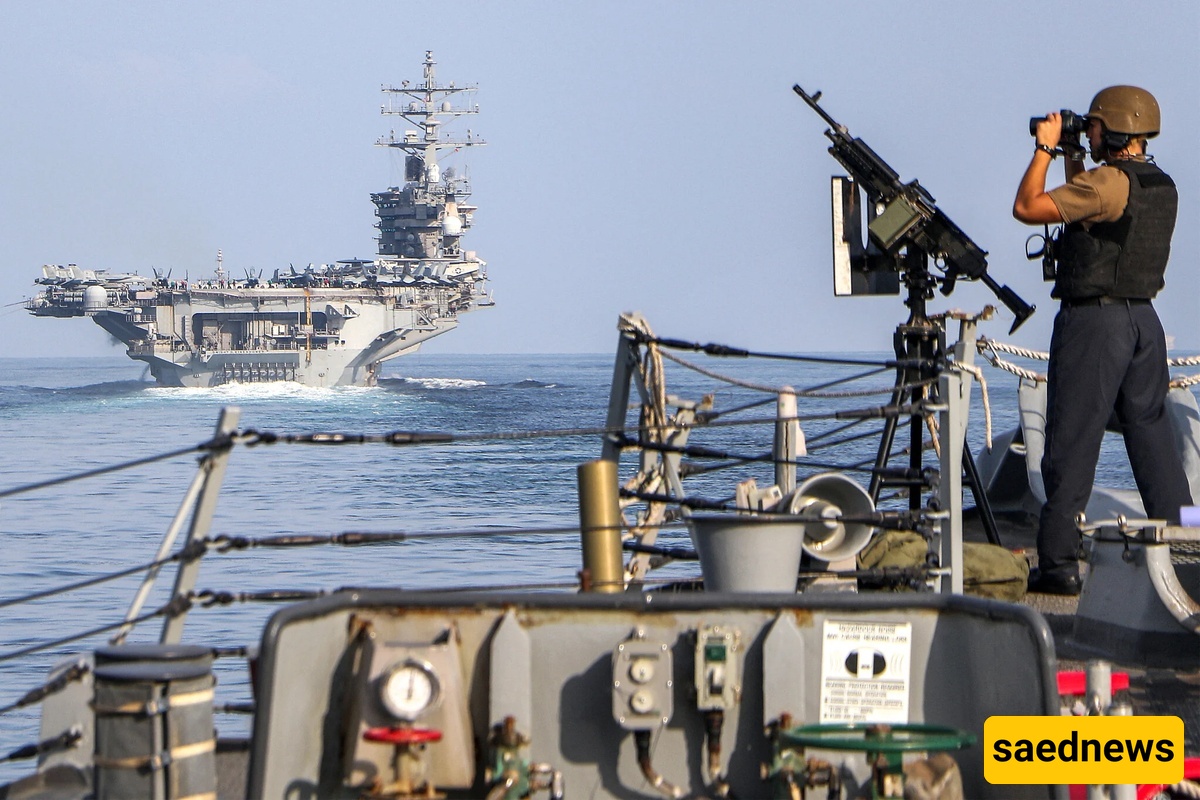
According to the political service of Saed News, The Washington Post reported:, current and former officials say the forces being deployed to the region include about 6,000 troops stationed aboard the aircraft carrier USS George H.W. Bush and several accompanying escort warships. An additional roughly 4,200 personnel are expected to arrive with the Boxer Amphibious Ready Group and its embarked Marine infantry unit, the 11th Marine Expeditionary Unit, by the end of the month.
This buildup is expected to peak alongside naval forces already present in the Middle East, just as a two-week ceasefire deadline expires on April 22. These forces will join approximately 50,000 personnel the Pentagon says are involved in operations aimed at countering Iran.
Former U.S. President Donald Trump, in an effort to pressure Tehran economically, announced a maritime blockade of Iranian ports. He has sought to force Iran to reopen the Strait of Hormuz—an essential route for global oil shipments from the Persian Gulf—and to halt its nuclear program in negotiations led by Vice President JD Vance. Talks reportedly stalled over the weekend but may resume later this week.
Trump also told Fox Business he believes a war involving Iran could end “very soon” and expects gasoline prices to fall back to pre-war levels ahead of the midterm elections, assuming the United States prevents Iran from acquiring nuclear weapons.
Iran responded by escalating threats to disrupt international trade. Major General Ali Abdollahi stated that Iran would block imports and exports through the Persian Gulf, the Gulf of Oman, and the Red Sea in response to the U.S. blockade, according to Tasnim News Agency.
The U.S. military buildup is intended to provide additional options for Central Command (CENTCOM), led by commander Brad Cooper, if negotiations fail. Retired Navy Admiral James Foggo said that having more assets increases operational flexibility, describing the buildup as reserve capacity in case the situation deteriorates.
White House Press Secretary Caroline Leavitt stated that Trump is keeping all options open and that U.S. “red lines” have been clearly communicated if Iran does not abandon its nuclear ambitions. She added that pressure from the blockade would likely increase Iran’s willingness to negotiate.
Pentagon and CENTCOM officials declined to comment.
The deployment would place three U.S. carrier strike groups in the region, including the USS Abraham Lincoln and USS Gerald R. Ford, alongside the USS George H.W. Bush. Amphibious and Marine units, including the 11th Marine Expeditionary Unit aboard the Boxer group, are also en route.
Officials said special boarding teams drawn from Navy SEALs, Marines, or Coast Guard units may be used to intercept vessels suspected of supporting Iran. While no such incidents had occurred in the first 24 hours, officials reported that several commercial ships were detained and later returned without incident.
However, officials warned that boarding operations are highly risky, with potential resistance from crews or attacks using drones or fast boats. Trump has publicly warned that Iranian naval assets or small vessels approaching U.S. forces could be destroyed.
Defense analysts, including retired Admiral James Foggo, suggested that prolonged pressure on Iran’s oil exports through the Strait of Hormuz could significantly strain its economy, though it could also raise global fuel prices.
Former Marine and ex-CIA officer Mick Mulroy noted that a prolonged blockade would be highly difficult for U.S. forces, and that any land-based operations would carry even greater risks. He expressed hope for a diplomatic agreement that could suspend Iran’s nuclear program for 10 to 20 years, warning that military scenarios would likely involve casualties.