SAEDNEWS: Iran Gains Upper Hand in Economic Confrontation with Donald Trump as Strait of Hormuz Blockade Raises Global Economic and Security Risks
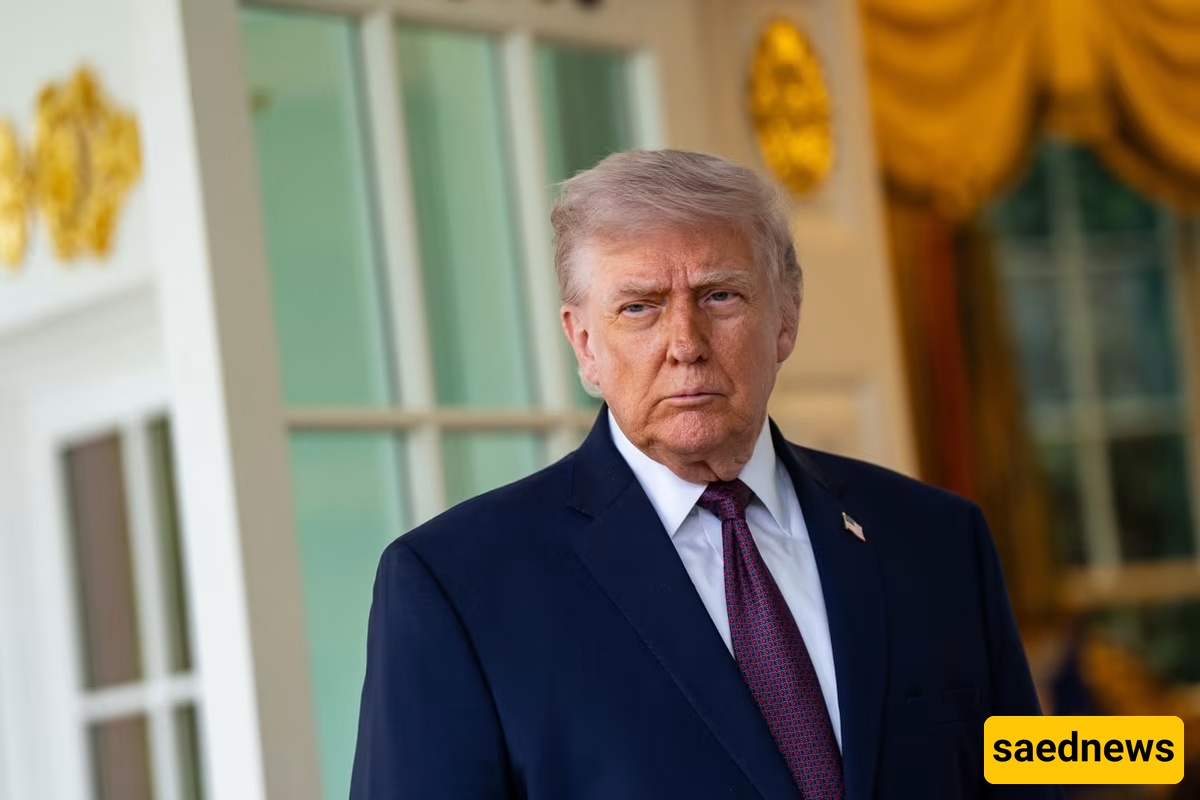
According to Saednews Political Desk Report, According to CNN, Iran appears to hold the upper hand in a high-stakes economic confrontation as it awaits a potential de-escalation with U.S. President Donald Trump.
An unusual and unprecedented blockade-like pressure by Trump on the Strait of Hormuz this week signals that the United States does not intend to back down. However, this new U.S. move carries significant risks—far beyond the economic sphere.
If the blockade continues, it could inflict severe damage on both the Iranian and U.S. economies, creating what analysts describe as “guaranteed economic pain for both sides.” The United States, with its $31 trillion economy, is betting it can withstand the pressure better than Iran.
Yet implementing such a blockade would require substantial military force and would expose U.S. troops to heightened danger—something Washington has largely avoided so far by relying primarily on air operations. Deploying naval forces to intercept and seize vessels in the region increases the risk of American casualties.
Public opposition in the United States to prolonged conflict remains strong, particularly regarding two consequences: rising gasoline prices and military casualties. Analysts note that President Trump appears to be betting Iran will back down first, but Iran has already endured years of economic pressure and shows little indication of retreating in what it considers an existential confrontation.
Halima Croft, Head of Global Commodity Strategy at RBC Capital Markets and a former CIA analyst, said: “The oil brinkmanship continues to escalate. I am not sure either side is willing to turn the wheel and avoid a collision.”
The blockade could remove up to 1.8 million barrels per day of Iranian crude from global markets—about 2% of global daily demand. While not catastrophic on its own, the disruption becomes more significant given broader supply risks.
Oil markets have already reacted sharply. Brent crude rose as much as 8% in a single day earlier this week, pushing gasoline prices higher at a time when they are already at four-year highs. Prices saw their largest monthly surge since 2022, adding political pressure in the United States.
President Trump acknowledged on Fox Business that elevated gasoline prices may persist through the upcoming midterm elections, saying they could remain at current levels or rise slightly.
However, a successful blockade would be far more damaging for Iran, potentially cutting off its primary source of revenue. Experts note that Iran’s alternative export capacity is limited, with pipeline constraints restricting its ability to bypass maritime routes.
Despite sanctions and economic strain, Iran has developed resilience and alternative mechanisms to sustain exports. Following a temporary easing of restrictions, Iranian oil production increased significantly, and large volumes of crude remain stored at sea, making enforcement of a full blockade difficult.
Analysts suggest that while the U.S. Navy could intercept some shipments, fully stopping Iranian oil flows would be challenging. Iran has also historically developed methods to circumvent sanctions, including blending crude with other countries’ exports and using covert shipping routes.
As one analyst noted, “These measures are unlikely to create meaningful short-term disruption.”
The situation also raises the risk of broader regional conflict. Military confrontation in the Strait of Hormuz could trigger retaliatory actions across the Middle East, including potential attacks on energy infrastructure and increased activity by Iran-aligned groups such as the Houthis and militias in Iraq.
Trump has reportedly warned that any Iranian vessels approaching the blockade could be destroyed, while Iranian officials have threatened retaliation against U.S. naval forces attempting to restrict access to its ports.
Analysts warn that Iran has previously demonstrated its ability to target shipping and regional infrastructure using fast boats, drones, and proxy forces, suggesting the risk of escalation is real rather than rhetorical.
Experts remain divided on which side would relent first. Some argue that time favors Iran due to its experience under sanctions and its established adaptation strategies, while others note that sustained naval pressure could eventually constrain its exports.
However, there is a growing consensus that neither side appears willing to back down, raising the risk of prolonged instability in one of the world’s most critical energy corridors.