SAEDNEWS: From the outside, pressure decreases; from the inside, doubt is injected. This is a classic hybrid war.
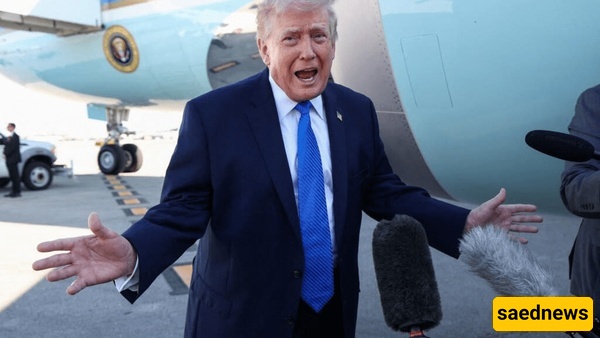
According to Saed News political desk, Fars reported: everything began with a tweet. There was no explosion, no rising column of smoke—yet markets paused, channels rapidly circulated the news, and analyses suddenly shifted direction. A short but precise sentence; as if, instead of targeting a military base on a map, someone had aimed at something else entirely: the minds and public opinion of Iranians. This is no longer a battlefield of land and sky—the battlefield is narrative.
Just days earlier, the equation was different. Military pressure had reached its limit, threats had grown repetitive, and the decisive blow that was supposed to break Iran’s deterrence never materialized. From that very point, the game changed. When superiority could not be achieved in the hard battlefield, the scenario moved to the soft arena—carefully designed, timed, and purposeful.
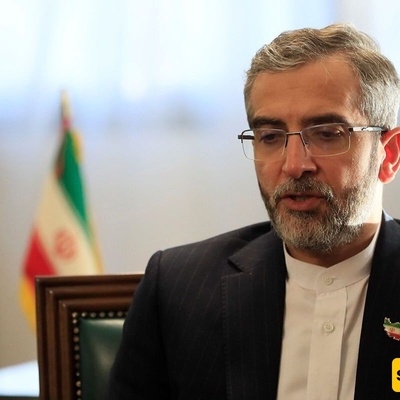
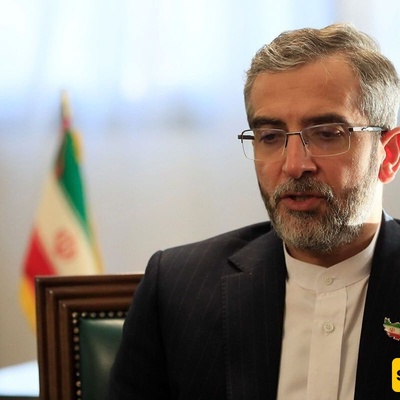
The puzzle began with a claim: negotiations are underway. Names were added to give it weight, including that of Mr. Ghalibaf. The news had neither confirmation nor evidence, but it had one critical feature: the ability to create division. Within hours, speculation emerged—Is there a rift at the top? Is Tehran retreating? Are the میدان (field) and diplomacy diverging?
This is the knot that must be untangled. The reality is that when an adversary cannot dismantle military or economic structures, it turns to political infrastructure—the space where decisions are made, trust is built, and cohesion takes shape. The goal is not to change a single decision, but to cast doubt on the entire decision-making process.
Here, the strategy resembled that of a commander in hybrid warfare: instead of firing at the front line, the strike targeted the communication center. The tweet was not merely a statement—it was an attack on cohesion. Its intended effects were simultaneous: shake the markets, engage the media, and most importantly, push minds toward a dangerous binary—resistance or negotiation—when in fact this is a false dichotomy.
A closer look reveals clear coordination: the battlefield and diplomacy are not in conflict but operate in alignment. Pressure in the field strengthens the language of diplomacy, while diplomacy enables the field to consolidate its gains. This synergy is precisely what the adversary cannot tolerate. If it holds, no gap remains for infiltration. Therefore, the link must be broken—at the level of narrative.
Rumors, therefore, target the most sensitive points: individuals, potential disagreements, and perceived divisions between institutions. The aim is not necessarily to make people believe a lie—but to make them uncertain. That doubt alone does the job.
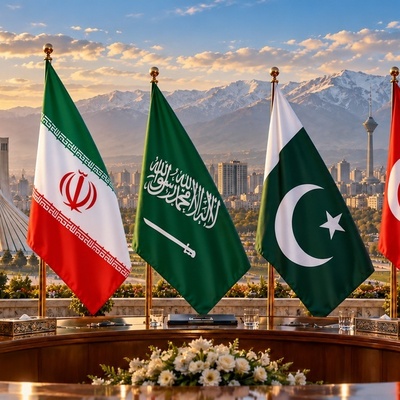
Timing is key. This operation was activated precisely when the opposing side failed to achieve results in the real battlefield. The 48-hour threats led nowhere, military options remained unused, and even some regional actors reportedly began urging Iran to de-escalate. This indicates that the real situation, contrary to media portrayals, was stabilizing in Iran’s favor. At that moment, an alternative narrative emerged to obscure this reality.
Pressure decreases externally, while doubt is injected internally—this is classic hybrid warfare. In such conditions, the main danger is not the rumor itself, but the reaction to it. When attention shifts inward instead of toward the origin of the operation, the adversary achieves its goal: internal attrition without cost.
Meanwhile, the reality remains different. Cohesion at the decision-making level persists, the overarching path has not changed, and a firm rejection of negotiations at this stage has been declared. This suggests that what was presented as “news” was less a fact and more a tool—a tool of pressure.
So what should be done?
The answer, despite the complexity of the scene, is simple but vital: recognize direction. Understand where the shot came from and where it is meant to land. With correct diagnosis, many such operations neutralize themselves, as their effectiveness depends on misreaction. Every word matters. Every analysis can either complete the adversary’s puzzle or disrupt it. The war continues—it has only changed form. And perhaps the most important point is this: the target is no longer territory or infrastructure—it is our perception of reality.
In this arena, the adversary operates with its familiar traits—deception, distortion, and manipulation. It does not deny truth outright; instead, it fragments it, reshapes it, and reconstructs something that resembles truth but ultimately misleads the mind. It whispers rather than shouts, disguises lies as analysis, and leads minds into confusion and doubt.
The objective is clear: create division, produce flawed analysis, and ultimately push society toward passivity. Passivity means stagnation instead of movement, inward conflict instead of outward focus, and erosion of resolve. The adversary understands that if this state is achieved, costly real-world confrontation becomes unnecessary.
However, such operations are neither random nor constant. They emerge precisely when the opposing side is stable and cohesive—when political structures align, decision-making bodies synchronize, and trust flows. At that point, the adversary identifies its target: breaking that very cohesion.
Despite the complexity, the path is not entirely obscured. There remains a clear line grounded in principles that are not swayed by emotional waves or media atmospheres. Central among these principles is unity—not merely as advice, but as a strategic necessity.
Unity here means conscious awareness: understanding that every word can either deepen division or strengthen cohesion. It is about choosing deliberately which side to stand on.
Ultimately, everything comes down to one point: correctly reading the situation. The adversary will continue its methods—deception, distortion, and psychological pressure. That is its nature. But what determines the outcome is how this is perceived and responded to. If the situation is understood correctly, such psychological operations not only fail but can reinforce internal cohesion. If not, the result is exactly what the adversary seeks: division, passivity, and loss of focus.
The shift from harsh threats to calls for negotiation signals a loss of initiative on the opposing side. When control of the battlefield weakens, the fallback is psychological warfare—daily narratives, targeted misinformation, and shifting claims designed to distract and divide.
Yet the central reality remains: internal coordination between field operations and diplomacy continues, not in opposition but in alignment. This cohesion, if preserved, renders external pressure ineffective.
This is a critical warning. The battlefield has shifted—from military confrontation to narrative construction. The weapon is rumor; the target is the mind. And in such a war, the most important task is preserving what is under attack: national unity.
If unity holds, these operations collapse against reality. If it fractures, the adversary moves closer to its goal—without firing a single shot.