SAEDNEWS: Oman’s Foreign Minister, in an interview on Friday evening, made claims regarding the contents of a potential agreement between Iran and the United States, stating that he believes there is consensus on these matters.
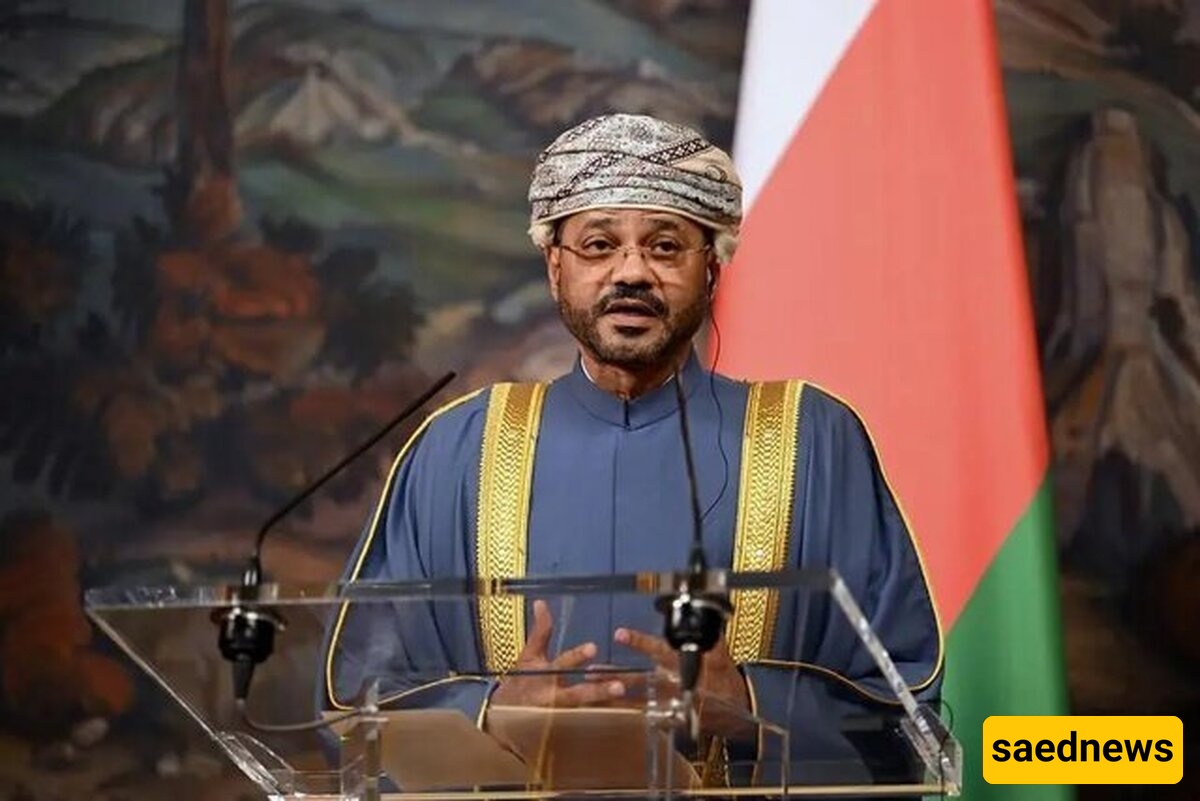
According to the political section of Saed News, Oman's Foreign Minister, Badr Al Busaidi, who traveled to Washington following his mediation between Iran and the United States in indirect nuclear talks, shared his perspectives on several areas of agreement.
Speaking on the program Face the Nation, Al Busaidi described achieving a “peace agreement” with Iran as attainable and emphasized that, if diplomacy is allowed to take its course, the issue can be resolved. He added that if the goal of the negotiations is to ensure Iran never obtains nuclear weapons, this objective is already being addressed through the current talks.
The Omani foreign minister claimed that the negotiations have reached a “significant breakthrough” that had never been achieved before. He explained: “In my view, the most important outcome is the agreement that Iran will never have the nuclear material necessary to build a bomb.”
Al Busaidi continued: “This is a major accomplishment that was absent in the previous agreement negotiated during the Obama era. It’s something entirely new.” He added: “This makes the debate over enrichment less critical, because we are talking about zero stockpiling. This is extremely important. If you cannot store enriched material, there is no pathway to making a bomb—regardless of whether enrichment continues or not.”
Regarding Iran’s current uranium stockpiles, he noted: “The agreement is that existing enriched uranium will be diluted to the lowest possible level and converted into fuel to make it irreversible.” He concluded, “From my perspective, we have reached an agreement on this.”
Badr Al Busaidi’s remarks open a window onto a potentially transformative and positive development in regional and international diplomacy. Beyond a routine diplomatic report, they signal a way past long-standing deadlocks. Key takeaways include:
1. Achieving a “magic formula” for peace
By describing a peace agreement as “within reach,” the Omani foreign minister signals that talks have moved beyond initial tension-reduction toward a structured framework. His assertion that “if diplomacy is given space, the issue will be resolved” reflects serious political will on both sides, which Oman, as mediator, has witnessed firsthand.
2. Crossing red lines with an “unprecedented breakthrough”
Al Busaidi’s reference to “zero stockpiling” and converting enriched uranium into irreversible fuel represents a true win-win scenario:
For Iran: Its right to enrichment and nuclear knowledge is preserved.
For the West: Concerns about weaponization are fully addressed due to the absence of stockpiles.
3. Neutralizing technical excuses
By eliminating stockpiling, debates over enrichment levels—a long-standing technical sticking point—lose much of their security significance, creatively removing a key obstacle that had stalled negotiations for years.
4. Turning a threat into an opportunity
The agreement to dilute and convert uranium stockpiles channels Iran’s nuclear activity toward a peaceful, industrial phase. This allows the country to utilize its scientific advancements in energy production without facing the full cost of sanctions or political pressure.
5. Enhancing Oman’s credibility as a mediator
Oman has long been recognized as a reliable and discreet mediator. The foreign minister’s detailed discussion of a “major breakthrough” suggests that the backchannel agreements have reached advanced and actionable stages.
Conclusion
Al Busaidi’s statements mark a potential end to an era of “ambiguity and threat” and the beginning of one of “transparency and cooperation.” The emphasis on practical solutions, such as zero stockpiling, indicates that both sides are focused on problem-solving rather than political rhetoric. This constructive approach could bring significant political and economic stability to the region.