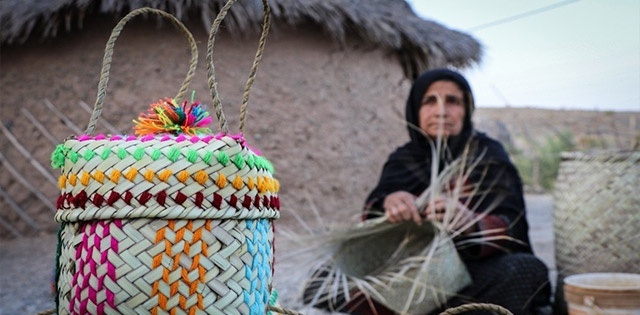
SAEDNEWS: With its several-thousand-year-old history, Hasir Bafi, or mat weaving, is one of the oldest handicrafts. It is not known when and where this craft was first invented.
Archaeologists have discovered traces of mat weaving on plaster pieces dating back six thousand years. The oldest known piece of Hasir in Iran comes from Shahdad in Kerman Province.
Mat weaving—threading thin reeds through cotton yarns—has remained largely unchanged from ancient Egypt to the present day. Among its forms, Booria Bafi, a type of mat weaving, continues to play a vital role in Iranian culture, traditionally serving as roof coverings for clay houses. Hasir Bafi, which also includes Bambo Bafi and Morvar Bafi, is an ancient craft that uses leaves, stems, and other plant materials, making it one of humanity’s earliest handmade products, dating back to the dawn of sedentary life and agriculture.
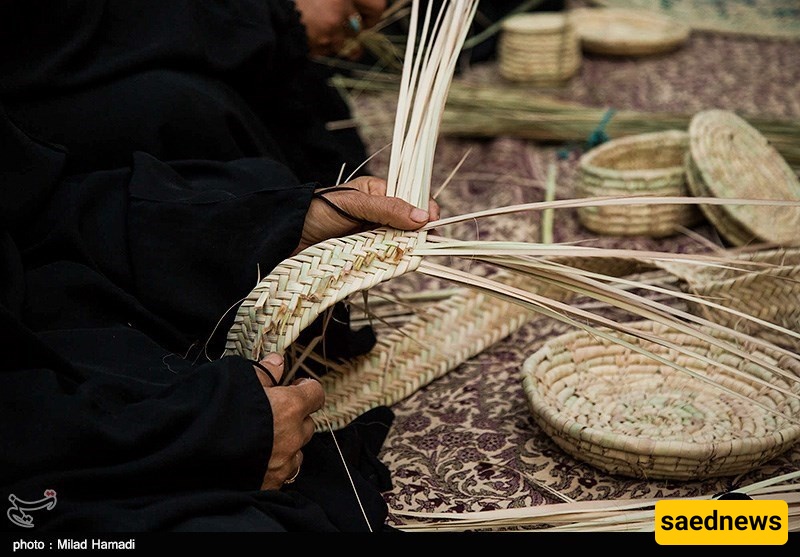
The materials used for Hasir vary across Iran’s diverse geography: leaflets from date palms, wild date palms (Porak), stems of reeds from Khuzestan’s tropical lagoons, the cold regions around Zarivar Lake, Anzali Lagoon, lands surrounding Hamun Lake, and wheat stems from Zanjan and Azerbaijan provinces, among others.
Despite its complexity, the tools for Hasir Bafi are remarkably simple: sickles, files, scissors, needles, and stitching awls. This traditional art is still practiced in provinces including Sistan and Baluchestan, Khuzestan, Kurdistan, Hormozgan, Bushehr, Kerman, Yazd, Fars, Mazandaran, Gilan, and Tehran.
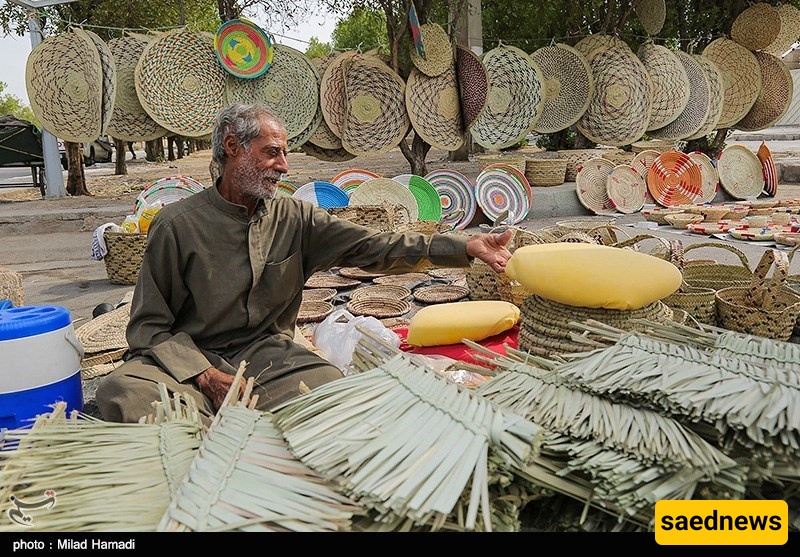
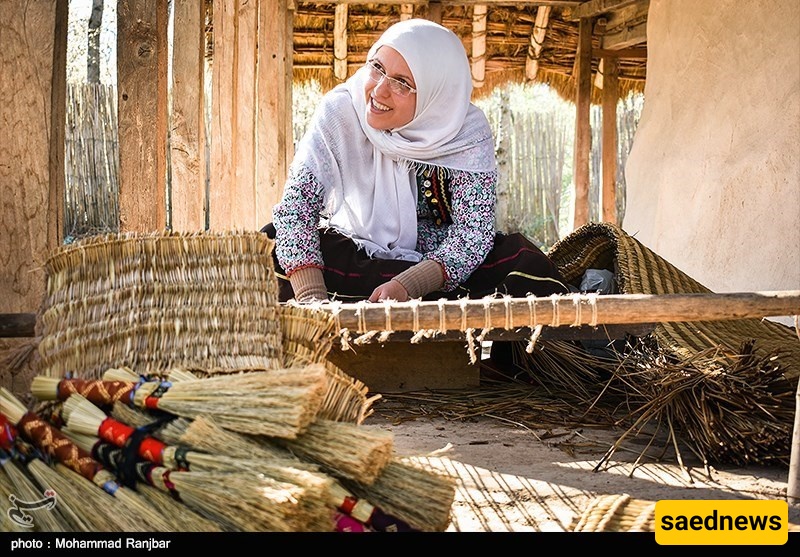
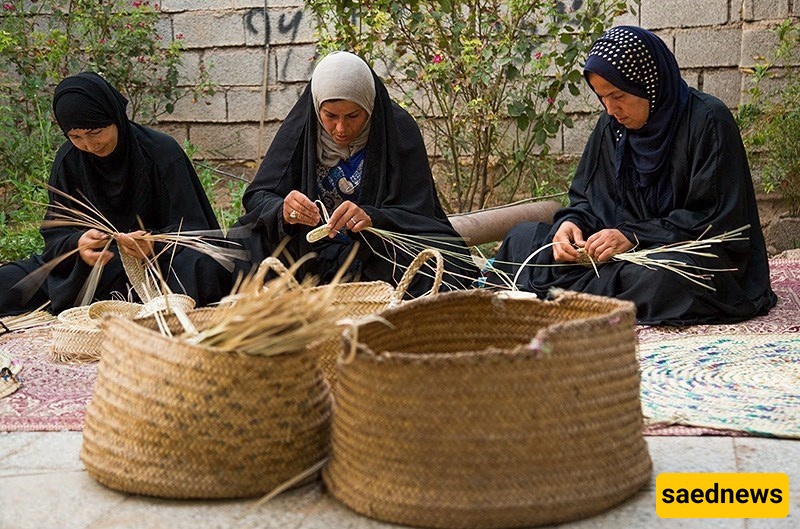
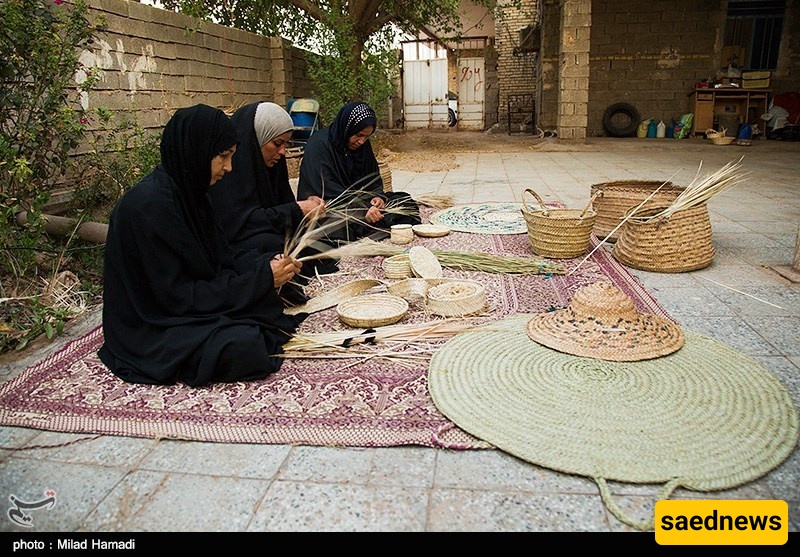
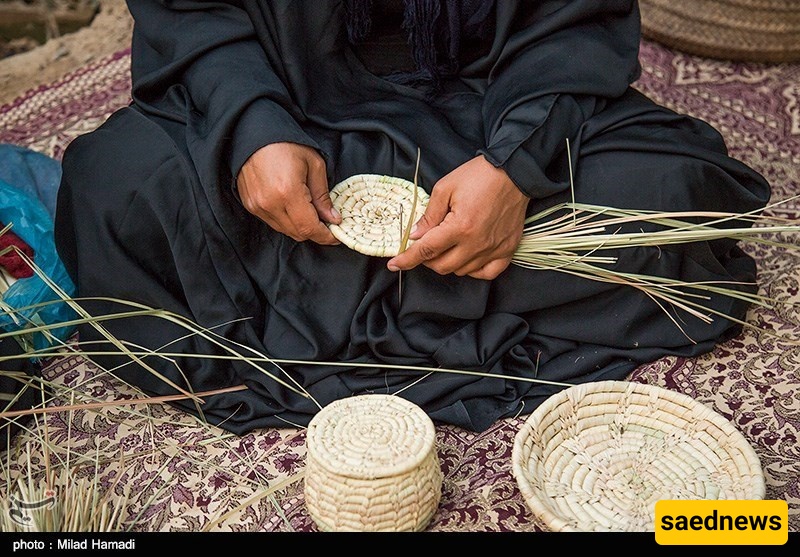
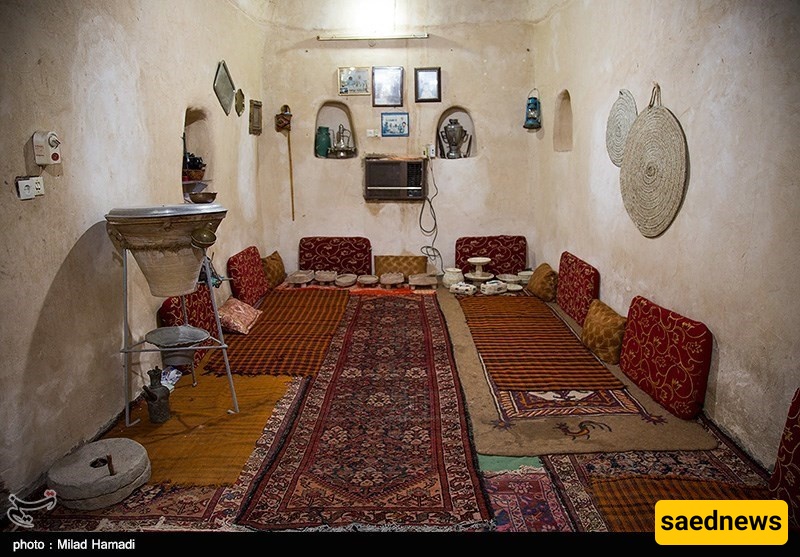
In Khuzestan, Hasir Bafi thrives in basket weaving, mat weaving, and Booria Bafi. The weaving techniques are generally categorized as twisted or netted. Today, Hasir products can be found anywhere in Khuzestan where leaves, reeds, and stems are available, with cities like Abadan, Shadegan, and Dasht-e Azadegan serving as central hubs.
These woven mats have versatile uses: window shutters in urban buildings, tent coverings for nomads, and even nests for chickens and goats. Booria mats, woven from date palm leaflets or local reeds, are used both as floor coverings and as roof layers in traditional houses, arranged over beams and topped with building materials. Notably, Booria Bafi is a craft traditionally performed by men.
By exploring Hasir Bafi, visitors gain a window into Iran’s rich cultural heritage, experiencing an ancient craft that blends practicality, artistry, and centuries of tradition in one woven masterpiece.