Saed News: A new study by researchers at the University of Oxford suggests that the answer may lie in two evolutionary changes that transformed our species more than any other: walking on two legs and the unusually large growth of the brain.
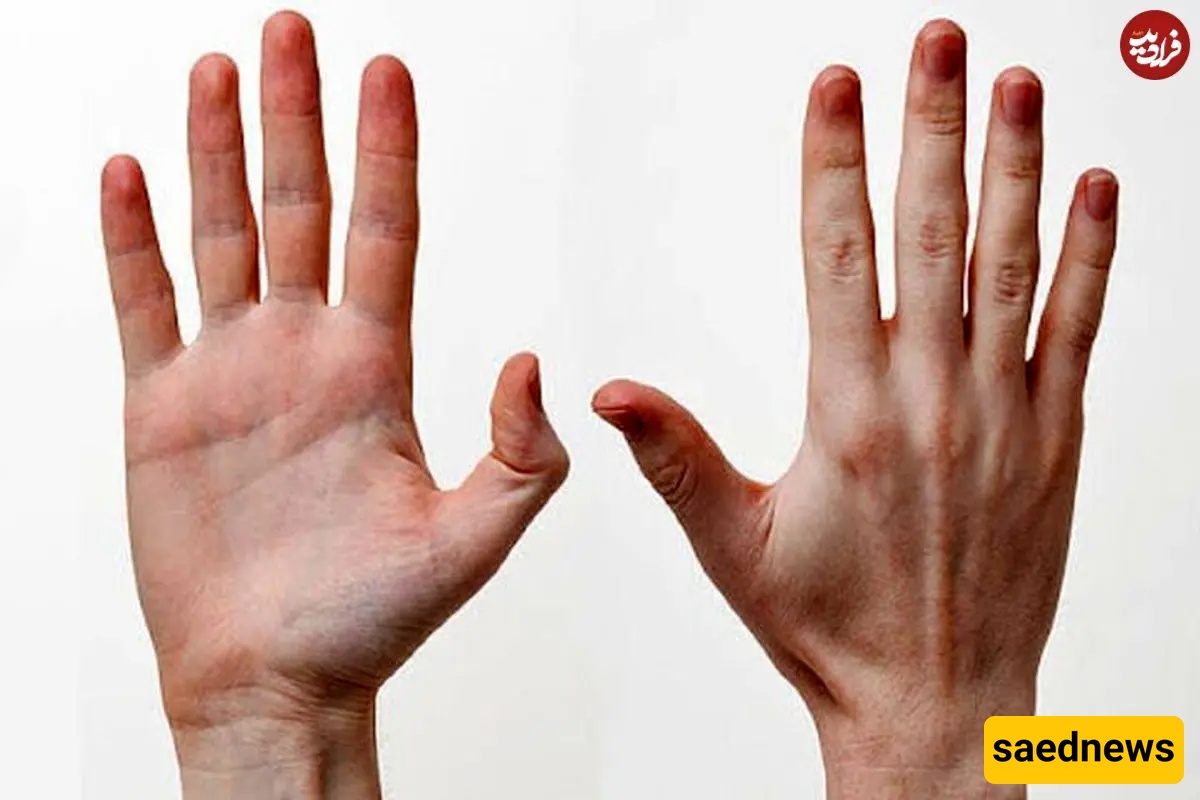
According to SAEDNEWS, About 9 out of 10 people on Earth are right-handed. This strange imbalance exists across cultures, continents, and history itself. Scientists have spent decades trying to explain it through brain structure, genetics, tool use, or even culture, but the question of why most people are right-handed has remained stubbornly unanswered—until now, it seems.
A new study by researchers at the University of Oxford suggests that the answer may lie in two evolutionary changes that transformed our species more than any other: walking on two legs and the unusually large growth of the brain.
According to IAI, the study’s authors argue that humans became right-handed through a gradual evolutionary process linked to bipedalism and brain expansion, rather than a single genetic change.
Thomas E. Puschel, one of the study’s authors and a professor of anthropology at the University of Oxford, says: “This is the first study to test multiple main hypotheses for human right-handedness within a single framework.”
The research team analyzed data on handedness from 2,025 individuals across 41 species of apes and great apes. Using Bayesian evolutionary models, they tested major explanations for handedness, including diet, tool use, social structure, habitat, body size, and brain size.
The study measured handedness using something called the Mean Handedness Index (MHI), where positive values indicate a stronger right-handed preference. Humans scored 0.76, significantly higher than other primates, most of which clustered near zero, meaning they showed little consistent population-wide preference.
The authors note that humans show a clear right-handed bias (MHI = 0.76).
Humans were the only species showing a strong and statistically significant right-handed bias. However, when researchers added two specific variables to their models, the picture changed. These were brain size and the “intermembral index,” which compares arm length to leg length. Humans have unusually long legs relative to their arms, a hallmark of bipedal walking. When these two factors were included, humans no longer appeared evolutionarily exceptional.
Researchers propose a two-step explanation for human handedness. First, handedness emerged. As early human ancestors began walking upright, their hands were freed from locomotion. This likely created new evolutionary pressure for specialized hand use in tasks such as carrying objects, manipulating tools, or gesturing. Humans may have adopted this pattern in a different direction. Bipedalism enabled more specialized use of one hand over the other.
The second stage began with brain expansion. Using evolutionary models, researchers estimated handedness in extinct human relatives. Early humans likely had weaker right-handed preferences.
However, this bias strengthened in species such as Homo erectus and Neanderthals before reaching its modern peak in Homo sapiens. The authors add: “With the emergence of the genus Homo and especially with the onset of marked encephalization (brain enlargement), we observe a significant increase in Mean Handedness Index values.”
The study suggests that human right-handedness may have deep roots in the same evolutionary changes that reshaped how our ancestors moved and interacted with the world.
However, several important questions remain unanswered. For example, scientists still do not know why left-handedness persisted throughout human evolution or how much culture has contributed to reinforcing right-handed dominance over time.
The authors note: “Humans are unique in showing cumulative cultural evolution, which may reinforce or stabilize behavioral asymmetries.”
Researchers also say future studies could examine whether similar preferences evolved in animals such as parrots or kangaroos through comparable evolutionary pressures, potentially revealing whether handed-like behavior emerged independently across different branches of the animal kingdom.