Saed News: The newly discovered tomb of Liu He, one of the emperors of the Han Dynasty, with its vast collection of valuable treasures, reflects the historical grandeur and wealth of this dynasty.
According to SAEDNEWS, citing Bitooteh, Liu He ruled during the Yuanping period. He was originally the ruler of Changyi and was later appointed emperor in 74 BC by the minister Huo Guang. However, just 27 days after ascending the throne, he was deposed based on 1,127 documented instances of misconduct cited in impeachment records used by palace officials.
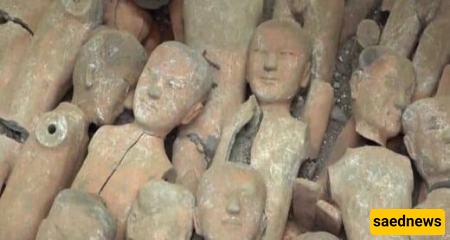
After his removal, Liu He was exiled and lived as an ordinary person. He died in exile in 59 BC, in his early thirties, leaving behind 22 children from 16 wives. He was buried in the Marquis of Haihun tomb located in northern Jiangxi. Archaeologists discovered this tomb in 2011 along with 20,000 other artifacts.
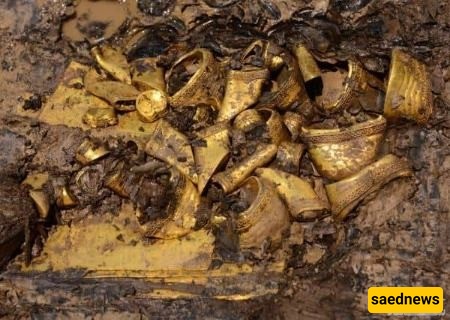
His tomb is considered one of the best-preserved sites from the Western Han period (206 BC–24 AD), notable for its integrity, unique layout, and sacrificial system. It contains the largest number of artifacts discovered in such tombs, including gold, bronze, jade objects, and a fragmented screen found in the main chamber. Two portraits were also recovered, one of which is believed to be the oldest known portrait of Confucius ever found in China.
In addition, more than 5,000 bamboo slips containing Confucian classics were uncovered, indicating the spread of his teachings over 2,000 years ago. Among them was the Qi version of The Analects of Confucius, which had been lost for 1,800 years and was identified using infrared scanning.
Although his dismissal may have stripped Liu He of his imperial glory, the artifacts discovered in his tomb tell a different story, revealing the magnificence of the Han Dynasty. Notably, the gold items found represent the largest collection ever discovered in Han tombs, demonstrating the dynasty’s wealth. His tomb is also the only imperial burial site located south of the Yangtze River.
Furthermore, five well-preserved horse-drawn chariots and four sacrificial horses were discovered, indicating the high status of the tomb’s owner. Liu He was the grandson of Emperor Wu of Han, whose reign marked the beginning of a prosperous era for the Han Dynasty, comparable by historians to the rise of the Qin Dynasty.