SAEDNEWS: Several traditional U.S. allies have declined requests from former President Donald Trump to join a proposed military coalition aimed at securing shipping routes in the Strait of Hormuz, highlighting an unusual level of disagreement between Washington and its partners.
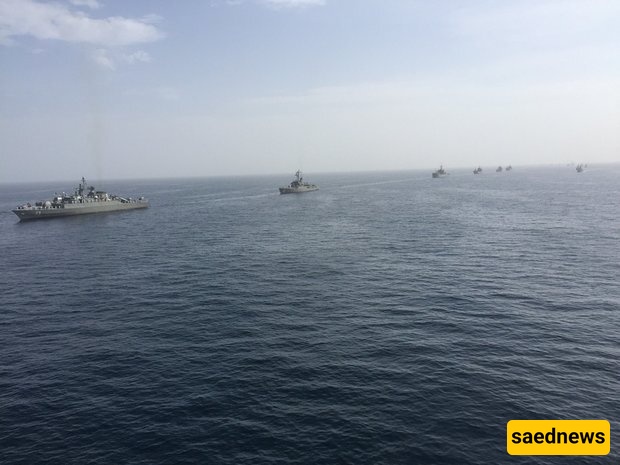
According to SAEDNEWS, Trump recently called on countries to contribute naval forces to the Persian Gulf to escort international vessels and ensure maritime security in the strategic waterway. The appeal followed escalating tensions after the United States and Israel launched military actions against Iran.
However, a number of countries have signaled reluctance to participate.
Australia announced that it would not deploy warships to the Strait of Hormuz despite Trump’s request. Japan also said it has no plans to send naval forces to the region. Japan’s prime minister stated that Tokyo currently has no intention of dispatching naval units to the Middle East to accompany commercial vessels, a position echoed by the country’s defense minister.
France has also rejected the proposal, while the United Kingdom and South Korea have emphasized the need for de‑escalation in the region and have not provided clear commitments to join the initiative. China has similarly called for reducing tensions.
Germany likewise indicated opposition to NATO involvement in securing the strait. Speaking ahead of a meeting of European Union foreign ministers in Brussels, German Foreign Minister Johann Wadephul said Berlin does not believe NATO should assume responsibility for the Strait of Hormuz.
His remarks came after Trump warned NATO members that they could face a “very bad future” if they refused to cooperate in reopening the waterway.
According to a report by the news outlet Axios, citing four informed sources, Trump hopes to form an international coalition to reopen the Strait of Hormuz and aims to announce progress on the initiative later this week.
U.S. officials have also indicated that Trump is reportedly considering the possibility of seizing Iran’s key oil reserves on Kharg Island, a move that would likely require a ground military operation.
Iranian officials have responded with warnings of their own. Rear Admiral Alireza Tangsiri, commander of the Islamic Revolutionary Guard Corps Navy, said that any vessel seeking to pass through the strait must obtain permission from Iran.
Iran’s Foreign Minister Abbas Araghchi also stated in a recent interview that the strait is not completely closed but that restrictions currently apply to American ships and those belonging to allied countries involved in the conflict.
“The Strait of Hormuz is closed only to American vessels and their allies because they are fighting us,” Araghchi said, adding that ships from other countries are still able to pass through, although some have avoided the route due to security concerns.
Meanwhile, CNN reported that Gulf Arab states are worried about the possibility that their critical energy infrastructure could become targets in a broader regional conflict. As a result, many are hesitant to fully align themselves with Washington’s approach toward Iran.
Analysts say the reluctance among both Western and regional partners reflects a growing and potentially unprecedented divide between the United States and some of its long‑standing allies as the conflict intensifies.