SAEDNEWS: Every day, the world generates more electronic waste—and now, a new method has emerged to extract the valuable metals hidden in devices like laptops and smartphones.
According to SaedNews’ society desk, an exciting and innovative program is underway at the Royal Mint in South Wales, near Cardiff—a facility renowned worldwide for producing billions of coins for more than 30 countries. The initiative? A method to reclaim precious metals from electronic waste.
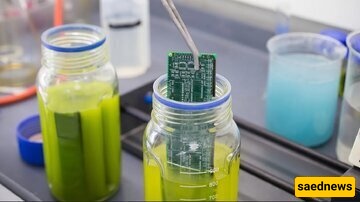
To enter the facility, visitors must wear safety goggles and a white lab coat. I passed through a small lab, where Healy Messenger, a chemist specializing in sustainable precious metals, explained why nothing in the lab is labeled: “Everything here is mysterious.” As he poured a glowing green solution into a one-liter glass flask containing multiple circuit boards, he repeated the phrase.
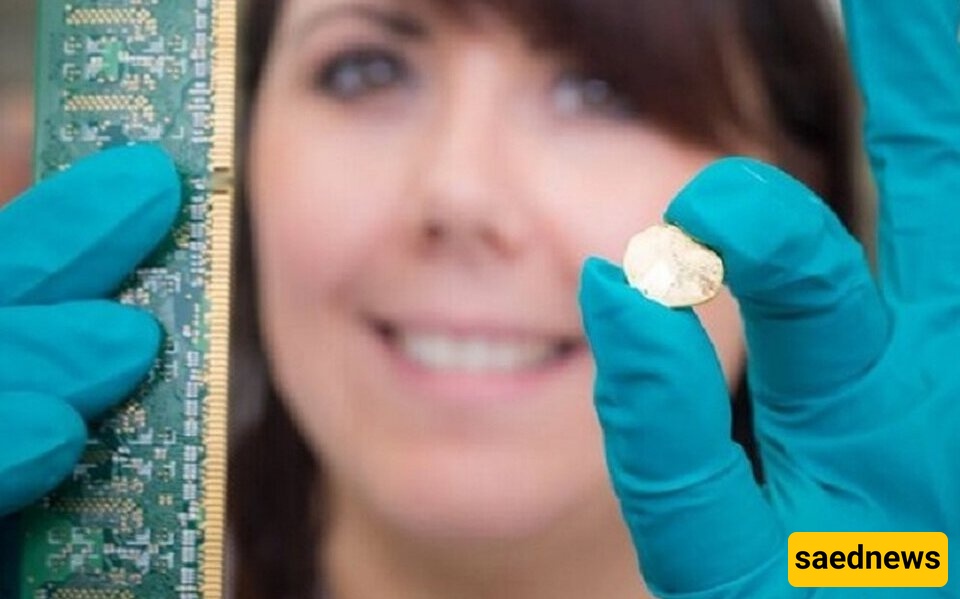
Messenger and a team of chemists, in collaboration with the Canadian startup Excir, have invented and patented a process that reportedly recovers 99% of the gold from obsolete laptops and old mobile phones. Later this year, the Royal Mint will open a new multi-million-pound facility capable of processing 90 tons of electronic boards weekly once fully operational—recovering hundreds of kilograms of gold annually.
As the luminescent mixture began to bubble in the flask, Messenger twisted the lid shut and placed it on a rolling device to stir the contents. In just four minutes, all the gold dissolved into the liquid.
“All of this happens at room temperature and very quickly,” Messenger explained. He added that the chemical solution can be reused up to 20 times, increasing the gold concentration each time.
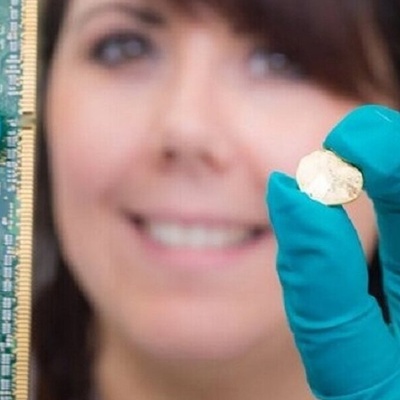
When a second mysterious solution is added, the gold re-solidifies. The resulting powder is filtered, melted in a furnace, and transformed into fine gold particles. These can become necklaces, earrings, or cufflinks—but the real value of this precious metal lies in the simplicity of the chemical process itself.
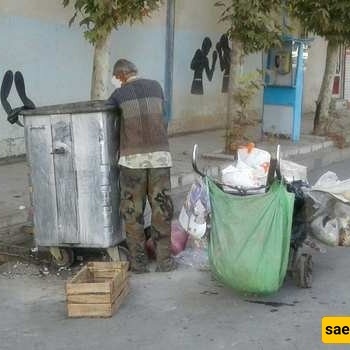
Electronic waste, also called E-Waste or WEEE, is the fastest-growing waste stream in the world. The United Nations Environment Programme estimates that 50 million tons of e-waste are generated annually—more than the combined weight of all commercial airplanes ever built. Yet only 20% is officially recycled; most is discarded, buried, or incinerated.
With the global demand for portable and fast electronic devices on the rise, e-waste is increasing. In 2019, the World Economic Forum projected that by 2050, annual e-waste generation will more than double to over 120 million tons.
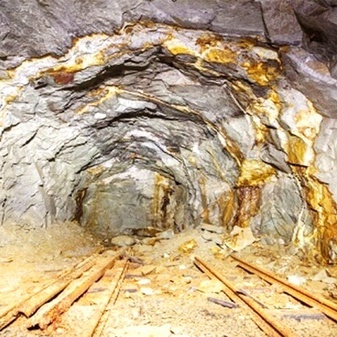
Gold, like all critical raw materials, is finite. Roughly 7% of the world’s gold is locked in unused electronics. Typically, gold extraction involves sending equipment to the EU or Asia, where e-waste is melted at very high temperatures in a raw, carbon-intensive process.
Messenger said: “We want to recover as many valuable metals as possible from what is currently considered waste. Our focus is to do it sustainably in the UK, using a room-temperature process that generates far fewer greenhouse gases than smelting.”
Mark Lowry, the Royal Mint’s commercial director, added: “If we produce waste, we must take responsibility for separating it ourselves rather than shipping it abroad. Building local e-waste supply chains around recycling facilities reduces long transport routes by sea, air, and road. We’re negotiating globally to spread this technology.”
I donned an orange hard hat, a protective vest, and sturdy black boots to tour the new processing plant. Dozens of large garbage bags stacked around the 3,000-square-meter facility were filled with colorful electronic boards—salvaged from laptops and phones and delivered by a network of 50 e-waste suppliers nationwide.
Incoming boards are inspected and placed into a large silver funnel that guides them toward a multicolored processing machine. Tony Baker, the innovation director, explained that mechanical separation breaks the boards apart, retaining non-gold components on one side while digitally identifying gold-containing parts—such as USB ports—which are transferred to a 500-liter reactor. Here, the “magic green solution” is added on a much larger scale, extracting gold and producing gold pieces.
Initially, most non-gold material is separated, so the chemical process focuses only on gold-containing parts. Materials used by the Royal Mint come from circuit boards rather than entire laptops or phones, and once gold is extracted, the remaining non-gold components are sent back into the supply chain to avoid waste. According to Lowry, gold content varies from 60 to 900 parts per million, depending on the raw material.
Currently, the Royal Mint’s recycling plant focuses on gold recovery at a relatively small scale. The long-term goal is to expand the system to recover other precious metals from circuit boards.
Beyond gold, residual plastics and fiberglass generate energy during processing, which is converted to synthetic gas and used in the local power plant—helping supply 70% of the site’s electricity through renewable sources, including solar, wind, heat, combined power, and battery storage.
If Excir can recover more valuable metals and the system operates on local renewable energy, this approach could be replicated at similar recycling centers nationwide—reclaiming e-waste before it is exported. Lowry emphasizes that the biggest challenge is ensuring the e-waste supply chain grows responsibly, prioritizing recycling and encouraging participation.
Baker noted: “The earlier we separate materials in the process, the less effort is required, resulting in a purer final product with higher value. We need these precious metals—they’re essential resources—but it’s not just about extracting gold and discarding the rest. We aim to recycle every component of these boards.”
After gold extraction, the remaining boards and other non-gold e-waste are shredded and sorted. Copper, steel, and tin go to specialized recyclers, while the remaining parts are recycled. The filter used in the chemical process can be reused up to 20 times. The ultimate goal: zero waste.
Urban mining—recovering precious metals from discarded electronics—is a growing trend, and a vast supply of e-waste exists. Kit Hinton, head of international relations at Material Focus, noted that British households alone hold around 527 million small old electronics, including 31 million laptops weighing roughly 190,000 tons. In the U.S., discarded phones contain an average of $60 million worth of gold and silver annually.
Experts agree that metals are highly recyclable, particularly given the environmental cost of extracting small amounts of gold from ore.
The American jewelry brand Ring Bear currently uses recycled gold. Pandora aims to use recycled gold and silver by 2025. Notably, for the Tokyo Olympics, gold, silver, and bronze medals were made from materials recovered from six million mobile phones and nearly 72,000 tons of e-waste.
Hinton added that 155,000 tons of small electronics are discarded annually. He hopes e-waste recycling becomes the norm, acknowledging it won’t solve all problems but emphasizing the absurdity of wasting materials needed for future green technology.
He believes innovation is critical—especially for small electrical items like chargers, plugs, and copper cables. “The Royal Mint’s performance is outstanding, but gold is just a small fraction of the materials in these devices.”
The process requires significant investment in research and development. As awareness of the environmental and social impacts of traditional mining grows, green technologies can drive economic growth in precious metals.
Few pioneers focus on speeding up this process. The U.S. company New Gold Recovery is developing a non-toxic method to extract gold from e-waste. U.K.-based N2S uses a “green wash” to recover materials from IT equipment, recycling 129 tons of copper in 2021.
Similar efforts are underway in New Zealand and Australia.
According to Material Focus, advanced recovery technology could reclaim $16.6 million worth of critical raw materials annually in the UK. Circuit boards are seen as a key resource for reducing waste and recovering precious metals like gold, silver, and palladium.
The Royal Mint’s secret chemical formula can also recover metals beyond gold, such as palladium, silver, and copper—potentially producing products beyond jewelry. Lowry welcomes the idea of recovering critical materials for use in electronics and renewable energy manufacturing.
“We need a lot of copper, and 20% of circuit boards contain it,” he said. “Alongside gold, we’re focusing on extracting copper, which plays a key role in various applications, giving us access to another valuable resource.”
Baker concluded: “We aim to expand the idea that one person’s waste can be another’s raw material.”