SAEDNEWS: An archaeology professor at the University of Padua in Italy has announced the discovery of a lipstick vial in a region of Iran, pushing back the known use of this cosmetic tool by more than 2,000 years.
According to Saed News’ social affairs service, historians believe that the ancient Jiroft or Halil-Rud civilization of Iran corresponds to the “Marhashi” civilization mentioned in Mesopotamian cuneiform texts, dating back to the third millennium BCE.
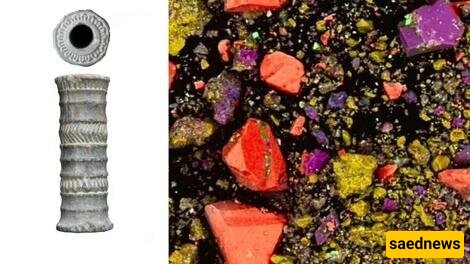
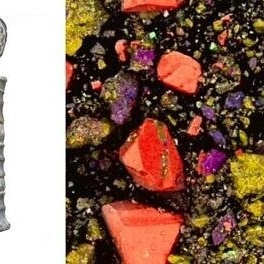
Archaeologists working in Jiroft, located in Iran’s Kerman Province, recently uncovered a small cylindrical vial containing what appears to be a dark red cosmetic resembling modern lipstick. Chemical analysis of the residue inside the vial, made of the mineral clinochlore, suggests that Iranians may have been the first people in the Bronze Age to invent lipstick.
Using X-ray radiation and mass spectrometry, researchers determined that the vial’s contents were composed of minerals such as hematite, manganite, brunite, galena, and anglesite, mixed with plant waxes and other organic materials. According to the scientists, the composition closely resembles contemporary lipstick recipes.
Similar prehistoric stone vials containing cosmetic substances have been found in Egypt, Anatolia, Iran, and Mesopotamia. However, researchers say the complexity of early Iranian cosmetic formulations may have been influenced by the availability of diverse metal ores on Iran’s central plateau, indicating that people at the time were capable of producing sophisticated cosmetic products.
Professor Massimo Vidale, commenting on the composition, said, “This material alone reveals extensive detail and requires deep knowledge of chemical processing and the behavior of iron and manganese compounds, the use of finely ground quartz as a shine enhancer, and oils, waxes, and possibly urea as moisturizers.”
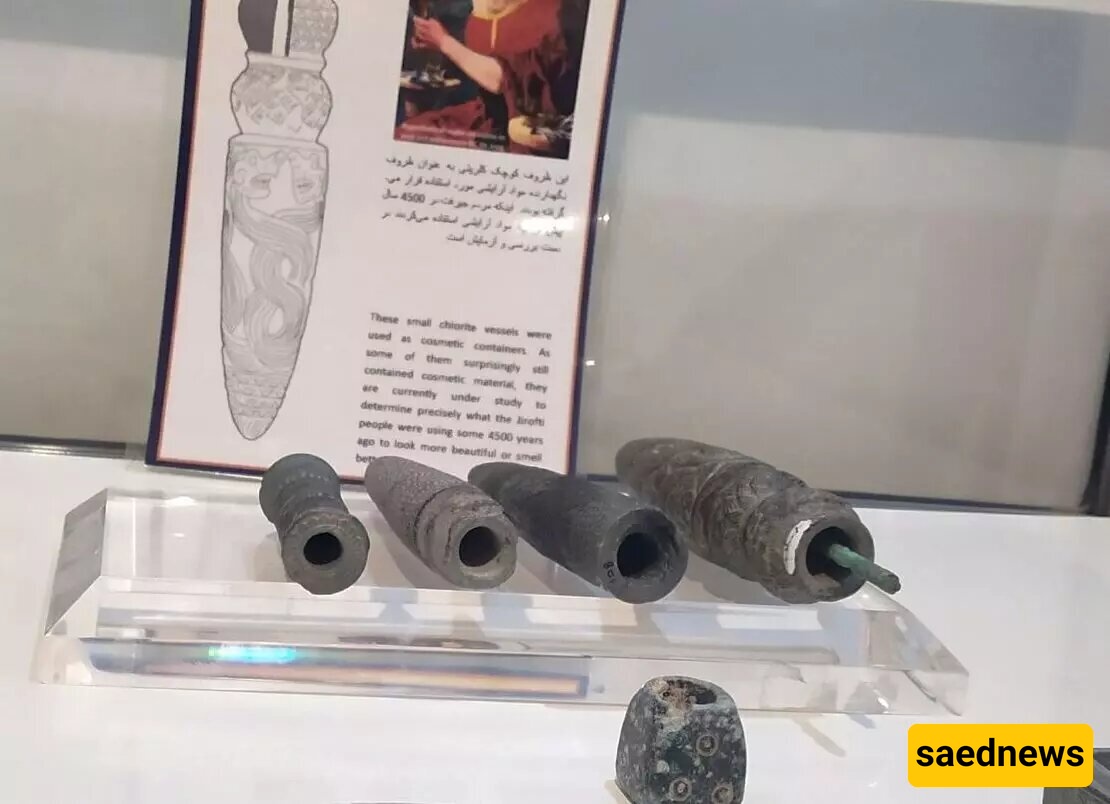
He added, “All of this would have required specialized knowledge that could only have been applied in centralized workshops managed by skilled experts.”
In early urban societies with social hierarchies, burying cosmetic containers with the deceased signified the person’s importance even after death. Researchers suggest that including cosmetics in graves may indicate a belief in life after death, where individuals would continue to exist in the same worldly appearance.
Yet, due to events following Iran’s Islamic Revolution, thousands of graves at the ancient Jiroft site were destroyed, making it impossible to accurately determine social strata or differentiate between them. After 1978, the site was abandoned, attracting looters and local people. In what has been described as one of the largest archaeological plunders in the world, three cemeteries were so extensively looted that archaeologists later could not find “even a single bone” in the graves. Looting of artifacts at the site continues to this day.
Professor Massimo Vidale, an archaeology professor at the University of Padua and co-author of the study, said, “Until now, we had discovered evidence of ancient eye cosmetics—such as eyeliner and eyeshadow—dating back 4,000 to 5,000 years, but we knew nothing about lipstick from this period.”
According to the study, most cosmetics identified in the Ancient Near East and Egypt were light-colored or white compounds used as eyeshadow, typically made from lead-based eyeliners or black kohl.
The newly identified dark red pigments for lips, however, had not been documented previously, and researchers were unaware of their use in ancient cosmetic products.
Professor Vidale described these lipsticks as largely a “historical secret,” adding, “We don’t even know if they were used by women or men, as the cemeteries of this civilization were collectively looted and destroyed in 2000–2001.”
Historians maintain that the Jiroft or Halil-Rud civilization represents the ancient “Marhashi” civilization mentioned in Mesopotamian texts, dating to the third millennium BCE.
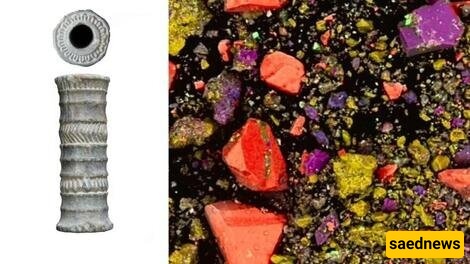
The small cylindrical vial containing lipstick was previously recovered by Iranian police among other valuable stone and copper artifacts. Researchers described the clinochlore vial as greenish and compact, similar to hundreds of other clinochlore samples found in Jiroft.
Its slender shape and thin walls suggest that ancient people had similar daily practices to ours. The design allowed someone to hold a copper or bronze mirror in one hand while applying lipstick with the other.
Historians also note that the discovery may reflect a form of “modernity” in the Bronze Age, demonstrating luxury and status among the emerging elite.
Previously, the oldest known use of lipstick had been traced to Ancient Egypt. The earliest depiction of a woman applying red pigment to her lips appears on a papyrus painted around 1200–1300 BCE.
The new discovery, however, pushes back the history of lipstick use. Professor Vidale said, “As far as we know, Bronze Age Iran provides the earliest evidence of this innovation.”
The results of this research have been published in the scientific journal Scientific Reports.






![Stunning Egyptian Mummy Discovered in a Deep Shaft [Photos]](https://en.saednews.com/storage/files/post/da5ff13e-ffb9-4eeb-8060-158b1abd4d66-8jOmCIYb1qCRkUAu/1x1-image.jpg)
![Discovery of a 3,000-Year-Old Hall Belonging to a Legendary King in Germany [Photo]](https://en.saednews.com/storage/files/post/e145410f-17aa-4f5b-842a-87973626121b-Kkmt4wgZI3SYWVfq/1x1-image.jpg)