SAEDNEWS: Archaeology suggests that writing was invented in Sumer between 3000 and 4000 BCE. But a tablet unearthed in 1993 in Dispilio, northern Greece, could upend everything we thought we knew about the history of script and writing.
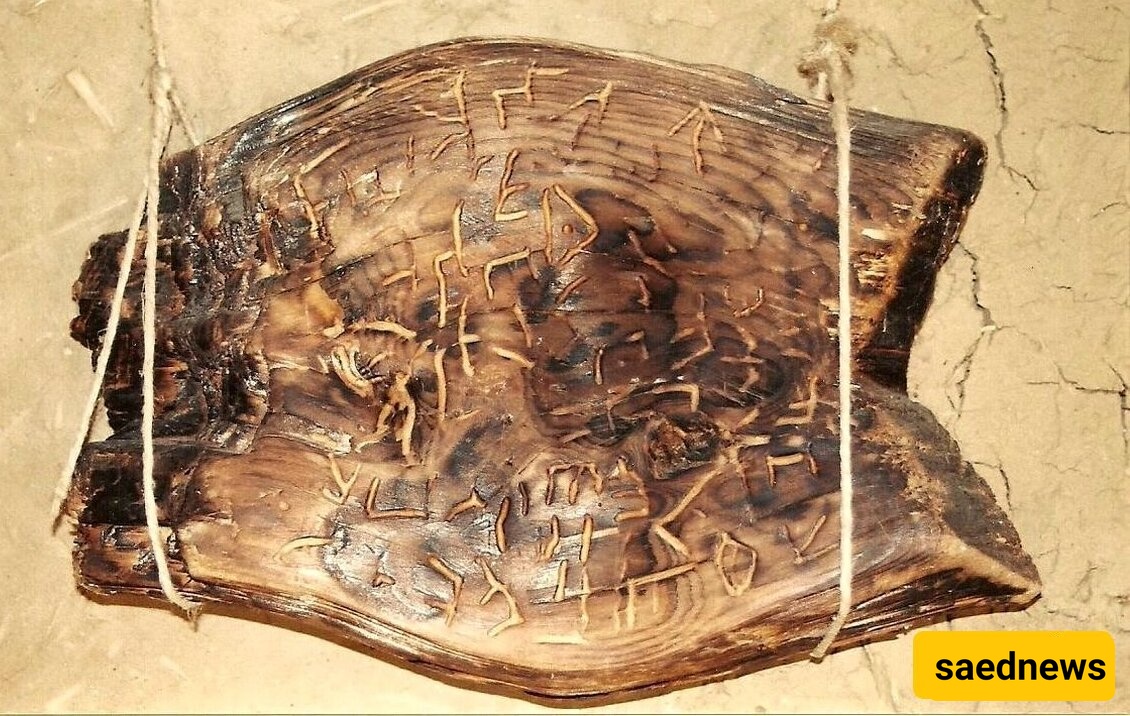
According to the Saed News Society Report, the Dispilio tablet is a wooden board etched with symbols that date back to around 5250 BCE. It was discovered exactly 30 years ago at the lakeside settlement of Dispilio by Professor of Prehistoric Archaeology Georgios Chormouziadis.
The Dispilio tablet is likely an early form of written communication, as similar engraved symbols have been found on clay in the Vinča culture of the southern Balkans. The clear symbols on the wooden board—some of which scholars believe resemble the earliest forms of the ancient Greek alphabet—undoubtedly represent a form of communicative signs.
The Dispilio Tablet: Evidence of Proto-Communication
Professor Chormouziadis suggests that such undeciphered inscriptions may represent an early form of communication, possibly including symbols for counting goods. Unfortunately, unlike the Rosetta Stone—which allowed archaeologists to decode Egyptian hieroglyphs—we have no comparable reference to decipher these early markings.
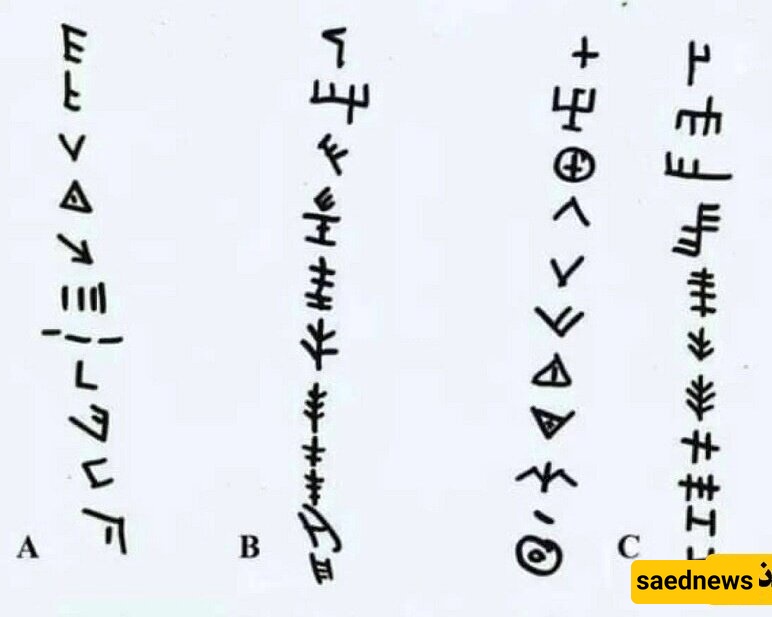
Similar engraved symbols have also been found on small ceramic pieces, which remain undeciphered. Cracking the code of the Dispilio tablet could change our understanding of “history,” at least in terms of when writing first emerged.
Comparisons of engraved symbols on the Dispilio tablet (a) with Linear A symbols (b) and marks on ancient European clay tablets (c).
When the tablet was exposed to oxygen outside the clay and water in which it had been submerged for so long, it suffered some damage. Today, it is under scientific conservation. Since 2021, a comprehensive academic study on the Dispilio tablet has been awaiting the completion of its preservation work.
The prehistoric lakeside settlement appears to have been occupied over an extended period, from the late Middle Neolithic (5600–5000 BCE) to the Final Neolithic (around 3000 BCE).
Conventionally, Neolithic discoveries like this are seen merely as evidence of early writing—limited information exchange rather than proof of a full language. However, if other artifacts comparable to the Dispilio tablet come to light, our understanding of the history of writing could be dramatically revised.
Dispilio: A Prehistoric Lakeside Settlement in Greece
The prehistoric lakeside settlement of Dispilio is one of the most fascinating archaeological sites in northwestern Greece, located near the city of Kastoria. Close to the modern village of Dispilio—part of the Kastoria community, sharing access to Lake Orestiada—the settlement holds abundant information about prehistoric life in the region.
Located in Nisi, on the southern shore of Lake Orestiada, the site has yielded thousands of Neolithic artifacts.
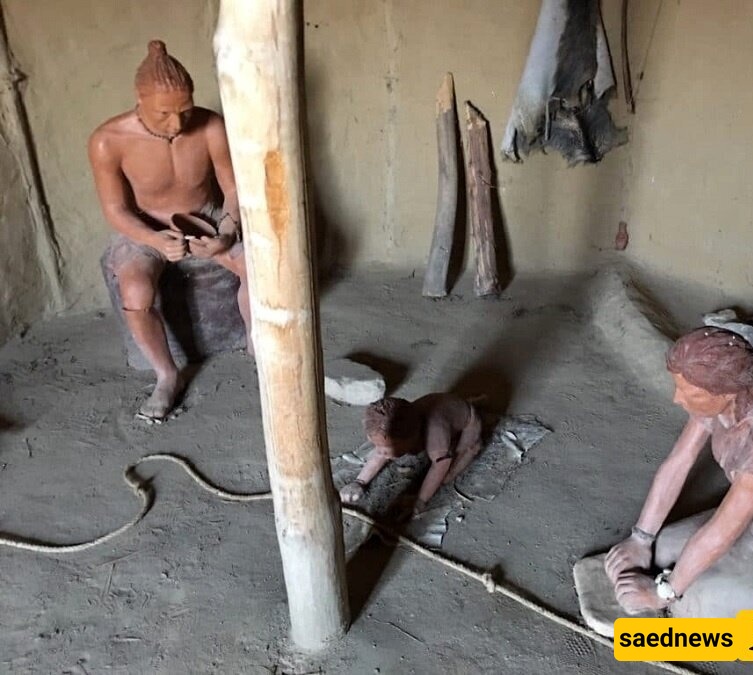
Reconstructing Neolithic life at Dispilio, southwestern Greece.
The settlement was first discovered during the dry winter of 1932, when the water level was unusually low. Remains of wooden posts revealed traces of dwellings on a small island separated from the lakeshore.
In 1935, archaeologist Antonio Kramopoulos conducted an initial survey, but excavation was interrupted and left incomplete due to the approach of World War II.
Decades later, in 1992, a systematic excavation project led by Professor Georgios Chormouziadis of Aristotle University of Thessaloniki unearthed extensive remains of a late Neolithic lakeside settlement, now recognized as one of the most important and oldest of its kind in Europe.
Thousands of objects were recovered, including tools made of stone, bone, and flint, as well as animal bones—evidence that the inhabitants practiced farming, hunting, and fishing.
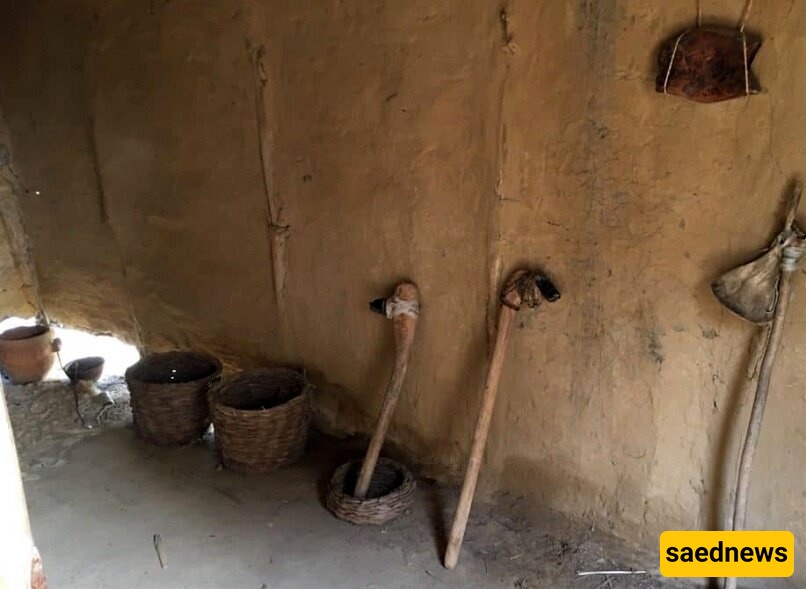
Reconstruction of the prehistoric settlement at Dispilio.
The materials used to build the dwellings—such as large quantities of timber arranged to indicate construction techniques, oversized clay pots, and woven baskets—were also recovered. Archaeologists found pottery, wooden structural elements, seeds, bones, figurines, and personal ornaments. Several cooking vessels, many shaped like boats, along with bone and stone jewelry, were also discovered. Yet perhaps the most remarkable find was a bone flute, one of the oldest known musical instruments ever discovered in Europe.






![Stunning Egyptian Mummy Discovered in a Deep Shaft [Photos]](https://en.saednews.com/storage/files/post/da5ff13e-ffb9-4eeb-8060-158b1abd4d66-8jOmCIYb1qCRkUAu/1x1-image.jpg)
![Discovery of a 3,000-Year-Old Hall Belonging to a Legendary King in Germany [Photo]](https://en.saednews.com/storage/files/post/e145410f-17aa-4f5b-842a-87973626121b-Kkmt4wgZI3SYWVfq/1x1-image.jpg)