SAEDNEWS: Nvidia Investigates CEO Jensen Huang Over Alleged Affair With Chinese Woman Accused of Spying on US Chipmaker
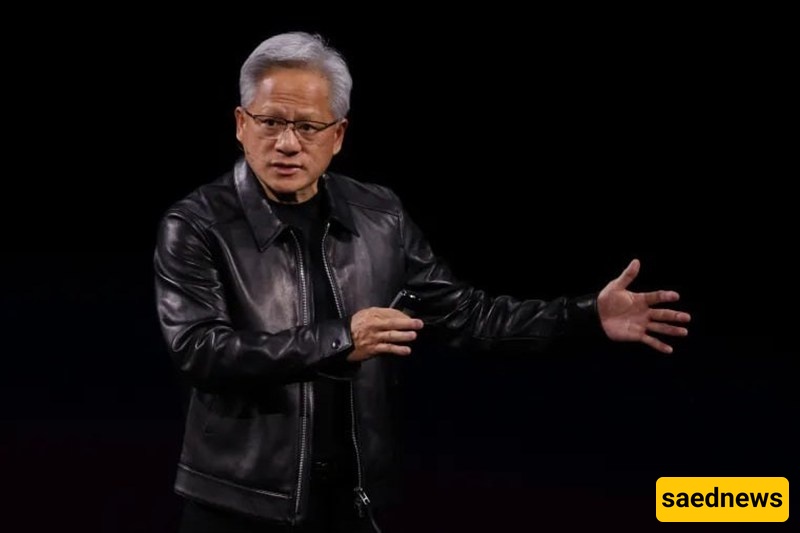
According to Saednews, NVIDIA has launched an independent investigation into whether CEO Jensen Huang’s alleged personal relationship with a woman identified as Alice Huang, also known as Huang Le, may have exposed the company’s sensitive technology or confidential information to foreign intelligence activities.
The company announced that a committee of independent directors, supported by external legal advisers, would oversee the investigation. Although NVIDIA’s board stated that it had no evidence suggesting that national security interests or company secrets had been compromised, it emphasized that all relevant information would be carefully reviewed. Huang will continue serving as CEO while the investigation proceeds.
The inquiry follows a report published by The New York Times on October 29, which claimed that Alice Huang had attempted to establish a close relationship with the billionaire executive as part of an alleged Chinese intelligence operation targeting NVIDIA. China’s Embassy in Washington has rejected the accusations.
The report also highlighted Alice Huang’s employer, Megaspeed, which reportedly became one of NVIDIA’s biggest customers, purchasing approximately $4.8 billion in equipment from the American technology giant. This development has raised additional concerns about the possible intersection of commercial interests and alleged intelligence activities.
The controversy has intensified political pressure in Washington, where both Democratic and Republican lawmakers have expressed growing concerns about China’s access to advanced American semiconductor technology. US officials increasingly view China’s technological ambitions as a potential challenge to American economic and military superiority.
Democratic Senator Elizabeth Warren has called on Huang and NVIDIA’s board to explain the company’s business activities involving China. She noted that members of both parties had repeatedly questioned the potential transfer of advanced AI chips to the Chinese market and urged Congress to introduce legislation preventing sensitive American technology from reaching China.
Republican lawmakers have also requested Huang’s appearance before Congress on November 18. Representatives John Moolenaar, Brian Mast and Rick Crawford argued that lawmakers must establish whether the allegations have created any risks to US national security.
Meanwhile, Huang addressed the personal controversy in an email to NVIDIA employees on Sunday. He acknowledged being unfaithful to his wife and expressed regret over the harm his actions had caused to his family.
The investigation comes at a time when Washington is increasingly relying on national security concerns to justify restrictions on China's access to advanced semiconductors. These measures have become a major component of America's broader strategy to preserve its technological advantage over Beijing.
NVIDIA has emerged as one of the biggest beneficiaries of the worldwide artificial intelligence boom. Its processors and software platforms are fundamental to the development of modern AI systems, while growing demand from companies such as OpenAI, Anthropic, Meta and Google has pushed its market valuation into the trillions of dollars.
However, the company's growing importance has also made it more deeply involved in the political and economic priorities of the Trump administration.
Since Donald Trump returned to the White House in 2025, Huang has maintained close relations with the US president while attempting to balance American export restrictions with NVIDIA's commercial interests in China.
In August 2025, the Trump administration announced an arrangement under which the US government would receive 15 percent of revenue from certain NVIDIA chip sales to China. The agreement highlighted how Washington could use its authority over technology exports as both a political and financial instrument.
Trump has also reportedly bought up to $1.6 million in NVIDIA shares before selling approximately $1 million worth in August, ahead of the November midterm elections.
Political tensions surrounding the technology sector have increased further as disagreements over artificial intelligence regulation have deepened. Trump has opposed demands for stricter industry controls, while Democratic candidates have advocated greater restrictions on technology companies, including limitations on the construction of new data centers.
After Republicans suffered significant losses in the midterm elections, AI-related shares, including NVIDIA, experienced renewed pressure. Nevertheless, NVIDIA managed to recover part of its losses after its market capitalization fell by approximately $450 billion during a single trading session the previous week.