SAEDNEWS: Sang-e Stone Mountain has a beautiful story and history that we will explore in greater detail below.
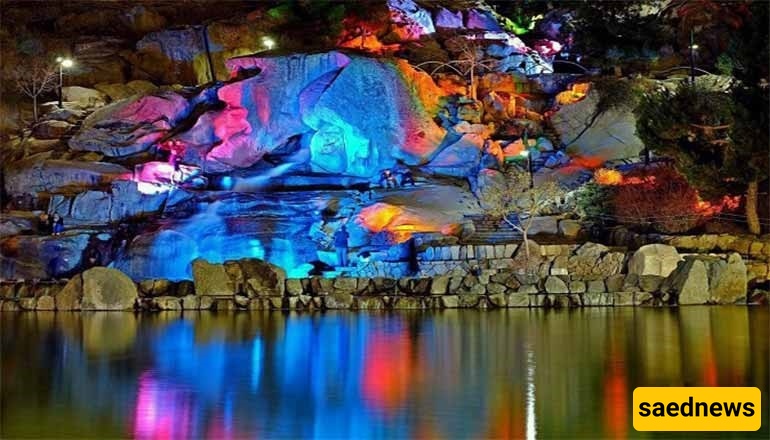
According to Saednews, Kooh Sangi is one of the oldest and most well-known parks and tourist attractions in Mashhad, Iran. With a history dating back several centuries, the park is famous for its distinctive rocky peaks, beautiful gardens, and historical significance. After the Holy Shrine of Imam Reza, it is considered one of the city’s most popular landmarks. The park also has an interesting history and several stories associated with its development.
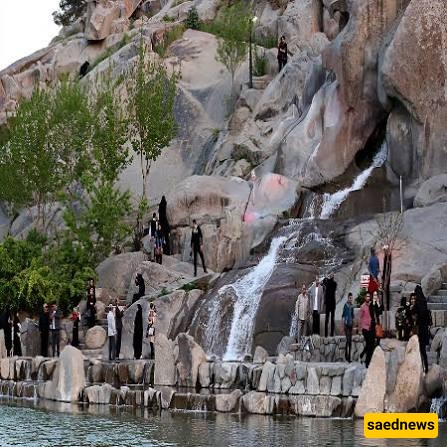
The historical importance of Kooh Sangi dates back hundreds of years. In 1577 (995 AH), Shah Abbas I of the Safavid dynasty was crowned in this area at the age of 16 by his mentor, Murshid Quli Khan Ustajlu. From that time onward, Kooh Sangi became increasingly important. Several prominent religious figures, including Sheikh Asadollah Yazdi, Aqa Mirza Askari, and Sheikh Saifollah Esi, as well as some of their followers, reportedly requested to be buried in this area.
Until 1931, the area remained largely unchanged. Its beautiful gardens and towering mountains made it a favored recreational retreat for kings and aristocrats. Major changes began that year with the construction of a pool and qanat, which enhanced the area’s appeal.
In 1939, at the order of the ruler of the time, German engineers constructed a two-story building within the garden. The building still stands today. Streets were subsequently landscaped with flowers and fitted with railings, transforming Kooh Sangi into a beautiful public park.
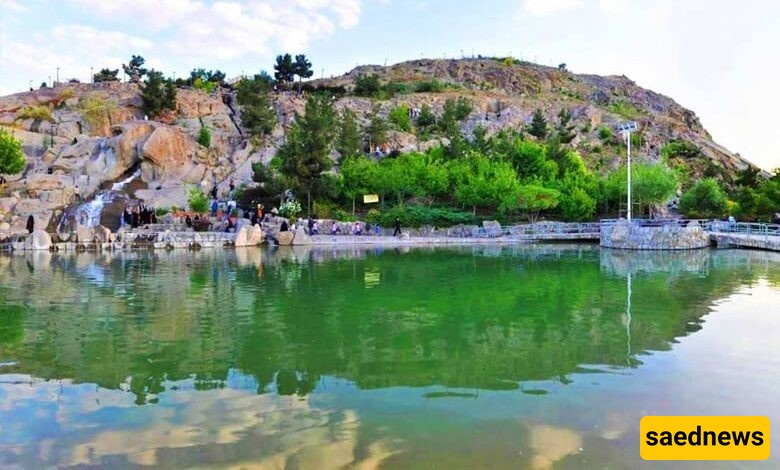
That same year, the mayor of Milan presented the mayor of Mashhad with several statues depicting two lions and two human figures. The lion statues were placed on either side of the entrance, while the human statues were installed beside the large pool, facing the restaurant and hall. The lion statues are still present in the park, and many visitors have taken photographs beside them. The human statues, however, were removed from the park during the early years of the Islamic Revolution because the figures were depicted wearing crowns.
In 1961, due to the park’s growing popularity, Kooh Sangi was connected to the main part of Mashhad by a wide avenue bearing the same name. The avenue also provided a direct route toward Mashhad Railway Station and became one of the city’s important streets and attractions.
Originally, Kooh Sangi served mainly as a recreational retreat for royalty and wealthy residents. Over the years, however, it evolved into a public recreational destination open to everyone.
As mentioned above, Kooh Sangi forms part of the Binalud mountain range and features two relatively low, rocky peaks. These distinctive rocks gave the area its name, which literally means “Stone Mountain.”
Visitors who climb either of the two peaks can enjoy panoramic views of Mashhad, the Holy Shrine of Imam Reza, and the city’s gardens. Today, Kooh Sangi is regarded as the second-largest park in Mashhad and one of its most visited tourist destinations, following the Holy Shrine and the Tomb of Ferdowsi.
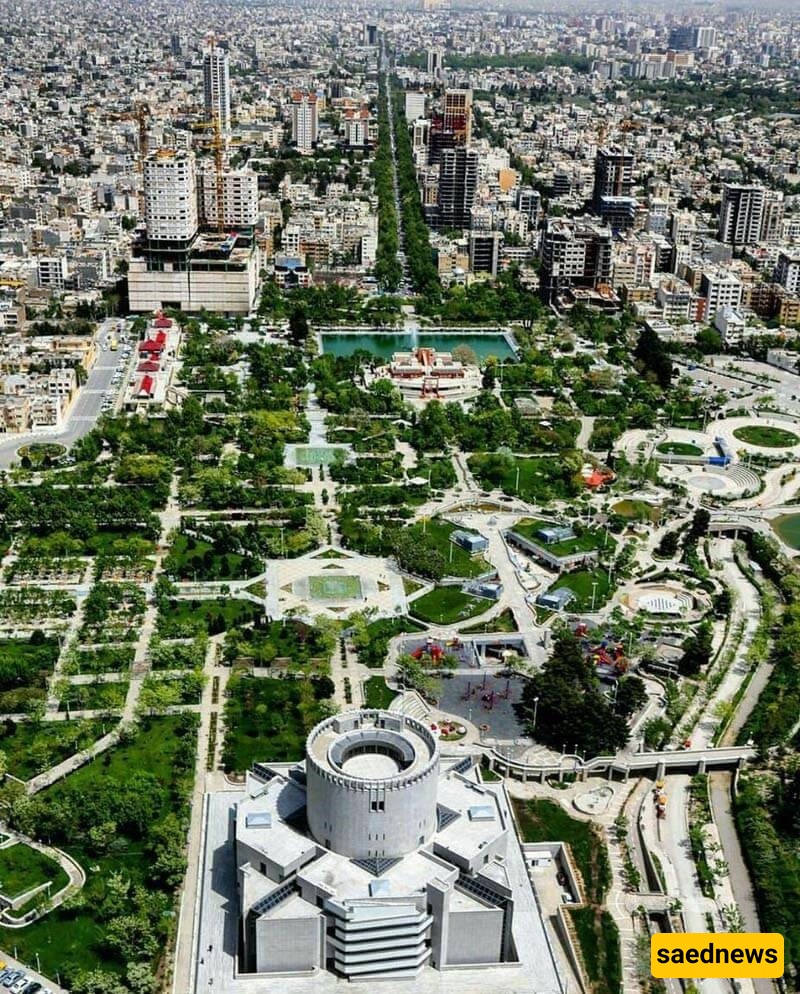
Because of the area’s long-standing popularity with tourists, Mashhad Municipality has gradually added a wide range of facilities to the park.
Kooh Sangi was also the location of Mashhad’s first major illumination project, giving the park a particularly attractive appearance after dark.
Among the park’s main attractions and facilities are:
Traditional restaurants
A memorial garden
A sports garden
A reception garden
Recreational areas
Walking and sightseeing spaces
Plans and proposals for further development have included a natural museum garden, a bird island, an artificial lake, outdoor and indoor amusement facilities, and a monorail route running through the mountains.
Kooh Sangi also has shops and stores specializing in the production and sale of traditional stone dizi pots. If you are looking for a durable stone pot for preparing abgoosht, a traditional Iranian meat and chickpea stew, the shops around the park can be a good place to look for one.
There are several ways to reach Kooh Sangi Park in Mashhad. Visitors can take a taxi directly to the park. The area is also accessible from Mashhad Railway Station, making it convenient for travelers arriving by train. Intercity bus facilities are located relatively close to the park as well.
Despite being one of Mashhad’s major tourist attractions, entrance to Kooh Sangi Park is free. Visitors do not need to pay an admission fee to enter the park.
If you choose to drive, however, parking fees may apply separately.