SAEDNEWS: St. Stephen’s Cathedral (German: Stephansdom) is the most famous church in Austria and one of the defining landmarks of Vienna. Built in 1147, it serves as the mother church of Catholicism in Central Europe and is the seat of the Archbishop and Cardinal Christoph Schönborn.
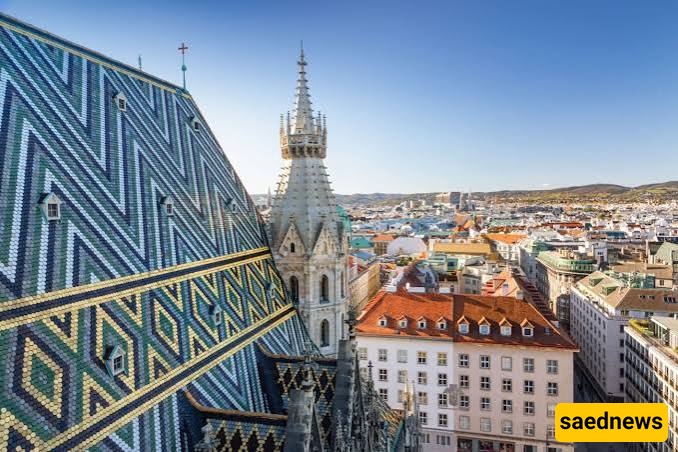
According to Saednews, Vienna is one of the world’s most historic cities, located in Austria and renowned for displaying its rich heritage throughout every part of the city. For travelers fascinated by impressive Baroque and Gothic architecture, Vienna offers countless remarkable buildings. One of the city’s most famous landmarks is St. Stephen’s Cathedral, whose origins date back to the 12th century.
Construction of St. Stephen’s Cathedral began in 1147. Today, it serves as the mother church of the Roman Catholic Archdiocese of Vienna and is the seat of the Archbishop of Vienna, Cardinal Christoph Schönborn.
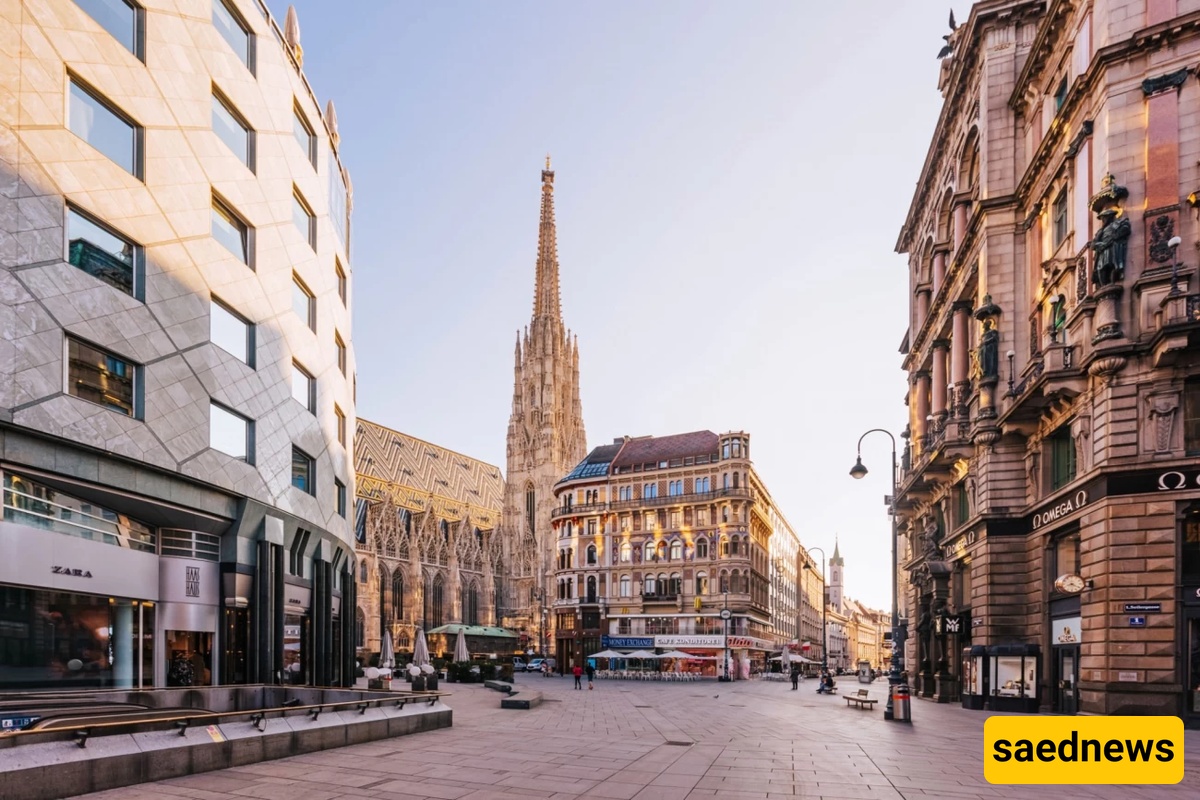
The cathedral is one of Vienna’s most recognizable landmarks. Measuring approximately 34 meters wide and 107 meters long, it stands prominently in the heart of the city at Stephansplatz. It is also commonly known as Stephansdom, St. Stephan, or St. Stephen’s Cathedral.
Throughout its long history, the cathedral has witnessed numerous wars and turbulent periods. Its survival has made it an enduring symbol of Vienna and, in particular, a symbol of the city’s freedom and resilience.
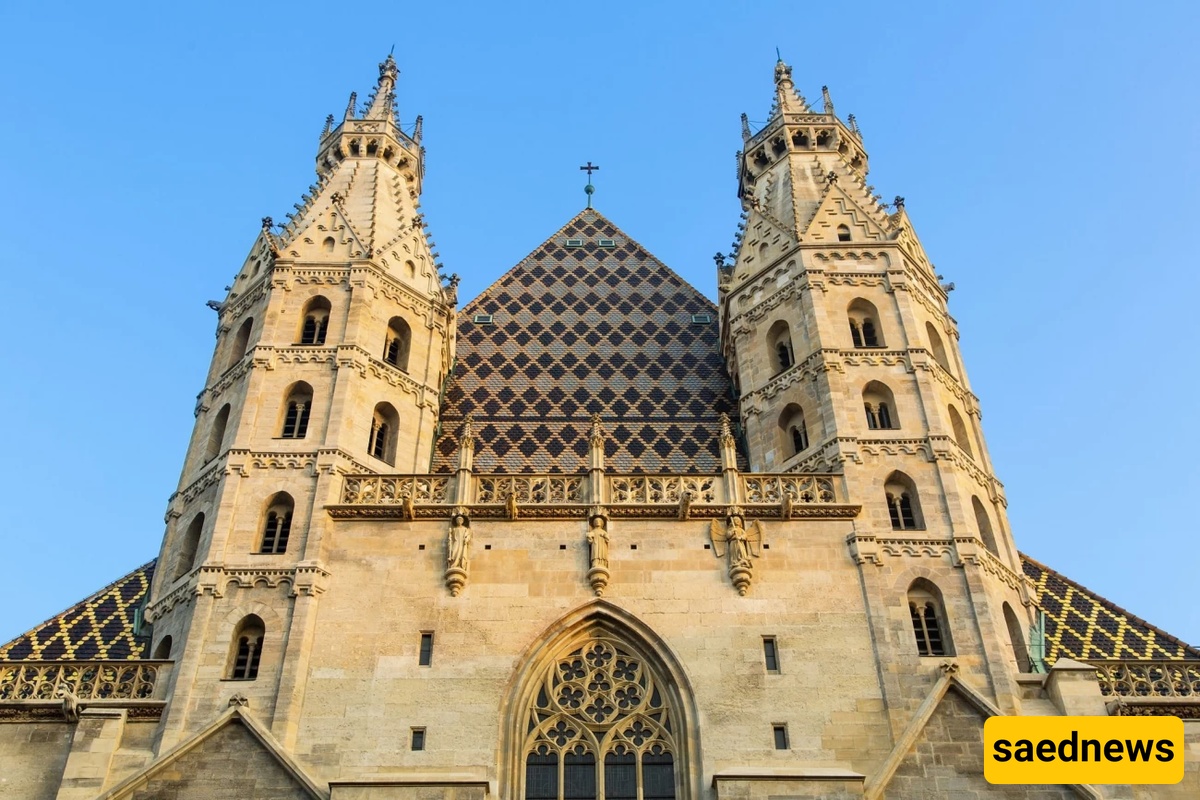
The cathedral is especially famous for its Gothic architecture and distinctive diamond-patterned roof, which has long fascinated visitors with its unusual design and striking appearance.
The first church built on the site of today’s cathedral was a Romanesque structure. It was later replaced by a larger Romanesque church in 1147.
Unfortunately, a devastating fire in 1258 destroyed much of the building. Construction of the Gothic cathedral in its present form began in the early 14th century.
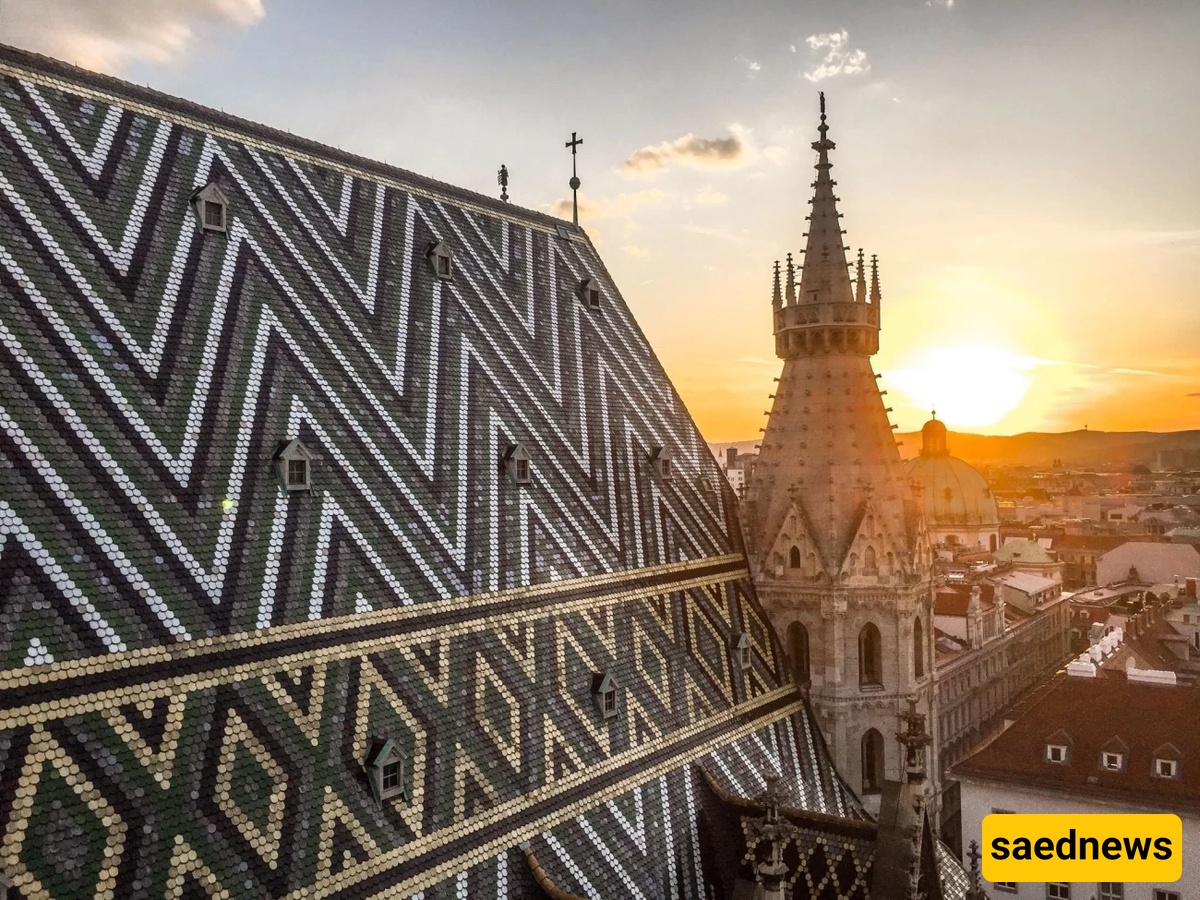
The cathedral suffered damage on several occasions, including during the Battle of Vienna in 1683 and in the final days of World War II. Restoration was completed after the war, and the cathedral reopened in 1948. Its famous roof was repaired and decorated with colorful ceramic tiles arranged in a distinctive diamond pattern.
Over the centuries, St. Stephen’s Cathedral has been the setting for many important historical events. Among the most notable were Wolfgang Amadeus Mozart’s wedding in 1782 and the funeral ceremony held for him in December 1791.
St. Stephen’s Cathedral is located at Stephansplatz in the center of Vienna, making it one of the easiest landmarks to reach while exploring the historic heart of the Austrian capital.
The cathedral’s development took place over several centuries and incorporated both Romanesque and Gothic architectural styles. In the 12th century, Duke Heinrich II Jasomirgott commissioned an early Romanesque church on the site of two older churches. After the fire of 1258, the building was reconstructed, initially following the Romanesque tradition before later Gothic additions transformed its appearance.
Originally, the exterior was predominantly white. Over time, however, exposure to pollution and weather caused the stonework to become considerably darker.
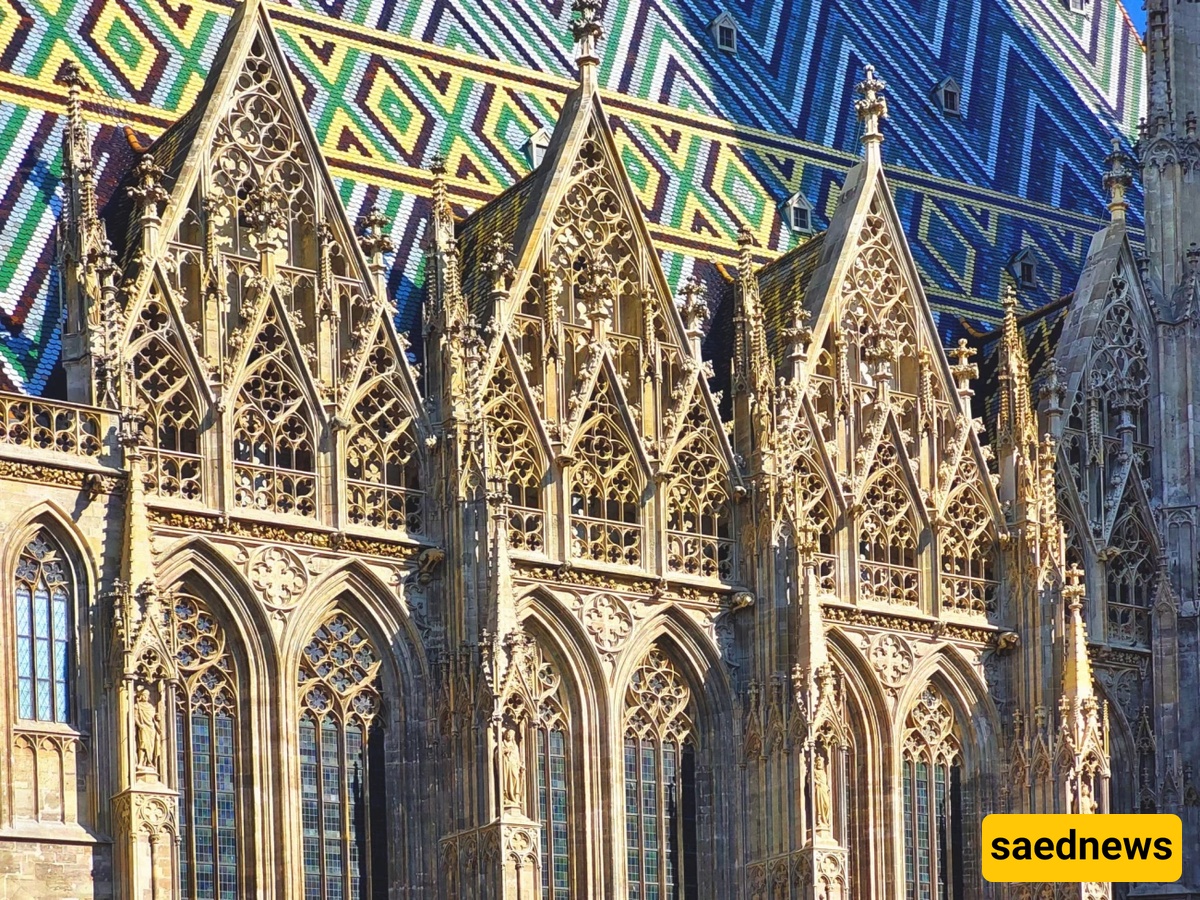
One of the cathedral’s most distinctive features is its spectacular tiled roof. Around 25,000 colorful glazed tiles form intricate geometric patterns, including the famous diamond design. The roof has become one of the most recognizable symbols of Vienna.
St. Stephen’s Cathedral is also home to Pummerin, one of Austria’s largest and most famous church bells. The bell is located in the cathedral’s North Tower and is traditionally rung on New Year’s Eve.
The cathedral’s Gothic towers were added later and took approximately two centuries or more to complete. Although the North Tower was never fully finished, a Renaissance-style crown was added to it in 1529.
One of the most fascinating—and somewhat eerie—parts of St. Stephen’s Cathedral is its crypt. It contains historical burial sites and remains associated with victims of past plague outbreaks, preserved in collective burial areas.
The main period of Gothic construction extended from approximately 1395 to 1433, although the cathedral continued to undergo changes and repairs for centuries. Because of wars and other historical events, some parts of the original plans were never completed.
Visitors can also climb one of the cathedral’s towers, where an elevator provides access to a viewing area offering impressive views across Vienna and its historic rooftops.
Pummerin is among the most famous bells associated with St. Stephen’s Cathedral. Its history dates back to the late 17th century, when it was cast in 1683 using metal from captured Ottoman artillery.
Today, Pummerin has a special role in Vienna’s New Year celebrations and remains one of the cathedral’s most important historical features.
Another intriguing historical detail can be found near the entrance to St. Stephen’s Cathedral. The O5 symbol became an important secret sign associated with the Austrian resistance movement during the Nazi era.
The number 5 represents the fifth letter of the alphabet, E, while the combination of O and E refers to Österreich, the German name for Austria. The symbol became associated with Austrian resistance and the country’s independence.
St. Stephen’s Cathedral is not only impressive from the outside. Its interior contains numerous works of art, religious treasures, historic objects, and architectural details.
One of the most remarkable attractions is the Wiener Neustadt Altar, an elaborate Gothic altar decorated with goldwork and paintings. It depicts the Virgin Mary alongside Saints Catherine and Barbara.
The cathedral also houses historical religious garments, manuscripts, and other objects connected with Vienna’s religious and cultural history.
Another fascinating feature is a Renaissance-era self-portrait of an artist located beneath a staircase. The figure appears to look outward through a window, offering visitors a rare glimpse into the artistic culture of the Renaissance, when individual artists increasingly became recognized by name.
St. Stephen’s Cathedral is one of Vienna’s essential attractions for anyone interested in history, architecture, art, or European culture. In addition to exploring the cathedral independently, visitors can join guided tours, including short tours lasting around 30 minutes.
With its centuries-old history, remarkable Gothic architecture, colorful tiled roof, historic towers, famous Pummerin bell, and fascinating interior, St. Stephen’s Cathedral remains one of Vienna’s most important landmarks and a defining symbol of the city.