SAEDNEWS: If you’re an adventurous traveler always looking for your next unforgettable destination, you’ll definitely want to book a trip to the Philippines and visit Bohol Island. Every year, countless travelers journey to this beautiful island to witness its fascinating and iconic Chocolate Hills up close.
According to Saednews, The Philippines, officially known as the Republic of the Philippines, is an island nation in Southeast Asia, located in the western Pacific Ocean. The country consists of thousands of islands, traditionally grouped into three major geographical regions: Luzon, Visayas, and Mindanao. With a population of more than 110 million people, the Philippines is one of the most culturally and geographically diverse countries in Asia.
The country was a Spanish colony from the 16th century until the end of the 19th century and later came under American rule. The Philippines gained independence from the United States in 1946, and its national day is celebrated on June 12.
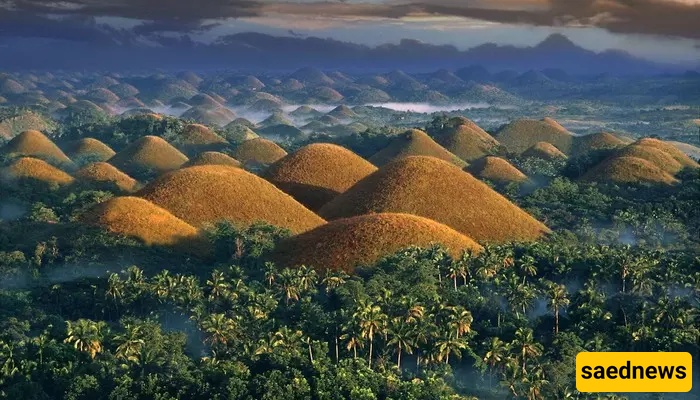
Among the Philippines' most remarkable natural attractions are the Chocolate Hills, a spectacular collection of unusually shaped hills located on the island of Bohol. They are considered one of the country's most distinctive landscapes and have become one of the Philippines' best-known tourist destinations.
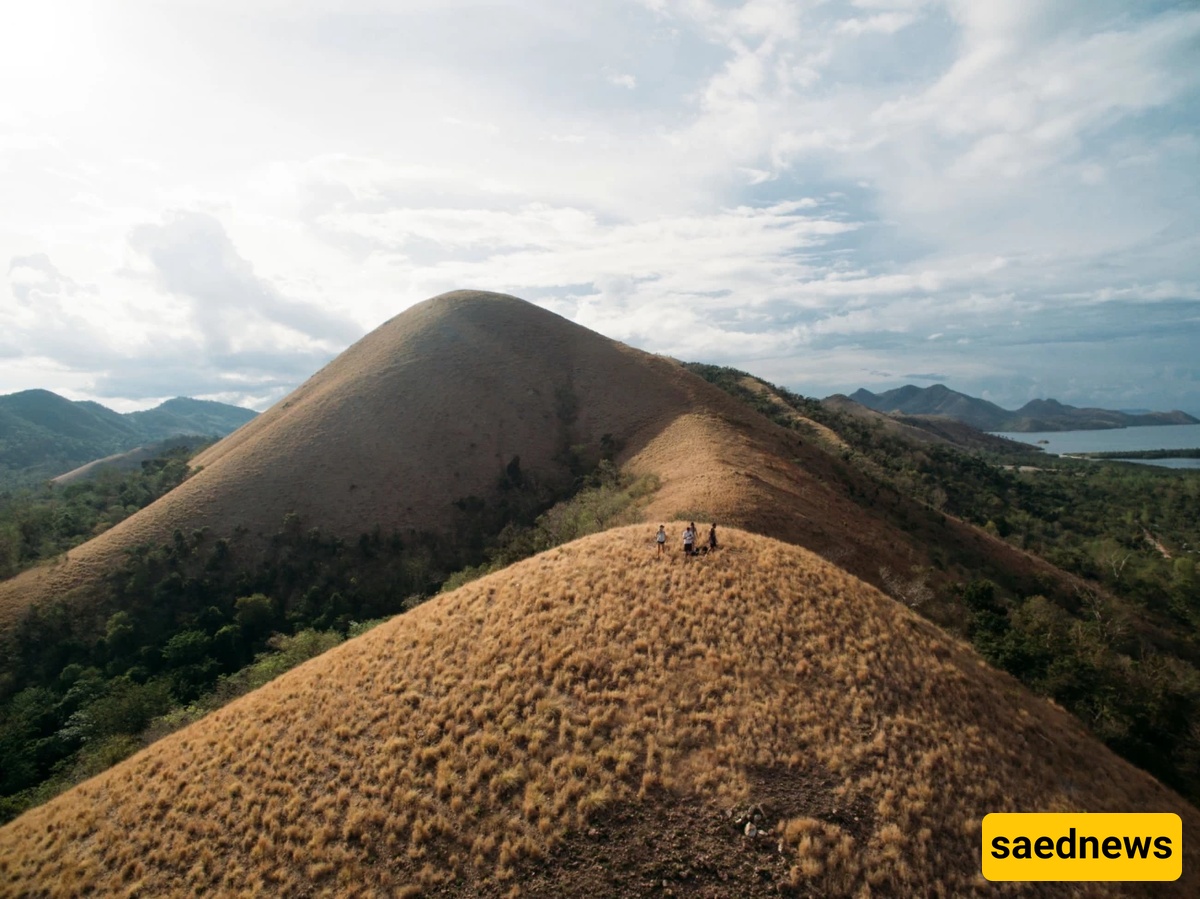
Bohol is both an island and a province in the central Philippines, forming part of the Visayas region. The provincial capital is Tagbilaran City. Covering more than 4,000 square kilometers, Bohol is home to more than one million people and is famous for its beaches, wildlife, cultural attractions, and unique natural scenery.
The Chocolate Hills are particularly impressive because of their almost identical conical shapes. More than a thousand hills are scattered across the central part of Bohol, creating a landscape unlike almost anywhere else in the world.
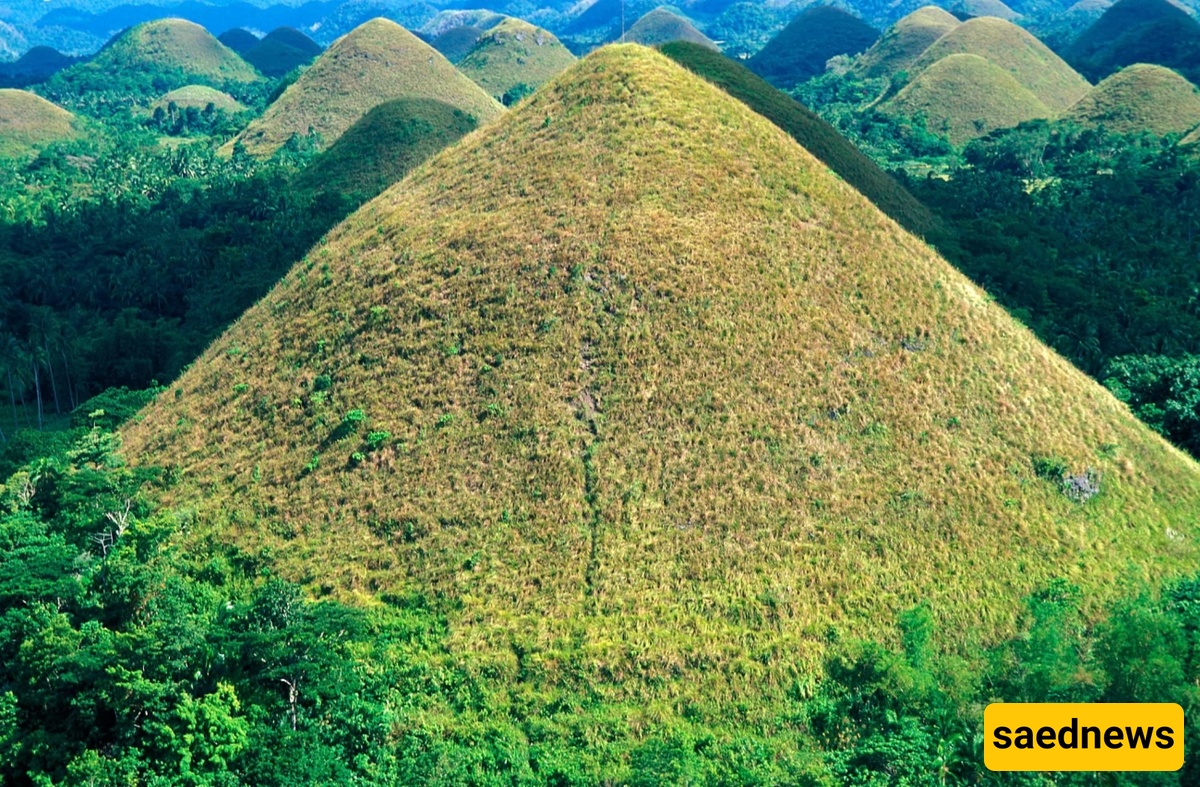
The hills are covered mainly with grass and vegetation. During the dry season, the grass turns brown, giving the hills a chocolate-like appearance. This seasonal transformation is the reason they became known as the Chocolate Hills.
During the rainy season, the hills are covered in green vegetation and look completely different, but they remain an impressive sight throughout the year.
The exact geological process that created the Chocolate Hills has been debated for many years. Geologists have proposed several explanations, including the uplift of coral deposits followed by long-term erosion. Weathering and erosion gradually shaped the limestone landscape into the distinctive rounded and cone-like formations seen today.
The hills vary in size, with many standing between approximately 30 and 50 meters high. Some of the largest formations reach around 120 meters. Together, they cover a broad area of central Bohol and form one of the island's most spectacular panoramic landscapes.
Alongside scientific explanations, the Chocolate Hills are also connected to local folklore. One popular legend tells of two enormous giants who fought across the island for several days, throwing huge rocks and stones at one another. Eventually, they became exhausted, made peace, and left the island. According to the legend, the stones they left behind became the Chocolate Hills.
Whether viewed through the lens of geology or local mythology, the unusual landscape has fascinated visitors for generations.
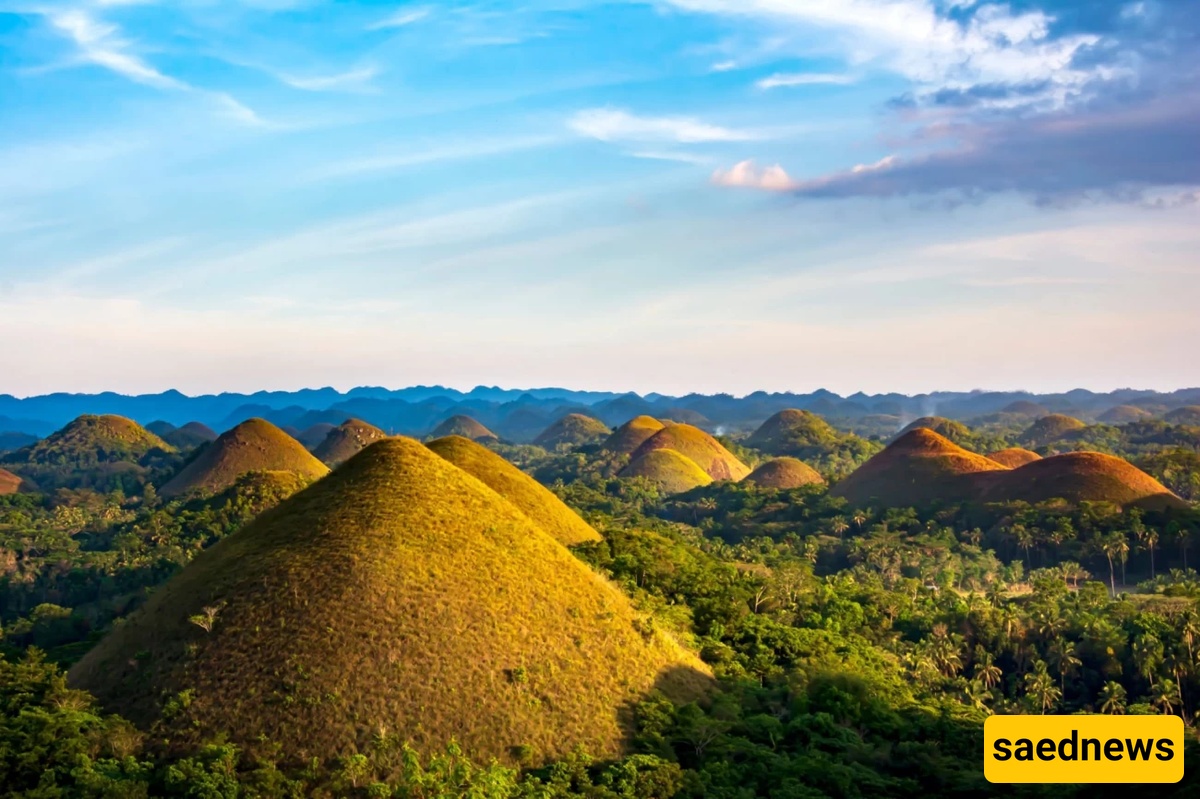
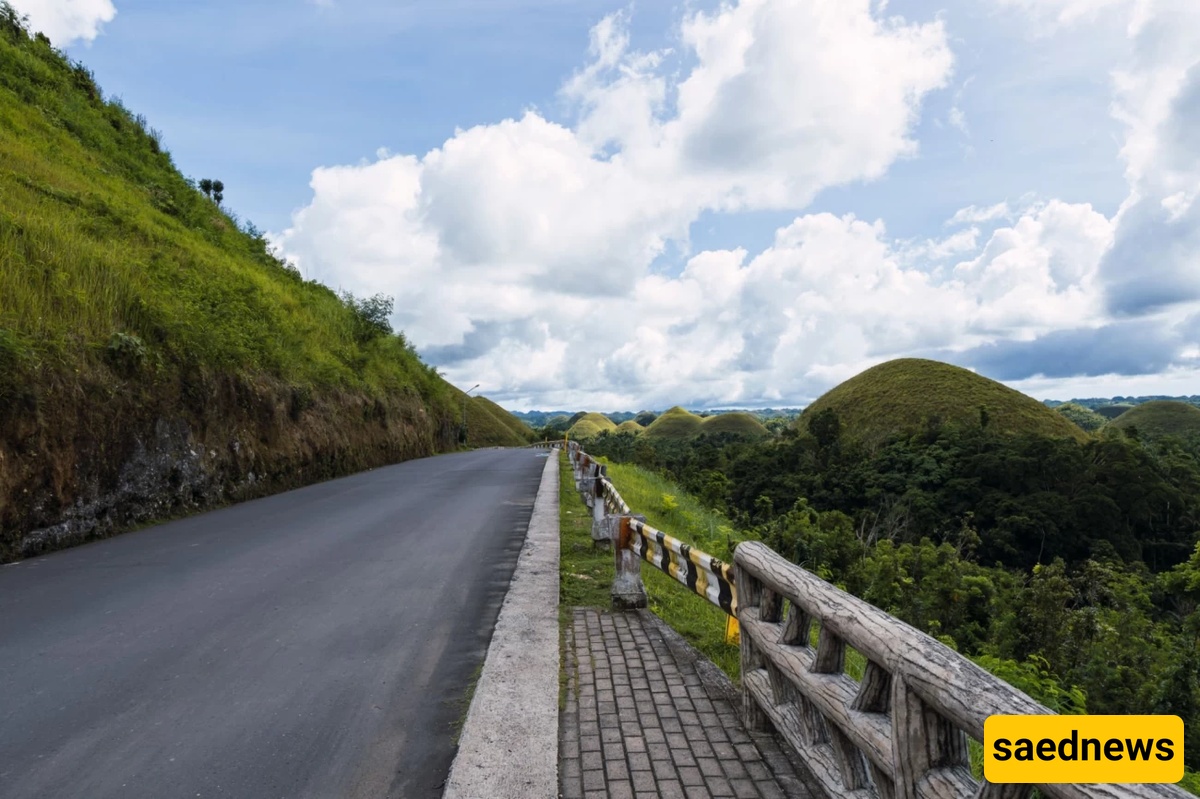
Visitors can enjoy panoramic views of the hills from designated viewing areas. One of the most popular ways to see the landscape is from an elevated observation platform, where hundreds of the distinctive formations can be viewed stretching across the countryside.
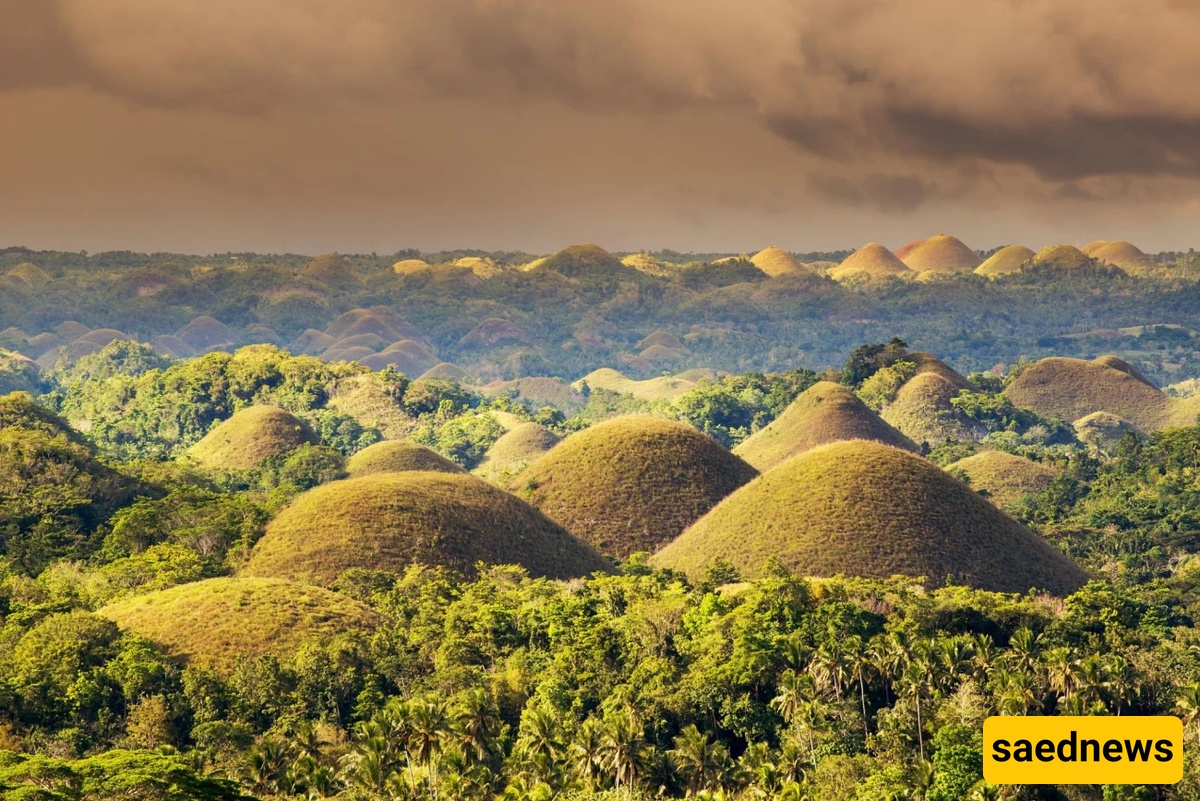
The area can be visited throughout the year, although the appearance of the hills changes with the seasons. The dry months offer the famous brown, chocolate-colored landscape, while the rainy season transforms the hills into vibrant green formations.
The Chocolate Hills are more than just a scenic attraction. They represent one of the Philippines' most extraordinary natural landscapes and remain a symbol of Bohol's unique beauty. For travelers exploring the central Philippines, a visit to these remarkable hills offers an unforgettable experience and a chance to witness one of Southeast Asia's most unusual geological wonders.