SAEDNEWS: In Khorramabad, a striking castle crowns a hill overlooking the city. Falak-ol-Aflak Castle, dating back to the Sassanian era, is one of Iran’s most important historic landmarks. Over the centuries, it has witnessed countless events—explore the secrets of this legendary fortress.
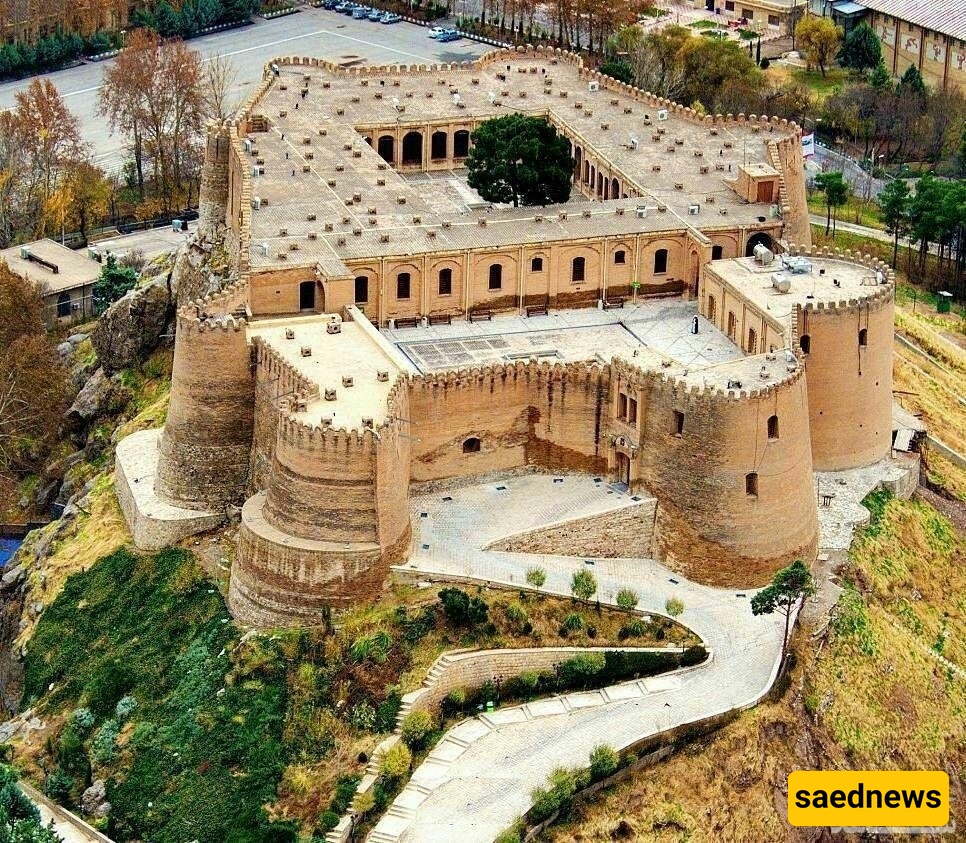
According to the Family Magazine service of SaedNews, Falak-ol-Aflak, also known as Shapur-Khast Fortress, is a historic castle located in the heart of Khorramabad in Iran’s Lorestan Province. The castle, sometimes referred to as the “Twelve-Towered Castle,” sits atop a hill overlooking the city and near the river, making it the most prominent historical and tourist landmark in Khorramabad. Its construction dates back to the Sassanian era, and it is registered as a national heritage site of Iran under number 883.
The name Falak-ol-Aflak literally means “Sky of the Skies.” Over time, the castle has been known by various names, including Shapur-Khast, Saber-Khast, Khorramabad Castle, Twelve Towers, and Atabakan Palace. From the Qajar period onward, it has been officially known as Falak-ol-Aflak. The name may also reference the twelve celestial towers, linking it to the concept of the “sky of the skies.”
During the Sassanian era, a city called Shapur-Khast was established near modern Khorramabad, accompanied by a governmental fortress. After the city was eventually destroyed, only a few scattered structures, including Shapur-Khast Fortress, survived.
Following the destruction, a new city named Khorramabad began to grow around the castle. Throughout history, the fortress has been referred to as Shapur-Khast, Twelve Towers, and Atabakan Castle. During the Qajar period, it gained the name Falak-ol-Aflak, which it has retained to this day.
Due to its strategic location, Falak-ol-Aflak Castle served various administrative and military functions over the centuries:
In the 4th century AH, as the seat of the Al-Hassanwayeh dynasty
Treasury of the Badr family
Administrative center for the Atabakan of Little Lorestan
Headquarters for Lorestan governors during the Safavid to Qajar periods
Military barracks and political prison during the Pahlavi era
In 1970 (1349 AH), the castle was transferred from the army to the Ministry of Culture and Art and officially registered as a national heritage site. In 1975 (1354 AH), it was converted into a museum featuring Lorestan bronzes and ethnography. Recent restoration work has enhanced both the exterior and interior, and today the complex hosts archaeological and ethnographic museums, a conservation laboratory, a cultural product shop, and a traditional teahouse.
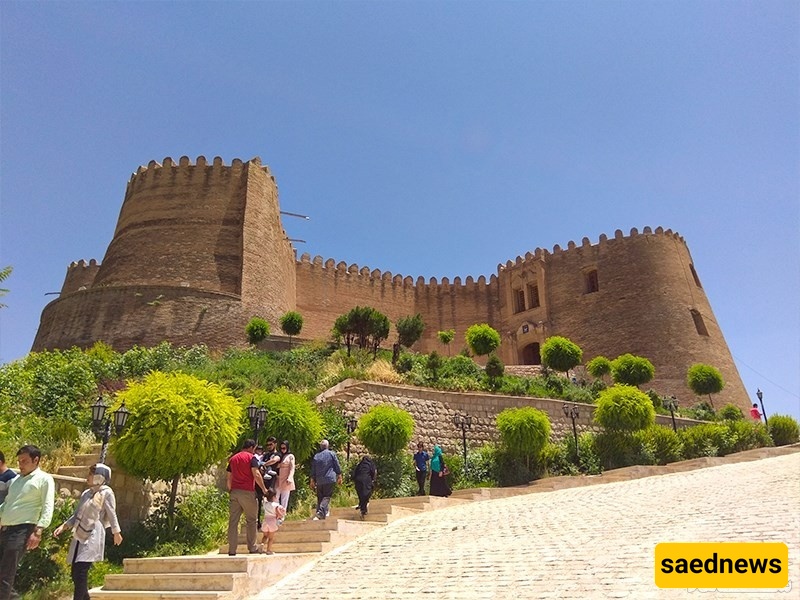
Falak-ol-Aflak Castle covers 5,300 square meters, with its tallest tower rising 22.5 meters above the hill. Construction materials include stone, large red bricks, mud bricks, and plaster mixed with lime. The main entrance is in the southwestern tower, measuring 10 meters wide and 3 meters high.
Over the years, the castle has undergone multiple restorations, particularly during the Safavid and Qajar periods. Historical records indicate that up to 100 years ago, the fortress was surrounded by a double-layered twelve-towered mudbrick wall, of which only two towers remain in the northwest and southeast.
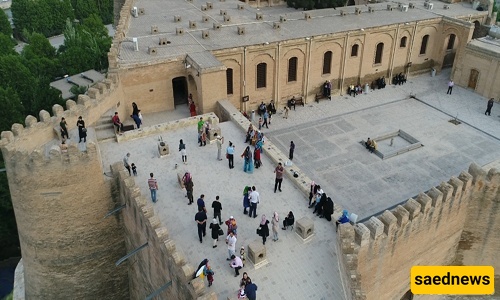
The castle has two courtyards: the first is surrounded by four towers, two to the north and northwest and two to the southwest and south. The second courtyard mirrors the first in structure, with large halls connected to each other. Today, this area hosts the museum. A bathhouse is located in the northern part of the first courtyard, with a nearby well supplying water. The well, carved into rock, connects to the Golestan water source and reaches a depth of 40 meters. Historically, it provided water for the castle’s residents and remains functional today.
Brick Minaret: Built 900 years ago south of the city, standing 30 meters tall with a base of 5.5 meters.
Inscribed Stone: A Kufic-script inscription north of the castle, dating to the 6th century AD, detailing tax exemptions, grazing regulations, and prohibitions of certain customs.
Shapuri or Broken Bridge: A Sassanian-era bridge in the city center, 350 meters long, 5.8 meters wide, with an 8-meter-high tower above the riverbed.
Visitors enter the castle via steps leading to the main courtyard, home to the famous well and bathhouse. Climbing the towers provides panoramic views of Khorramabad. The fortress includes four large halls, two inner courtyards, several smaller halls, rooms, and gates. The ethnographic and archaeological museums showcase local traditions and historical artifacts. Each of the 12 museum halls highlights the culture, beliefs, and daily life of Lorestan’s people.
Spring and summer are ideal for visiting, when the weather is mild and pleasant. The castle attracts large crowds during summer holidays and Nowruz.
The castle is closed on specific religious holidays: Tasua and Ashura, 21 Ramadan, 28 Safar, 14 Khordad, and 25 Shawwal. The museum is closed every Monday. Other days, it is open from 9:00 a.m. to 8:30 p.m.
Falak-ol-Aflak Castle is easily accessible from any part of Khorramabad. Public transportation, such as buses and taxis, can take you to 12-Towered Street, from which the castle is visible immediately upon arrival.
The site offers convenient transportation access, parking, restrooms, lodging, restaurants, a buffet, and excellent mobile network coverage.