SAEDNEWS: A father’s role in raising a child goes far beyond providing material needs. He is often a child’s first model of authority, security, and strength, while also teaching essential life skills and values.

According to Saednews, A father’s role in raising a child goes far beyond providing for the family financially. He can become a child’s first model of authority, security, stability, and resilience, while helping them develop important life skills and values.
Research in developmental psychology suggests that children who have warm and stable relationships with their fathers may experience greater self-confidence, stronger social skills, and better mental well-being as they grow older.
This article explores important lessons children can learn through their fathers’ presence, behavior, and example, and examines the unique role fathers can play in shaping a child’s character.
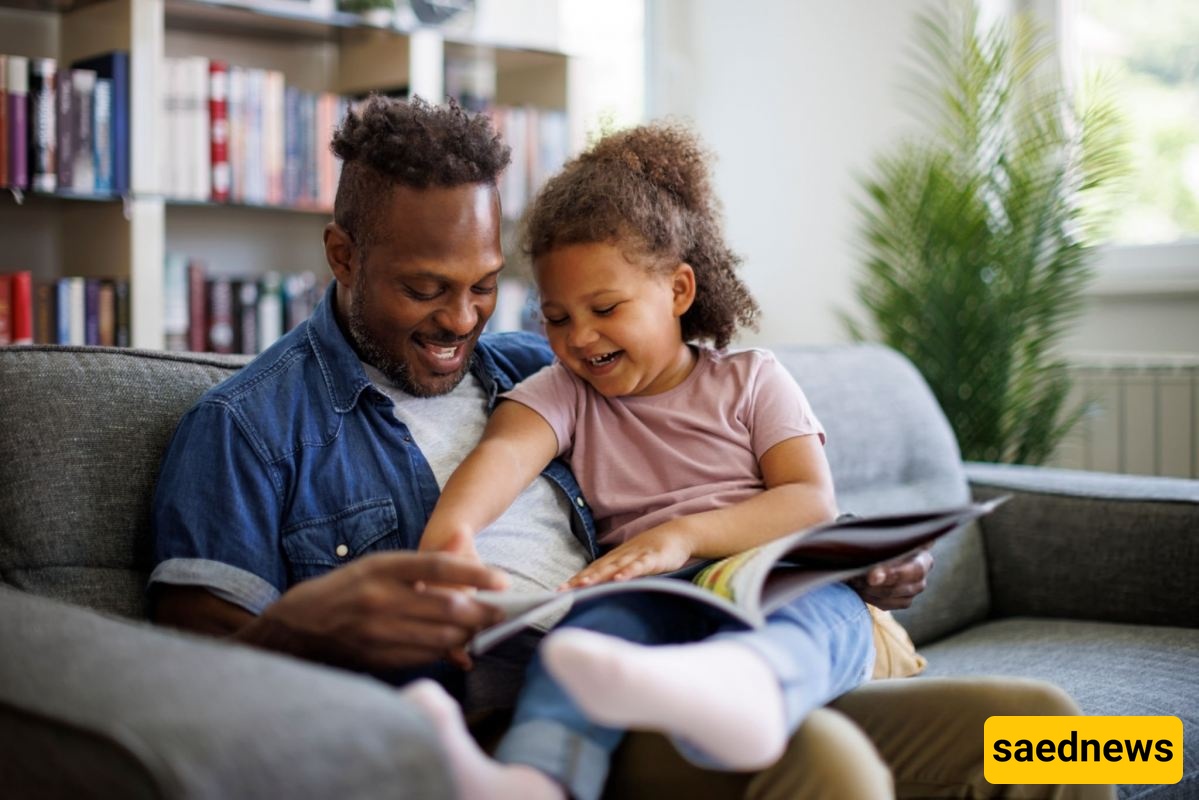
Mothers and fathers may contribute to a child’s development in different but complementary ways. While a mother may often be associated with emotional nurturing, comfort, and unconditional affection, a father may provide opportunities to learn about boundaries, responsibility, independence, and engaging with the outside world.
A child with an involved father can learn that the world can be both caring and structured. They may learn that achieving goals requires effort, responsibility, perseverance, and the courage to face difficulties.
 1. Responsibility and Commitment
A child may observe their father getting up each morning, going to work, providing for the family, and fulfilling his responsibilities even when he does not feel like doing so.
This seemingly simple example can teach an important lesson: commitment means doing what needs to be done, even when you are not in the mood.
Children who grow up seeing this kind of consistency may be more likely to value keeping their promises and accepting responsibility as adults.
Children can learn from their fathers that failure is not necessarily the end of the road. A father who experiences a professional or financial setback and then gets back on his feet can show his child that life includes both successes and difficulties, and that the ability to recover matters.
Psychologists often refer to this ability as resilience—an increasingly important skill for navigating the challenges of modern life.
Fathers may encourage children to explore and try new things, from climbing a tree as a child to making bold decisions later in life.
This kind of support can teach children to acknowledge fear without allowing it to control them.
A child who learns to take calculated risks may feel more comfortable making significant decisions later in life, such as starting a business, moving to another country, or changing career paths.

One of the most influential lessons children can receive from their fathers is how they treat their partners.
A father who speaks to his wife with respect, affection, and courtesy can demonstrate that men and women in a family can be partners who value and support one another.
Boys may carry this example into their future relationships, while girls may develop expectations about respectful and healthy treatment in their own relationships.
Children often receive some of their earliest financial lessons through observing their parents.
Understanding where money comes from, how it is spent, how it is saved, and how financial decisions are planned can become valuable life skills.
A father who discusses money openly and responsibly can help a child understand that money is a tool rather than an ultimate goal, and that honest work can be a source of dignity and pride.
When children face problems, they may turn to their parents for help. Rather than immediately solving every problem for them, a father can encourage a child to think through possible solutions independently.
This approach can strengthen problem-solving abilities.
Instead of simply fixing a child’s problems, teaching them how to solve problems gives them a skill they can carry throughout their lives.
Parents play an important role in establishing household boundaries and expectations. Although rules may sometimes feel restrictive to children, reasonable boundaries can provide structure, predictability, and security.
Learning that hearing “no” is a normal part of life can also help children develop a healthier relationship with social rules, workplace expectations, and everyday limitations as they grow older.
A father who remains calm during moments of anger can demonstrate an important lesson: strength is not necessarily expressed through shouting or aggression, but through self-control.
Children who observe adults managing anger constructively can have an opportunity to learn healthier ways of handling their own emotions and responding to conflict.

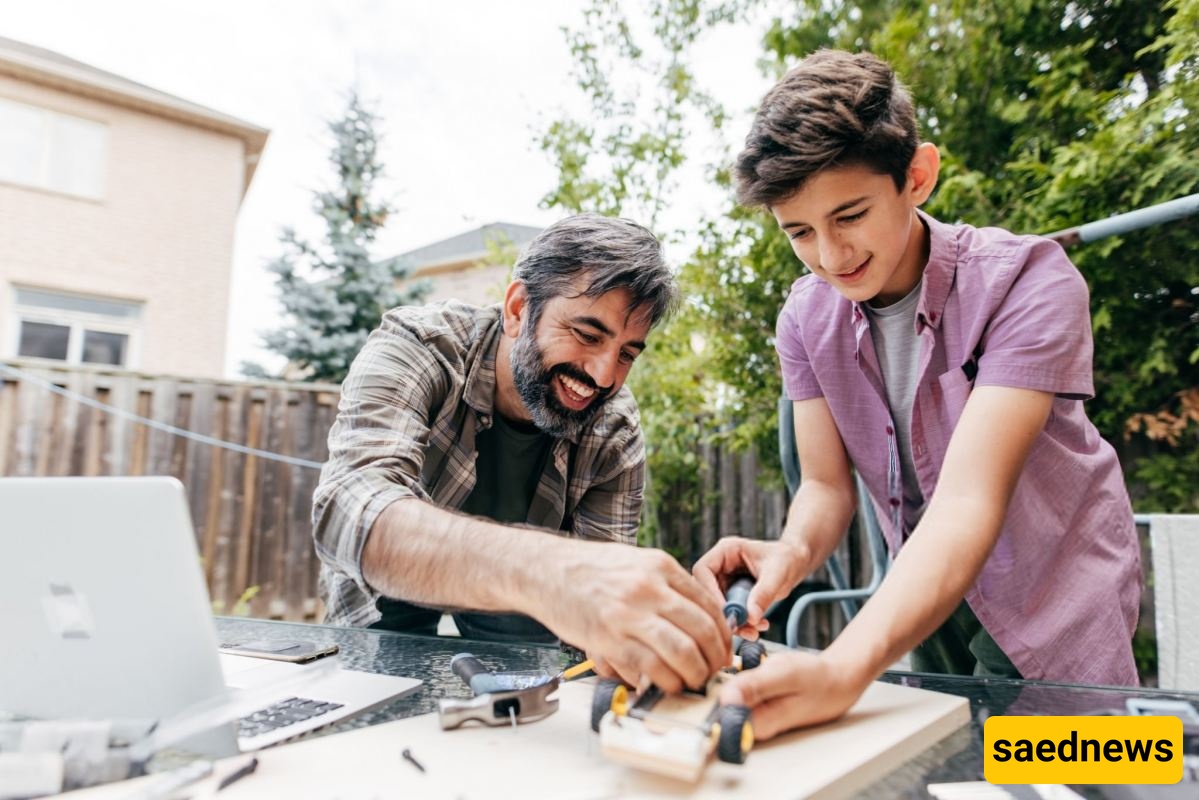
From fixing a leaking faucet to changing a tire or building a simple shelf, children can learn many practical skills by working alongside their fathers.
These skills are not merely technical. Completing practical tasks can also encourage self-reliance and confidence.
A child who has experienced building or repairing something alongside a parent may feel more capable of handling unfamiliar tasks independently.
A father who keeps his word, even when dealing with small matters, can teach his child that trust is one of the foundations of any healthy relationship.
This lesson can later influence the child’s professional, family, and personal relationships.
Children can learn from their fathers that family can be a source of security and support, particularly during difficult circumstances.
A father who remains present and supportive during a crisis can demonstrate the meaning of loyalty, commitment, and standing by the people you love.
Boys may observe their fathers to understand how partners should treat one another, while girls may develop ideas about what respectful behavior can look like in a relationship.
Even when these lessons are absorbed unconsciously, the relationship patterns children observe at home can have a lasting influence on their expectations and behavior in adulthood.

Are these lessons exclusively something children can learn from fathers? Not necessarily.
Mothers can teach many of the same skills, and fathers can provide emotional nurturing and security as well. What makes a father’s contribution distinctive is often the particular way he interacts with his child and models behavior.
Rather than viewing parenting as a competition between mothers and fathers, it is more useful to recognize that children can benefit from different forms of support, guidance, affection, boundaries, and encouragement.
Choose quality time over simply spending more hours together. A short period of genuine attention can be more meaningful than hours of physical presence without engagement.
Talk rather than simply give orders. Children should be able to see their father as a source of safety and guidance, not only as an authority figure.
Include children in everyday activities. Even simple tasks can become opportunities to teach useful skills.
Admit your mistakes. Showing that fathers can make mistakes teaches children that honesty and accountability are valuable.
Treat their mother with respect. The way parents treat each other can be one of the most powerful lessons children observe.
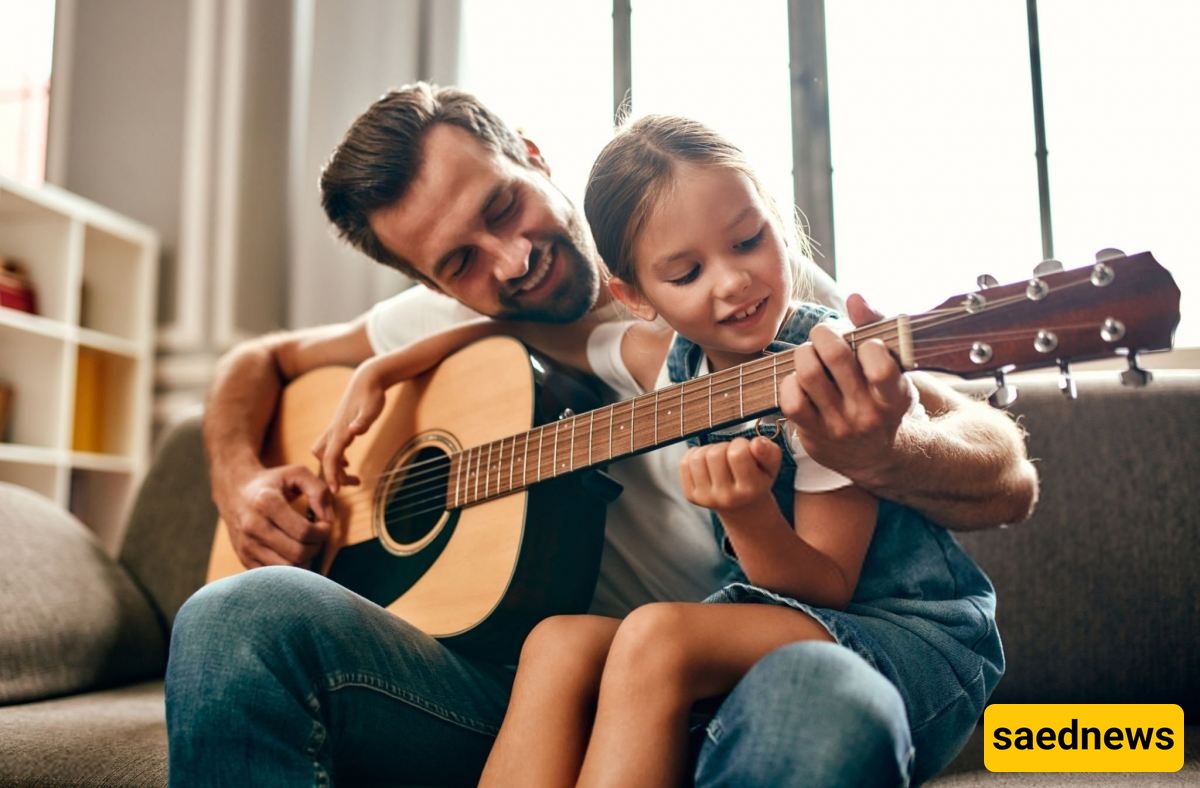
A father’s role in raising a child can have a lasting influence on their development. Lessons involving responsibility, courage, problem-solving, emotional regulation, respect, and practical independence can help prepare children for the challenges of adult life.
However, physical presence alone is not enough. Emotional availability, positive example-setting, meaningful communication, and genuine involvement are also important.
A father’s legacy is about much more than possessions or financial support. His lasting legacy can be found in the values, habits, and life lessons that remain with his child for years to come.
For fathers, every meaningful moment spent with a child can become an opportunity to shape their future. And for those who were fortunate enough to have a positive father figure, the values they learned can become part of the legacy they pass on to the next generation.