SAEDNEWS:PDR repairs car dents without filler or repainting, restoring the vehicle’s original look while helping preserve its value.
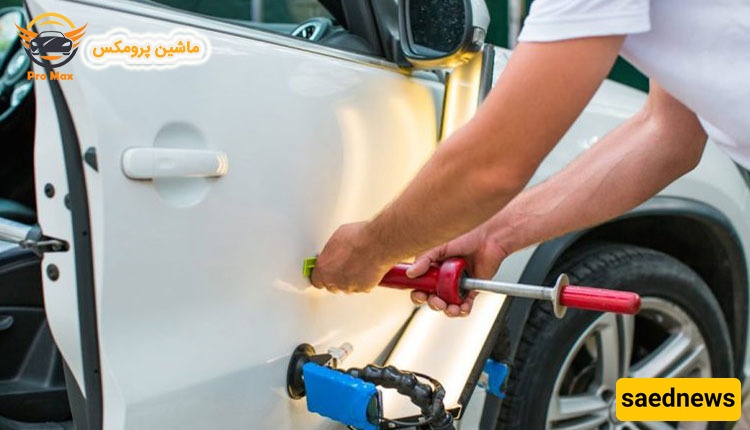
According to Saednews, Minor accidents, roadside gravel impacts, severe hailstorms, or even a simple mistake while parking can all leave dents and damage on a vehicle’s body. Until a few years ago, discovering a dent on a car usually meant a significant drop in its resale value, followed by body filler and repainting. Today, however, a technique known as PDR, or Paintless Dent Repair, has become a popular solution for repairing many types of dents without repainting.
If you have heard the term PDR from auto body specialists or are looking for a way to restore your vehicle’s body while preserving its original condition and value, this guide explains how the process works, where it can be used, and what its limitations are.
PDR stands for Paintless Dent Repair. It is a specialized repair technique used to restore dents without applying body filler or repainting the damaged panel.
During the process, a trained technician uses specialized tools to apply carefully controlled pressure to the damaged area, gradually returning the metal to its original shape. Because the factory paint remains intact, there is usually no need for additional paintwork.
One of the main advantages of PDR is that it preserves the vehicle’s original factory finish. Since repainting a body panel can affect a vehicle’s resale value, paintless dent repair can be a practical and cost-effective option when the damage is suitable for this technique.
The quality of a PDR repair depends heavily on the technician’s experience, technique, and equipment. Different types of dents require different tools and repair approaches.
Specialized rods and levers are used to reach the back of a dent and apply precise pressure to specific areas. The technician gradually manipulates the metal until the original shape is restored.
When there is limited access to the rear of a damaged panel, specially designed tabs can be attached to the dent. A pulling tool then gradually draws the affected area outward.
In certain situations, controlled heat may be used to manage the surface temperature and reduce the risk of damage to the paint during the repair process.
Special lighting systems are among the most important tools used by PDR technicians. Reflections from the lights across the vehicle’s surface allow the technician to identify the depth and shape of a dent, including subtle changes that may not be visible under ordinary lighting. This makes it possible to apply pressure more accurately.
When a vehicle develops a dent, traditional body repair is often the first solution that comes to mind. Traditional repairs may involve reshaping the metal, applying filler, sanding, and repainting the affected panel.
With PDR, however, the original paint can remain untouched when it is still intact and the severity and location of the damage make paintless repair possible.
Comparison | PDR | Traditional Body Repair |
|---|---|---|
Original factory paint | Preserved | Usually requires repainting |
Effect on vehicle value | Helps preserve the original finish | Repainted panels may affect resale value |
Repair time | Often completed within hours or a day | Can take several days depending on the damage |
Overall cost | Often more economical when applicable | Generally higher when filler and painting are required |
Long-term finish | Original panel and factory paint remain intact | Filler or repainting may require maintenance over time |
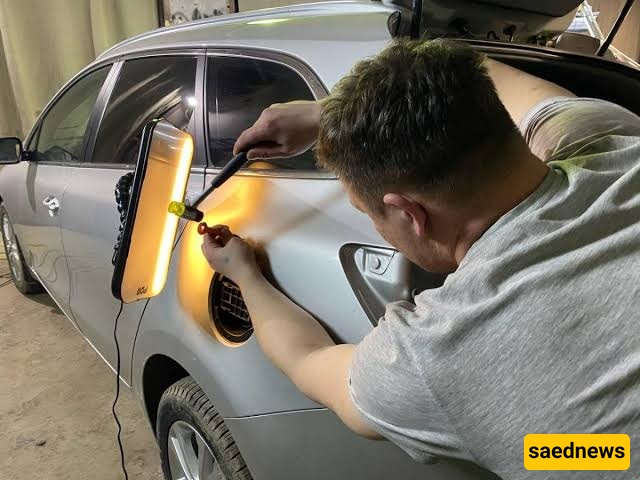
A common question is whether every dent can be repaired using PDR. The answer is no. In general, paintless dent repair works best when the original paint has remained intact and has not cracked or peeled.
PDR is particularly useful for repairing numerous small dents caused by severe hailstorms. Roofs, hoods, and trunk lids can often be restored without repainting.
Small dents caused by stones or gravel thrown up by other vehicles, particularly on highways, may be suitable for PDR when the paint remains undamaged.
Small dents caused by low-speed impacts, contact with another vehicle’s door, or accidental contact with walls and other objects in parking areas can often be repaired using PDR.
Dents located on pronounced body lines or curved sections can sometimes be repaired with PDR as well. These repairs require considerable skill because the technician must restore both the dent and the original contour of the panel.
Despite its advantages, PDR has limitations. When the damage is severe or the vehicle’s paint has been significantly affected, paintless repair may not be sufficient.
PDR may not be appropriate when:
The paint has peeled, chipped, or developed deep scratches.
The dent is extremely severe and located on a sharp body edge where the metal has been excessively stretched or torn.
The panel has previously been repaired incorrectly with body filler and repainting, since the filler may crack or break when pressure is applied from behind.
The underlying metal has suffered extensive structural deformation.
In such cases, conventional body repair, painting, or a combination of repair techniques may be more appropriate.
The technician’s skill and experience are among the most important factors in achieving a high-quality PDR result. Paintless dent repair requires patience, precision, and a detailed understanding of how automotive panels respond to controlled pressure.
Choosing an inexperienced technician can potentially result in uneven surfaces, visible waves, or unnecessary damage to the original paint. Before handing over your vehicle, it is therefore worth checking the repair center’s experience, previous work, equipment, and customer feedback.
Platforms that introduce automotive service providers can also make the selection process easier by allowing vehicle owners to research and compare different repair centers before making a decision.
PDR can be an excellent solution for many minor dents, hail impacts, and parking-related body damage when the original paint remains intact. Its biggest advantage is the ability to restore the shape of the panel while preserving the factory finish and avoiding unnecessary repainting.
However, the technique is not suitable for every type of damage. The condition of the paint, severity and location of the dent, condition of the metal, and previous repair history all need to be considered.
Ultimately, the best PDR results come from using the right repair method and choosing an experienced specialist. A proper assessment before the repair begins can help determine whether paintless dent repair is the right option for your vehicle.