SAEDNEWS: Cyclamen persicum, with its vibrant flowers and beautifully variegated leaves, is one of the most popular indoor plants for autumn and winter. In this comprehensive guide, learn about the ideal growing conditions, watering, fertilizing, propagation methods, and solutions to common problems affecting this beautiful plant.
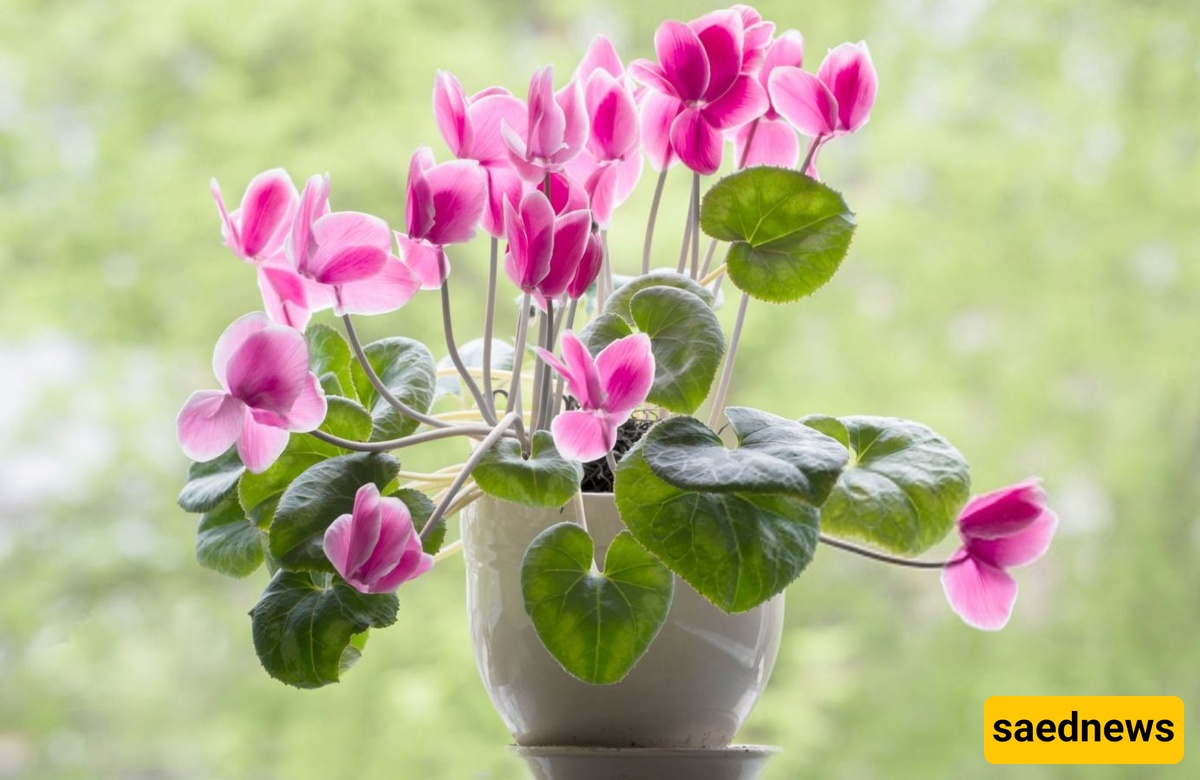
According to Saednews, Cyclamen persicum belongs to the primrose family (Primulaceae) and is considered a bulbous plant because it develops an underground tuber-like corm. Native to Mediterranean climates—including southern Europe, western Asia, and parts of North Africa—this attractive plant produces butterfly-shaped flowers in white, pink, red, purple, and even bicolored varieties. Its heart-shaped, leathery leaves are often decorated with beautiful patterns, giving the plant ornamental value even when it is not flowering.
Cyclamen naturally flowers from late autumn through early spring. This makes it particularly valuable as a houseplant during the colder months, when many other plants enter dormancy. Understanding its natural growth cycle is essential for keeping Cyclamen healthy and encouraging it to bloom again.
To keep your Cyclamen fresh, healthy, and covered with flowers, try to recreate the cool and moderately humid conditions of its natural habitat. Cyclamen prefers consistent cool temperatures, bright indirect light, and moderate humidity.
Cyclamen persicum needs plenty of bright but indirect light. Strong direct sunlight, particularly around midday, can scorch the leaves and cause the flowers to wilt.
An ideal location is near an east- or north-facing window, where the plant receives gentle morning light or filtered daylight. During winter, when sunlight is weaker, the plant can be moved closer to a south-facing window to maximize light exposure. If natural light is insufficient, a suitable grow light can be used.

Temperature is one of the most important factors in successful Cyclamen care. The plant prefers cool conditions, with an ideal growing and flowering temperature of approximately 10–18°C (50–64°F).
Temperatures above 20°C (68°F), especially at night, can cause leaves to turn yellow and flower buds to drop. Keep Cyclamen away from radiators, heaters, stoves, and other sources of heat.
Cyclamen generally benefits from relative humidity around 50–60%. You can increase humidity by:
Placing the pot on a tray filled with pebbles and a small amount of water, making sure the bottom of the pot does not sit directly in the water
Using a cool-mist humidifier nearby
Lightly misting the air around the plant rather than spraying the leaves and flowers directly
Proper watering is one of the most important aspects of Cyclamen care. The plant needs consistent but controlled moisture. Overwatering can lead to root and corm rot, while insufficient water can cause leaves to wilt and flowers to fall.
Keep the soil slightly moist, but never constantly wet or waterlogged.
Before watering, check the top layer of soil with your finger. If the upper 1 cm (about ½ inch) feels dry, it is generally time to water.
Bottom watering is often the safest method. Place the pot in a container of water for about 10–15 minutes, allowing moisture to enter through the drainage holes. Remove the pot afterward and let excess water drain away.
If watering from above, avoid pouring water directly onto the corm, as prolonged moisture around it can encourage rot.
Use room-temperature water. Ideally, allow tap water to sit for about 24 hours before use.
During its active growing and flowering period, generally from autumn through spring, Cyclamen benefits from regular feeding.
Apply a liquid fertilizer formulated for flowering plants approximately every two weeks. A balanced fertilizer such as 20-20-20 (nitrogen-phosphorus-potassium) can be used at half the strength recommended on the package.
Stop fertilizing completely during the plant's summer dormancy.
Cyclamen prefers a light, well-draining growing medium that contains plenty of organic matter. A suitable mixture can include:
Well-decomposed leaf mold
Peat moss
Perlite
A small amount of sand
This type of mix provides good drainage while retaining enough moisture and preventing the roots from becoming compacted.

The pot size is also important. Choose a container only about 2–3 cm (¾–1¼ inches) wider than the corm. An oversized pot can retain excessive moisture and increase the risk of root rot.
Always use a container with drainage holes. A well-draining potting mix is more important than simply adding a thick layer of gravel or broken pottery to the bottom.
Understanding the annual life cycle of Cyclamen persicum is essential for keeping it healthy over the long term. After flowering, the plant naturally enters a period of summer dormancy. Proper care during this stage helps prepare it for renewed growth and flowering in autumn.
Once flowering has finished and the leaves begin turning yellow, gradually reduce watering.
Remove spent flowers by taking the entire flower stem from its base. Allow the leaves to yellow and dry naturally rather than removing them prematurely. During this stage, the plant transfers nutrients from the leaves back into the corm, so the leaves should be allowed to complete this process.
During summer, Cyclamen may become completely dormant. Its leaves dry out and eventually disappear.
At this point, reduce watering considerably. The soil should not remain wet, but it should also not be allowed to become extremely dry for prolonged periods.
Keep the pot in a cool, dry, relatively dark location. Some growers remove the corm from the soil and store it in a dry place, but leaving it in its pot is generally a simpler approach.
Around early autumn, as temperatures begin to fall, the corm starts producing new growth.
Gradually resume watering and move the pot to a cool location with bright, indirect light. Once new leaves have developed, restart fertilization to support the plant as it prepares for another flowering season.
Cyclamen persicum can primarily be propagated from seeds or, less commonly, by dividing the corm. Both approaches require patience and careful handling, while seed propagation is particularly interesting for experienced growers.
Cyclamen can be grown successfully from seed, but it is a slow process. Plants may require approximately 12–15 months or longer before reaching flowering size.
Seeds can be collected from mature flowers on an established plant or purchased from a reputable supplier.
Soak the seeds in lukewarm water for approximately 24 hours to soften their outer coating.
Fill a seed tray with a mixture of peat moss and perlite.
Sow the seeds about 0.5 cm (¼ inch) deep.
Cover the tray with clear plastic to maintain humidity and keep it at approximately 15–20°C (59–68°F).
Seeds commonly germinate within 4–6 weeks. Once seedlings emerge, remove the covering and move the tray to bright, indirect light.
When seedlings have developed 3–4 true leaves, transplant them into small individual pots.
During the first year, the young plants primarily produce foliage and develop a small corm. Flowering generally occurs later as the plants mature.

Corm division can produce new plants more quickly, but it is less commonly used because cutting the corm creates a significant risk of rot and infection.
To attempt this method:
During summer dormancy, carefully remove the corm from its pot and clean away the soil.
Using a sharp, sterilized knife, divide the corm into sections, ensuring that each section contains at least one viable growth point.
Treat the cut surfaces with an appropriate fungicide or powdered charcoal to reduce the risk of infection.
Allow the sections to air-dry for approximately 24 hours so the cut surfaces can dry.
Plant each section in a small container filled with suitable, well-draining soil and water sparingly.
Keep the newly planted sections cool and in bright, indirect light until new growth appears.
Like other ornamental plants, Cyclamen persicum can suffer from pests and fungal diseases. Identifying problems early can greatly improve the chances of saving the plant.
Corm rot is one of the most common Cyclamen problems and is usually associated with excessive watering or poor drainage.
Symptoms may include sudden yellowing of leaves, a soft corm, and an unpleasant smell coming from the soil.
If these symptoms appear, remove the plant from its container, cut away affected tissue with a sterilized tool, and repot it in fresh, clean, well-draining growing medium.
Botrytis is a fungal disease favored by high humidity and poor air circulation. It can appear as brown, soft, or decaying areas on flowers and leaves.
To reduce the risk, avoid wetting the flowers and improve air circulation around the plant.
Cyclamen mites are microscopic pests that can cause distorted, stunted leaves and deformed flower buds.
They can be difficult to control. Isolate an affected plant from other houseplants and treat it with an appropriate miticide according to the product's instructions.
Aphids and thrips may attack developing flower buds and cause distorted or deformed growth.
Insecticidal soap or an appropriate systemic insecticide may help control an infestation, provided the product is suitable for Cyclamen and used according to its label.
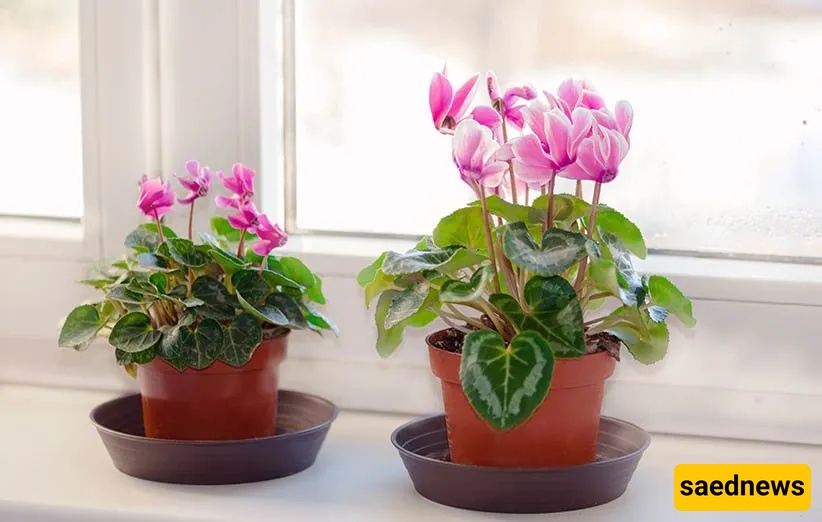
For the best possible flowering performance, keep these final tips in mind:
Remove faded flowers as soon as they appear, taking the entire flower stem from its base. This encourages the plant to produce additional blooms.
Remove yellow or completely dried leaves regularly so the plant can focus its resources on healthy growth.
Keep the Cyclamen pot away from hot walls and direct heat sources.
Rotate the pot periodically so all sides of the plant receive similar amounts of light, encouraging balanced growth.
Never expose Cyclamen to cigarette smoke, household gas, or chemical solvents.