SAEDNEWS: Whipped cream plays a key role in a cake’s appearance, texture, and flavor. In this guide, you’ll learn why whipped cream becomes runny, how to whip it properly, and effective ways to make it firmer and more stable.
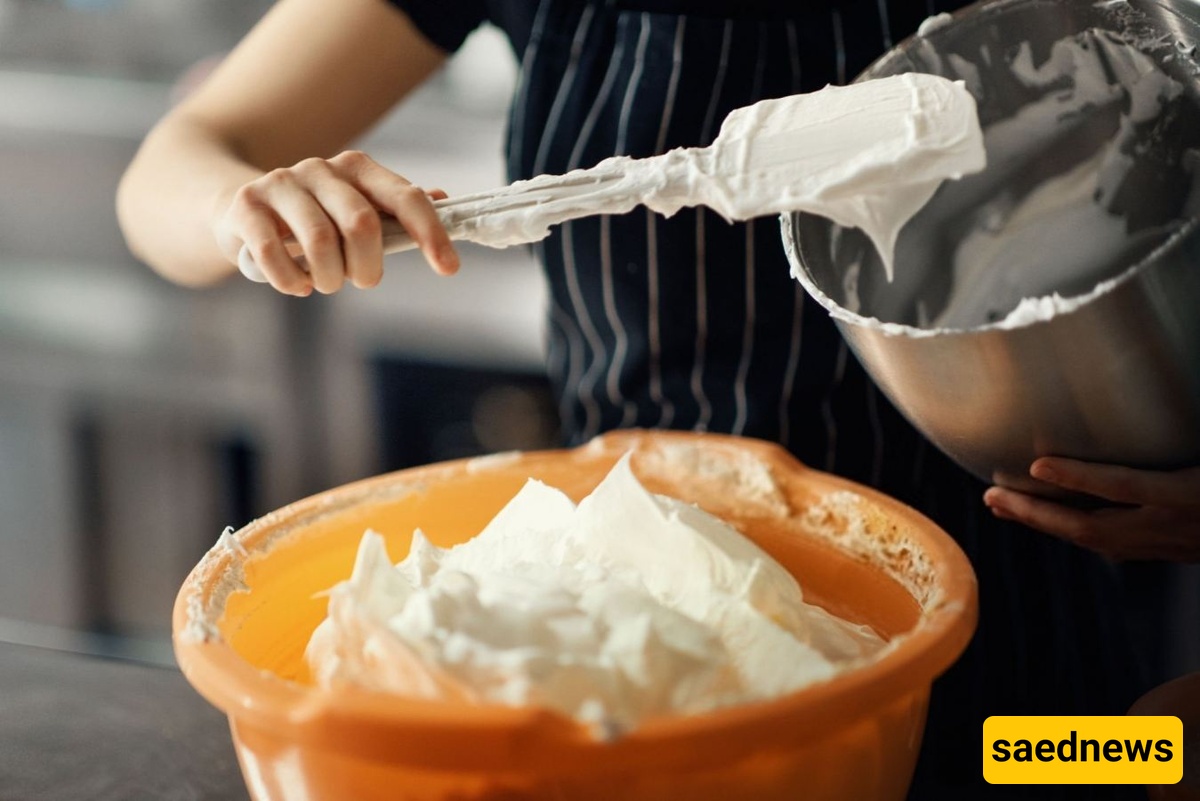
According to Saednews, Whipped pastry cream is a type of confectionery cream that increases in volume as air is incorporated through continuous whipping. Once properly whipped, it develops a light, airy, yet stable texture. Whipped cream can be used as a cake covering, as a filling between cake layers, and for creating cream flowers, decorative borders, and writing on cakes.
The quality of whipped cream has a direct impact on the appearance and durability of a cake. If the cream does not whip properly or becomes soft after a while, cake decorations may collapse and the overall appearance of the cake can be ruined. For this reason, understanding the basic principles of whipping pastry cream is essential for both home and professional bakers.
Whipped cream can become soft for several reasons. Understanding these causes can help prevent problems. The most common reasons include:
Low fat content: Cream containing less than 30% fat is difficult to whip and tends to become soft quickly.
Incorrect cream temperature: Cream that is too warm or completely frozen is unsuitable for whipping. It should be cold but not frozen solid.
Greasy or warm equipment: Any traces of grease on the bowl or mixer beaters can prevent the cream from whipping properly.
Under-whipping or over-whipping: Insufficient whipping leaves the cream soft, while excessive whipping can cause it to split and become grainy.
Adding warm ingredients: Warm food coloring, chocolate, or flavorings can cause whipped cream to lose its structure.
High humidity: Exposure to steam or excessive humidity can reduce the cream's stability.

The first step in making high-quality whipped cream is choosing the right type of pastry cream. Choose cream with a fat content of more than 30%. The higher the fat content, the easier the cream is to whip and the more stable it will be.
Ready-made pastry creams available on the market are generally more suitable for cake decoration. However, always pay attention to the production date, storage conditions, and brand.
Pastry cream should be stored in the freezer. When you want to use it, remove the required amount from the freezer and place it in the refrigerator so that it can thaw gradually. The ideal time to whip it is when the edges have thawed while the center remains slightly frozen.
Before whipping the cream, make sure the bowl and mixer beaters are completely cold and free of any grease. A metal or ceramic bowl is the best choice because it retains cold temperatures more effectively and helps keep the cream chilled. Plastic bowls are less suitable because they can absorb grease and are more difficult to clean thoroughly.
Place the mixer beaters in the refrigerator or freezer for a few minutes until they are thoroughly chilled. You can also place the mixing bowl over a larger bowl filled with ice to keep the cream cold throughout the whipping process.
Pour the partially thawed cream into the chilled bowl. Beat it on low speed for about two minutes until it becomes smooth and uniform. Then increase the mixer speed and continue beating for approximately 8–10 minutes until the cream holds its shape.
At this stage, the beaters should leave visible marks on the surface of the cream.
It is important that only the surface does not become firm—the entire volume of the cream should have a stable consistency. To test it, carefully tilt the bowl. If the cream does not move or slide, it is properly whipped.
Be careful not to over-whip the cream, as it may split and release liquid. If this happens, add a small amount of cold, unwhipped cream and mix gently on low speed until the mixture becomes smooth again.
Using an electric mixer is the most common and fastest way to whip pastry cream. If you do not have an electric mixer, you can use a hand whisk, although this will require more time and effort.
Whipping with a fork is also possible, but the cream may not become completely smooth and uniform. A blender can also be used and generally produces a firmer cream, but care must be taken to avoid over-whipping.
If your whipped cream becomes soft, do not worry. The following methods can help restore its consistency:
Refrigerate it: Place the bowl in the refrigerator for 15–30 minutes, then beat the cream again on low speed.
Add whipped cream powder: This is one of the most effective ways to stabilize cream. Mix it with powdered sugar before adding it to the cream.
Add powdered sugar: Besides adding sweetness, powdered sugar can help absorb moisture and improve the cream's firmness.
Add gelatin: A cooled gelatin mixture can increase the stability of whipped cream.
Add mascarpone: Mascarpone can give the cream a more stable texture while adding a smooth, delicate flavor.
Add cold, unwhipped cream: If the cream has been over-whipped, add a small amount of cold, unwhipped cream and mix gently on low speed.
1 cup whipped cream powder
1 cup powdered sugar
1 cup cold milk or cold cream
Mix the whipped cream powder and powdered sugar together. Add the cold milk or cream, then beat on high speed for 3 minutes.
Reduce the mixer speed and continue beating for approximately 8 more minutes, until the cream becomes light, fluffy, and holds its shape.
This method is particularly suitable for decorating cakes and pastries.
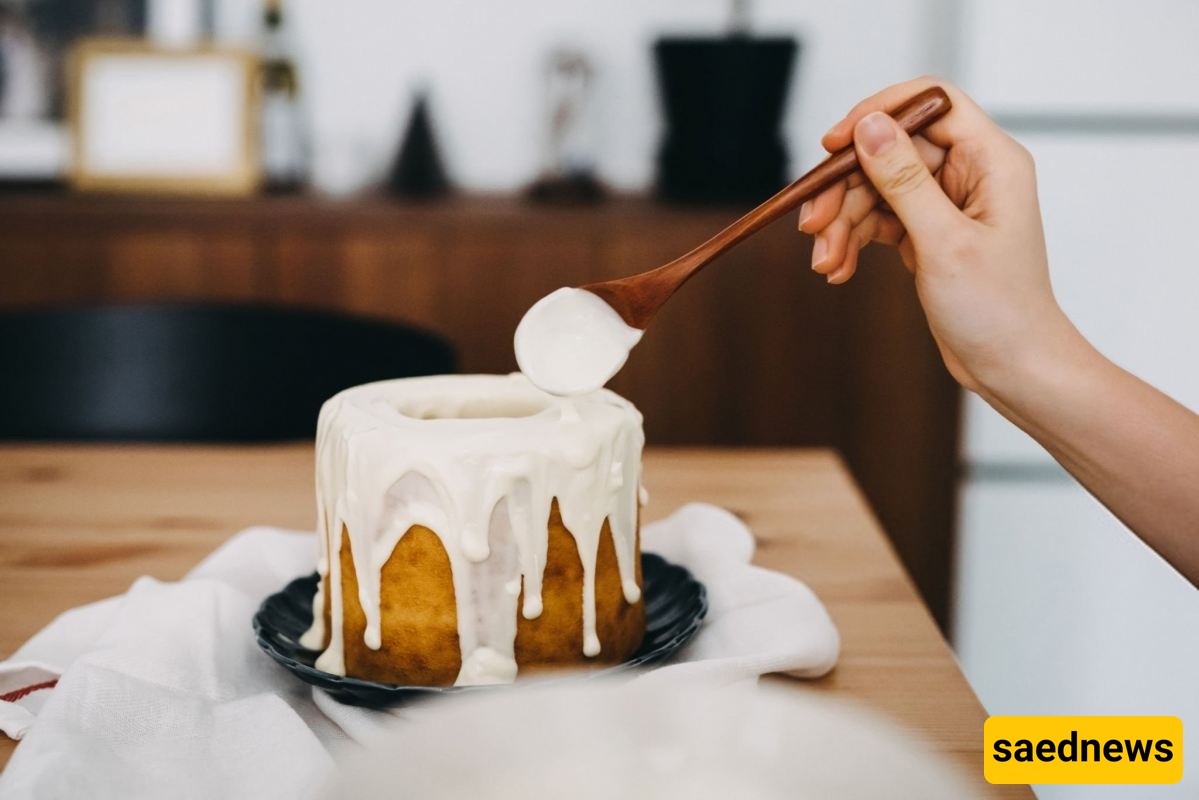
Once the cream has been whipped, it is best to use it immediately. Whipped cream gradually becomes softer when exposed to air.
If you need to store it, place it in the refrigerator and cover the container with plastic wrap.
Whipped cream can also be stored in the freezer, but its original quality and texture will not be fully restored after thawing. For this reason, thawed whipped cream is not ideal for covering cakes, although it can still be used in desserts and ice cream.