Saed News: A remarkable dinosaur discovery in Spain has provided scientists with a new perspective on the world of stegosaurs.
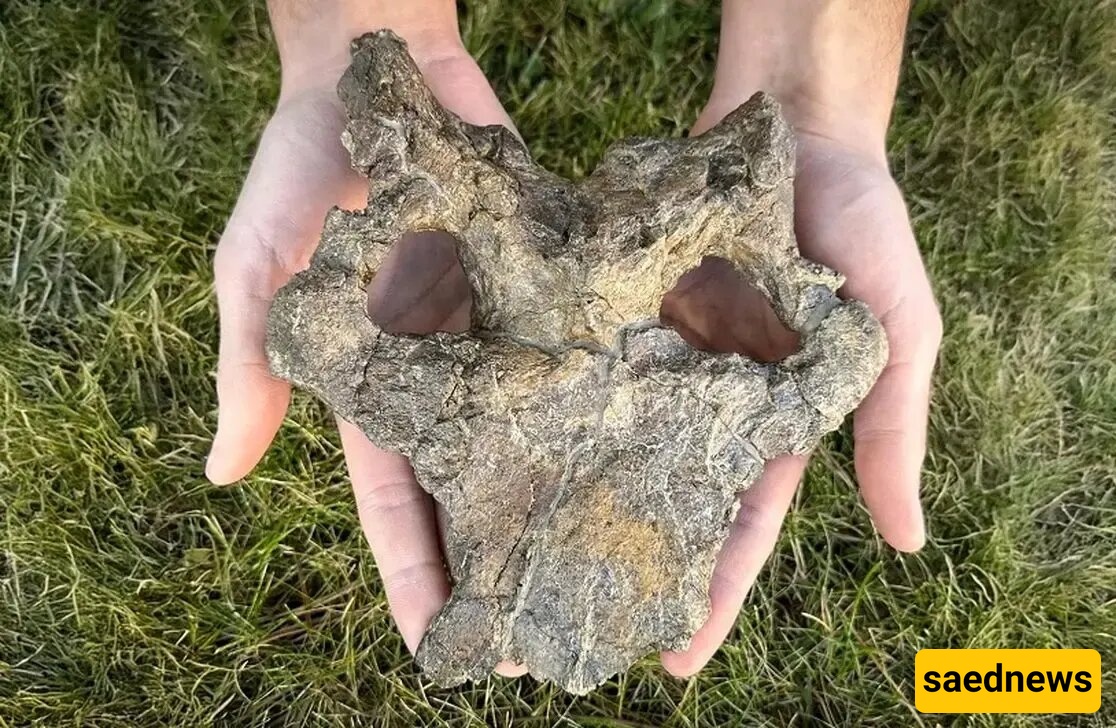
According to SAEDNEWS, and citing Fardid, paleontologists have successfully found the most complete stegosaur skull discovered in Europe; a skull belonging to the famous armored dinosaur “Dacentrurus armatus” that lived about 150 million years ago on Earth. Since stegosaur skulls are extremely fragile and rarely remain intact, this fossil reveals new information about the evolutionary process of these armored giants.
This research was conducted by paleontologists from the Fundación Conjunto Paleontológico de Teruel-Dinópolis, and its results were published in the scientific journal Vertebrate Zoology. The fossil was discovered in the Riodeva region of Teruel province in Spain and belongs to a plated dinosaur from the late Jurassic period.
According to Fardid, stegosaurs were herbivorous dinosaurs that walked on four legs and are mainly known for the bony plates and spikes extending from their neck to their tail. The fossil was discovered during excavations at the “Estado de Colón” site in the Villar del Arzobispo geological formation, an area dating back about 150 million years.
Researchers identified this specimen as belonging to the species Dacentrurus armatus, one of the most famous European stegosaurs. This skull is now considered the most complete stegosaur skull known in Europe, which is highly significant because dinosaur skull bones are extremely delicate and usually disappear over millions of years.
Sergio Sánchez Fenollosa, a researcher at the Dinópolis Foundation and one of the study’s authors, said that a detailed examination of this exceptional fossil has revealed previously unknown aspects of the skull structure of Dacentrurus armatus, a dinosaur considered one of Europe’s most important stegosaurs.
He explained that this discovery plays an important role in understanding the evolution of stegosaur skulls. In addition to anatomical studies, researchers have also proposed a new hypothesis about the evolutionary relationships of stegosaurs worldwide and have defined a new group called “Neostegosauria.”
According to the researchers, Neostegosauria includes medium and large stegosaur species that lived in different parts of the world during various periods of the Jurassic and early Cretaceous.
Based on this study, members of this group lived during the Middle and Late Jurassic in present-day Africa and Europe, in the Late Jurassic in North America, and in the Late Jurassic and Early Cretaceous in Asia.
Scientists believe this new classification could change the current understanding of the evolutionary history and global distribution of plated dinosaurs.