SaedNews: Researchers believe that this axe dates back to between 1400 and 1275 BC and belongs to the Bronze Age, a period when humans began working with metal.
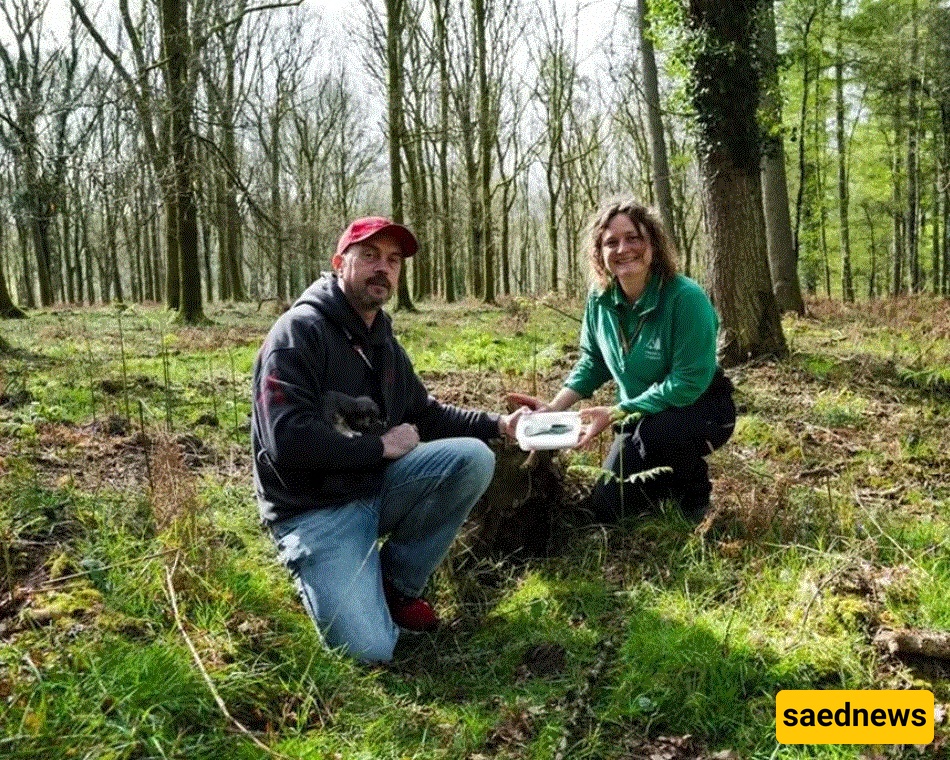
According to SAEDNEWS, John Smith went for a walk in the forest with his dog—a normal outing in which his dog was busy chasing sticks and squirrels. But before the walk ended, they discovered something far more astonishing: an axe head that is believed to be 3,400 years old.
Smith says he found the object while walking in the “Forest of Dean.” He explains: “My dog suddenly ran away from me and started sniffing among the roots. When I went after him, I saw something stuck between the roots; an axe head glowing with a beautiful green color. It was stuck in a hollow, so I pulled it out, and I immediately realized I had found something special.”
Smith handed the object over to Forestry England, which then sought help from Cotswold Archaeology to identify and preserve it. The axe is now kept at the Dean Heritage Centre for registration and conservation.
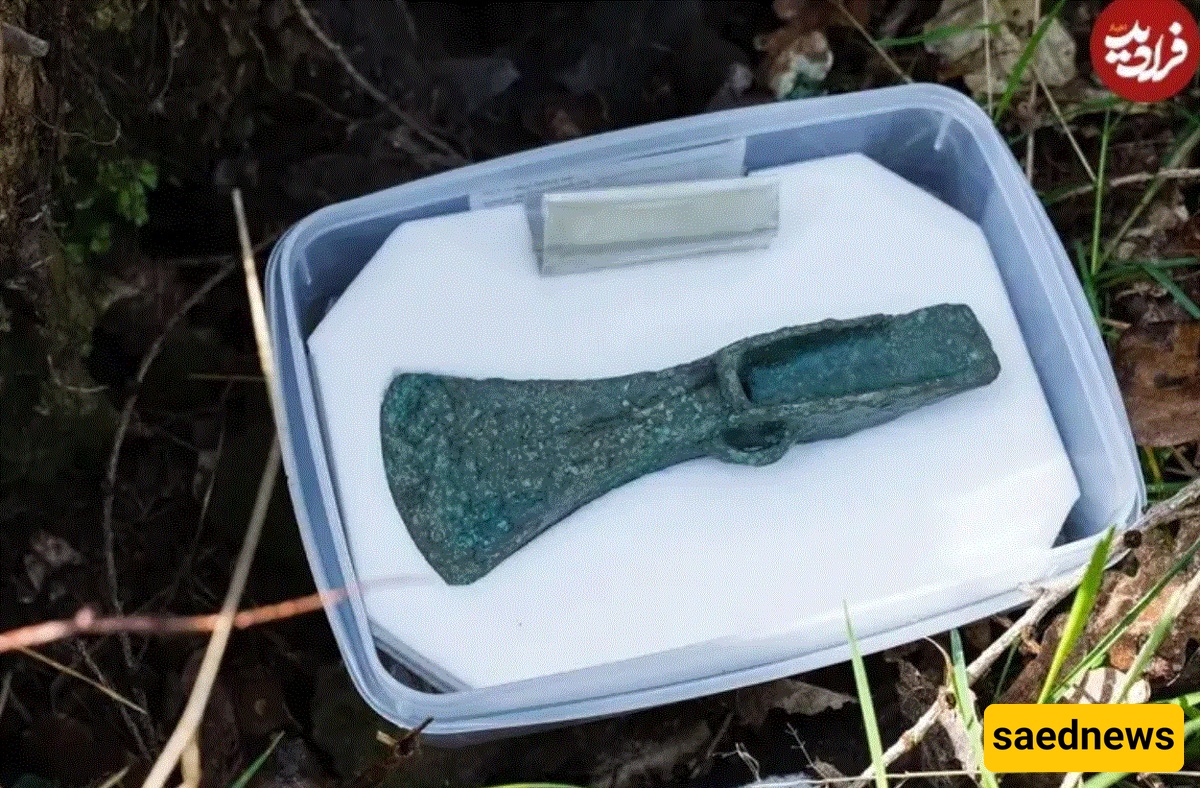
Experts believe the axe dates to around 1400–1275 BC, as it is made of bronze, an alloy of copper and tin. Its shape is identified as a “palstave,” a type of Bronze Age axe.
Leonie Dawson, a local Forestry England officer, said the axe could provide valuable information about the lives and tools of Bronze Age people.
She said: “It is incredible that tools like this have remained hidden beneath our feet for thousands of years and are still preserved. Such discoveries help us connect with people who lived and worked in these lands long before us.”
The Bronze Age in Britain lasted from around 2300 to 800 BC. During this period, bronze toolmaking became widespread. Palstave axes were common tools of the time and featured a loop on the body to secure a wooden handle with a rope.
These axes were made by pouring molten metal into two-part molds, a more advanced method than earlier simple stone molds.
People in the Bronze Age used axes for tasks such as butchering animals, woodworking, and carpentry. They were also symbols of social status and were sometimes buried in graves as valuable items.
Interestingly, this is not the first time a walk with a dog has led to a historical discovery. A few months earlier, a couple in Scotland discovered semi-fossilized human footprints on a beach while walking their dogs—prints believed to date back to the late Iron Age.
The Forest of Dean in southwest England, where this axe was found, has been inhabited since the Stone Age and is considered one of Britain’s ancient forests.
During the Bronze Age, people in this region cleared parts of the forest for agriculture, housing, and ritual sites. In 2019, archaeologists also discovered a circular structure of stone and earth in the same forest, dating back to around 2500–1500 BC.
Researchers say the location of the discovery may be as important as the object itself. Matt Seawright from the National Museum of Ireland previously said: “A historical object is valuable on its own, but when found in its original location, it provides much more information about how and why it was used. What gives meaning to these objects is their place in the natural landscape.”