SAEDNEWS: Dr. Russel Loches, an AI expert from the Polytechnic University of Valencia, questioned the external ramp theory of pyramid construction after a 2020 documentary, noting that the ramps would become too steep as the structure grew taller.
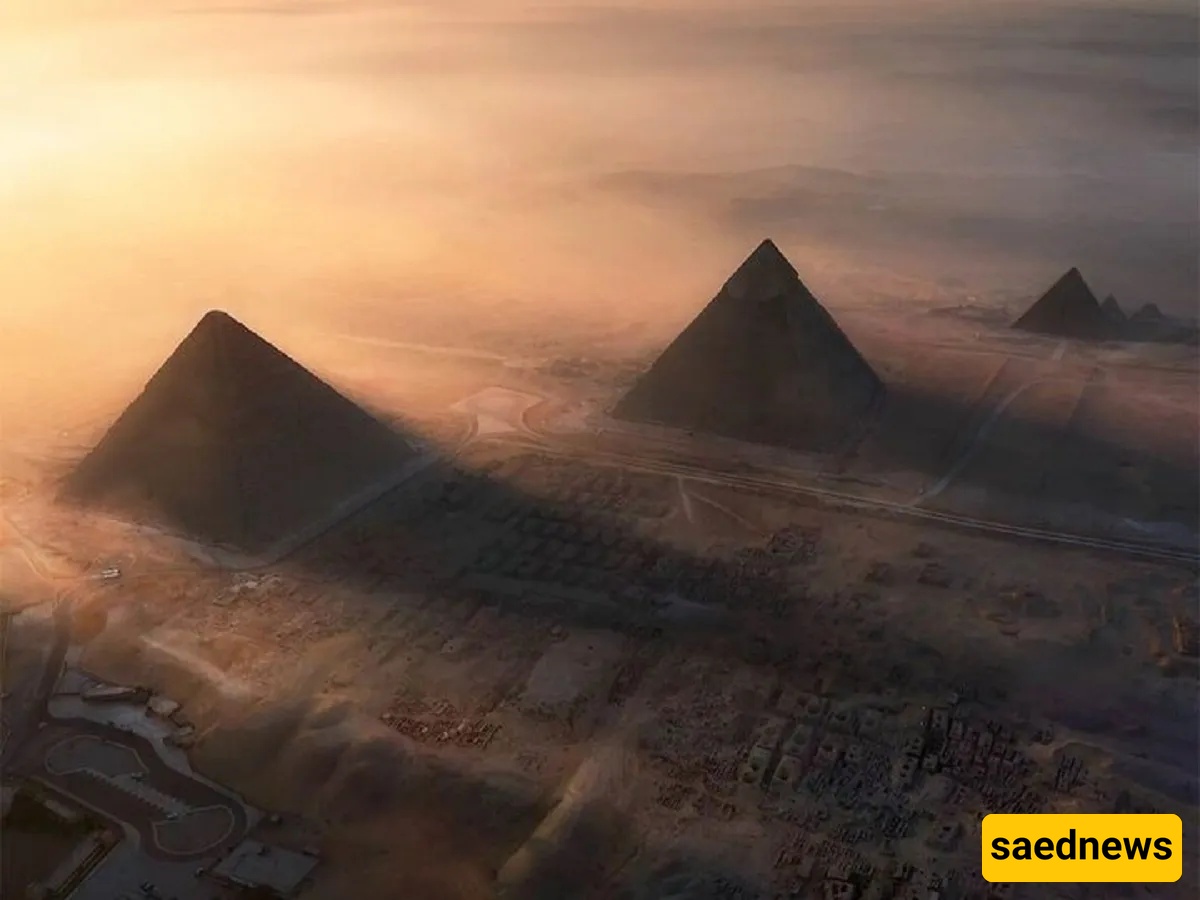
According to the community news service Saed News, three-dimensional simulations by a Spanish researcher indicate that edge-based pathways could have enabled the rapid accumulation of stones, consistent with findings from muon scanning studies.
“I have seen the towering walls of Babylon, the statue of Zeus by the Alpheus River, the Hanging Gardens, and the colossal statue of the sun god Helios. Although I have witnessed the indescribable grandeur of the pyramids and the Mausoleum of Mausolus, none matched the Temple of Artemis, which seemed to touch the clouds. Even the sun outside Olympus had seen nothing that could rival it.”
Antipater, a Greek poet of the 2nd century BCE, introduced the seven great structures in his poem and coined the term “Seven Wonders of the World” for the first time. While originally referring to the major architectural and artistic achievements of ancient Hellenic civilization, today only the pyramids remain. Although Antipater ranked the Temple of Artemis as the greatest, the pyramids—having survived for thousands of years—are undoubtedly the most enduring wonder.
Dr. Russell Loches, a computer engineer with a PhD in pattern recognition and artificial intelligence from the Polytechnic University of Valencia in Spain, questioned existing theories while watching a 2020 documentary about pyramid construction. The most common hypothesis—external ramp systems—has a flaw: as the pyramid grows taller, the ramps would become excessively steep and impractical.
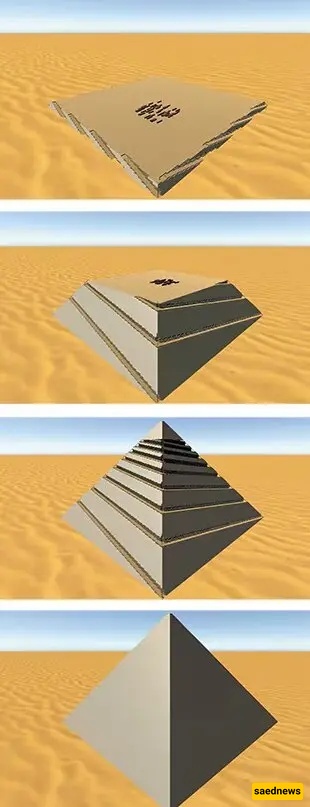
Computer simulations of pyramid construction by Spanish researcher Vicente Luis Rosio propose a different approach. During each layer’s construction, some edge sections were deliberately left incomplete and covered with sand, soil, or wooden planks to form temporary ramps for transporting stone blocks. After placement, these access routes would be filled in with rubble, gradually forming the square pyramid shape.
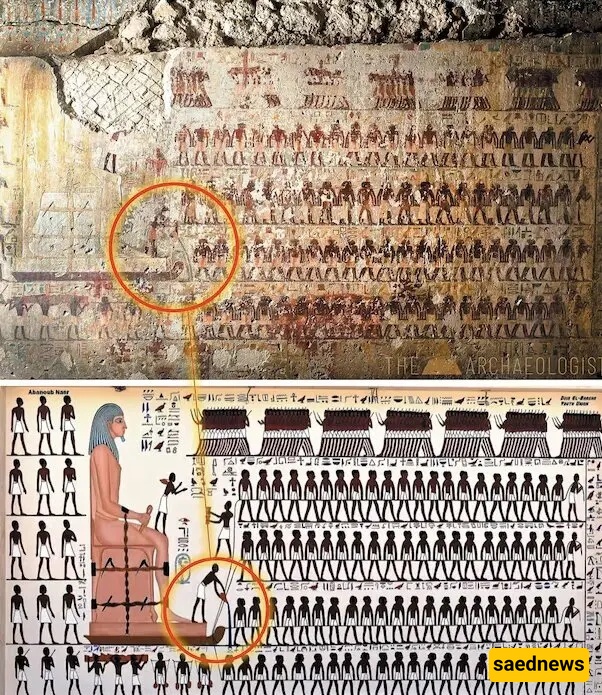
This simulation integrates earlier research. In 2014, physicists at the University of Amsterdam found that wetting sand reduces friction, allowing sleds to move heavy stones with nearly half the force required. Moisture creates capillary bridges between sand grains, effectively doubling their cohesion.
This finding aligns with an ancient Egyptian wall painting from the Twelfth Dynasty (19th century BCE), showing 172 men pulling a massive statue on a sled while one person wets the sand. It suggests that ancient Egyptians understood this physical principle long before modern science.
Simple pulley systems were also likely used. In 2018, researchers from the University of Liverpool and the French Institute of Oriental Archaeology discovered sloped pathways with wooden posts and steps in the Hatnub quarry. They proposed that ropes wrapped around these posts could have helped lift stones up steep inclines of up to 11 degrees.
Dr. Loches incorporated these findings into his simulation: wet ramp surfaces combined with wooden pulley systems for transporting stone blocks. At the corners of the pyramid, widened pathways may have allowed sleds to turn 90 degrees, assisted by pulley mechanisms.
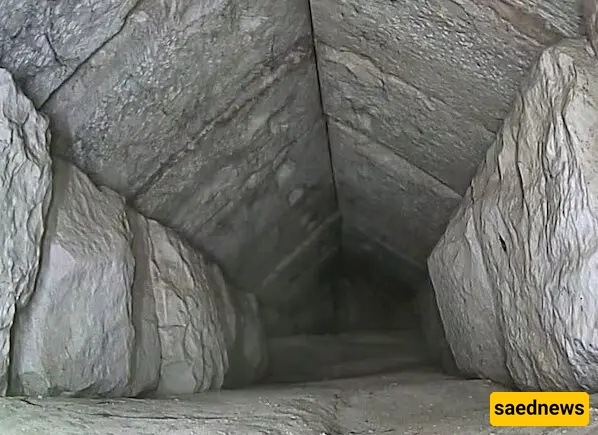
The edge-ramp model aligns with 2023 findings from the “Scan Pyramids” project, which used muon particles to examine internal structures. Muons penetrate materials, revealing hidden voids where their detection patterns intensify. The simulated edge pathways correspond to voids detected in the scans, suggesting a structural connection.
The Great Pyramid contains an underground burial chamber, a Queen’s Chamber, and a King’s Chamber connected by a 47-meter Grand Gallery. Scan Pyramids discovered previously unknown voids in 2016 and 2017 above the northern entrance and the Grand Gallery. One such void—2 meters wide, 2 meters high, and 9 meters long with a vaulted ceiling—was interpreted by architect Jean-Pierre Houdin as possibly part of a spiral corridor, while other scientists suggest it may have served as a structural stress-relief zone.
Dr. Loches’ model proposes that these voids were intentionally designed buffer spaces to distribute the immense stresses caused by edge-based construction pathways.
By combining physics, space science, computer engineering, and artificial intelligence, the mystery of the Great Pyramid—built with copper chisels, ropes, and wooden sleds—is gradually being uncovered.