SAEDNEWS: Hitler Tried to Create an Army of Talking Dogs During World War II
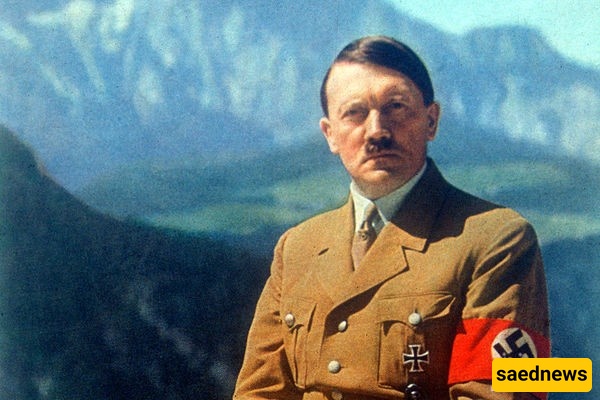
According to the history and culture service of SaedNews agency, quoted from Akona Press:
Most people may agree that Adolf Hitler is one of the most well-known figures in history. He was an ambitious politician and leader whose grand objectives contributed to the outbreak of the largest war in history, resulting in the deaths of millions of people. Although he is widely remembered negatively today, it could be argued that not all propaganda created against him is entirely accurate or fair.
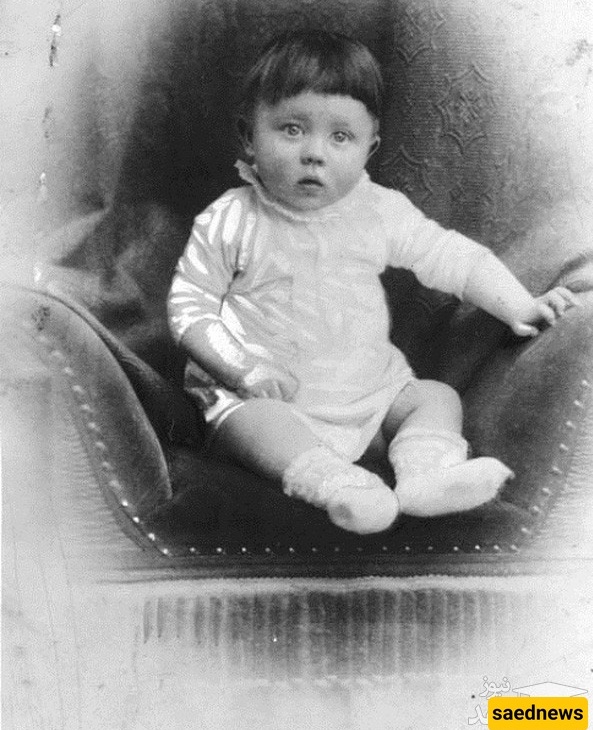
Hitler’s childhood
Adolf Hitler’s childhood
At least part of these claims are exaggerated or incorrect and were formed to portray him negatively. However, his crimes during the occupation of other countries and the genocide of Jews cannot be ignored. While his life has been extensively studied over decades, there are still interesting facts about him that many people are unaware of.
In this article, we introduce some surprising and lesser-known facts about this 20th-century political and military figure who played a major role in changing the course of history.
Although death camps for Jews were built under his direct orders, Hitler himself never entered them. It is said he did not want to be associated with the atrocities carried out there. Some neo-Nazi groups even claim he had no direct involvement in the Holocaust and that Heinrich Himmler concealed the details from him—though this claim is widely disputed.
Hitler was interested in art, but his works were never recognized. In his youth, he dropped out of school and lived in poverty in Vienna, trying to work as an artist. His paintings were often repetitive or lacked meaning, and he was rejected multiple times from the Vienna Academy of Arts. To survive, he sold postcards with his drawings to tourists.
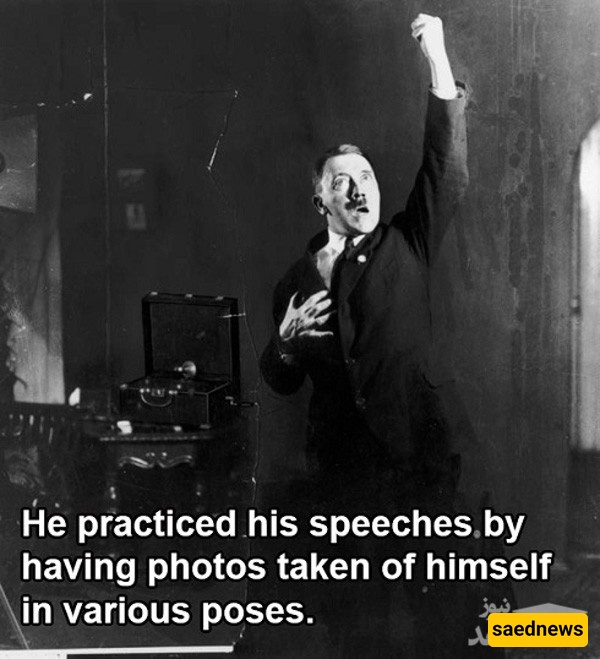
Hitler was known as a skilled speaker. He prepared for speeches in unusual ways and recorded himself to improve his gestures. A famous photo taken by Heinrich Hoffmann in 1925 shows him practicing a speech. He would analyze such recordings and make notes to refine his performance.
During World War I, Hitler served as a soldier in the German army. He was injured during battles with the British and was once narrowly saved from death. He reached the rank of corporal and remained supportive of German commanders throughout the war.
Hitler had a strong interest in cartoons and animation, especially Disney films. A copy of Snow White and the Seven Dwarfs (1938) was reportedly purchased by Nazi propaganda officials and placed in his private cinema. He admired Disney animators and was disappointed that German studios could not produce similar works. He also liked King Kong for its storyline.
Hitler was influenced by powerful industrial figures such as Henry Ford. Ford’s production ideology and his anti-Jewish views made him a figure of interest for Hitler, who reportedly kept Ford’s photo on his desk. Some claims also suggest Ford supported Germany’s war industry, though these are debated.
During World War II, Hitler allegedly supported experiments to train dogs to communicate with humans using trained gestures. Reports claim that some dogs were even taught to “say” phrases like “Mein Führer,” though these claims are widely considered exaggerated.
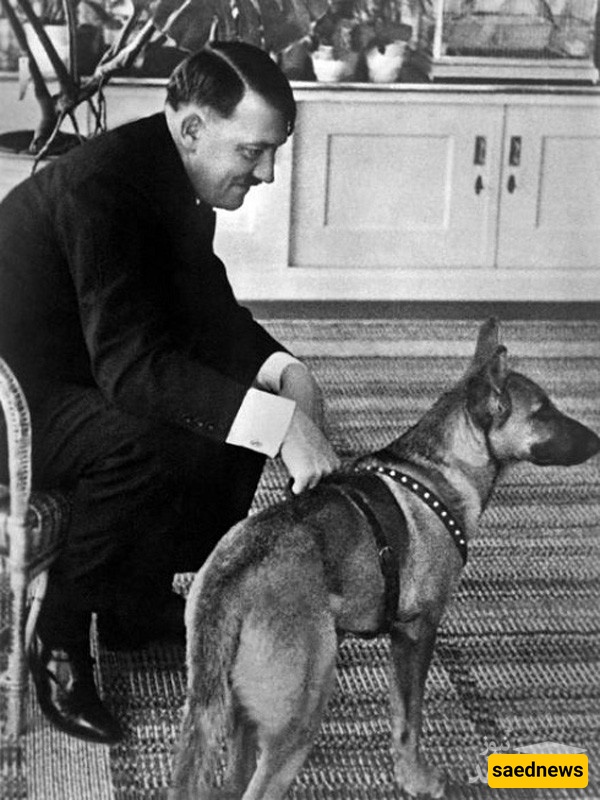
Hitler reportedly followed a strict vegetarian diet and criticized others for eating meat. He is also said to have supported laws against animal cruelty. However, he occasionally consumed small amounts of meat or caviar.
In his youth, Hitler’s family was treated by a Jewish doctor named Eduard Bloch. When Hitler came to power, he reportedly allowed him to leave the country safely, and Bloch later lived in the United States.
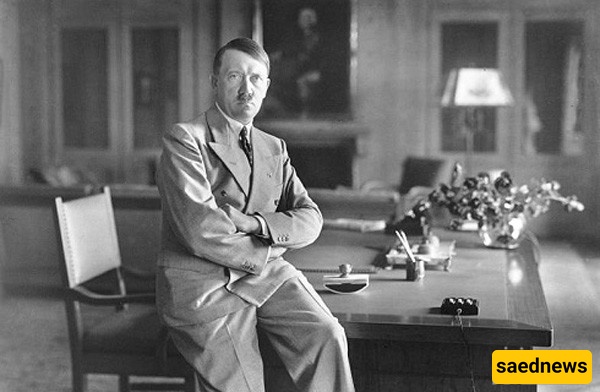
Hitler was interested in music, especially Wagner’s operas. He often listened to opera before sleeping and claimed it influenced his thinking and ideas.
He reportedly admired religious structures and once wanted to become a priest in childhood. He participated in religious schooling and was influenced by clerical figures.
During World War II, it was alleged that the United States attempted psychological operations against Hitler, including attempts to introduce estrogen into his food supply via vegetables. These claims are not verified.
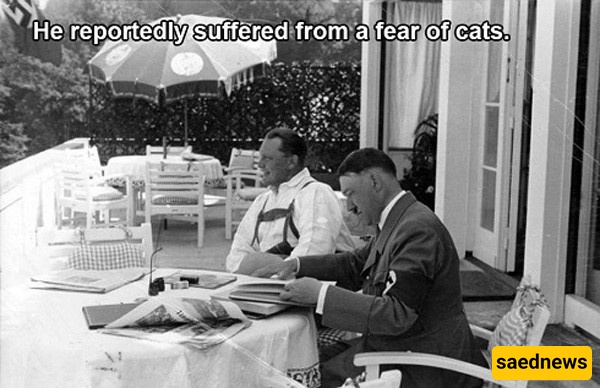
It is claimed that Hitler had a strong fear of cats and avoided them completely.
Although associated with the development of Volkswagen, Hitler reportedly never obtained a driving license, even though there are accounts suggesting he may have driven cars.
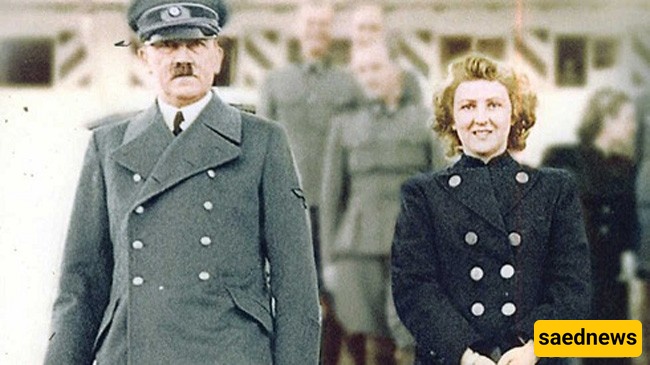
He had a long relationship with Eva Braun but kept it hidden from the public, presenting himself as single for political image purposes.
On the day of the Allied Normandy invasion (D-Day), Hitler was reportedly asleep and ordered not to be disturbed, delaying military responses.
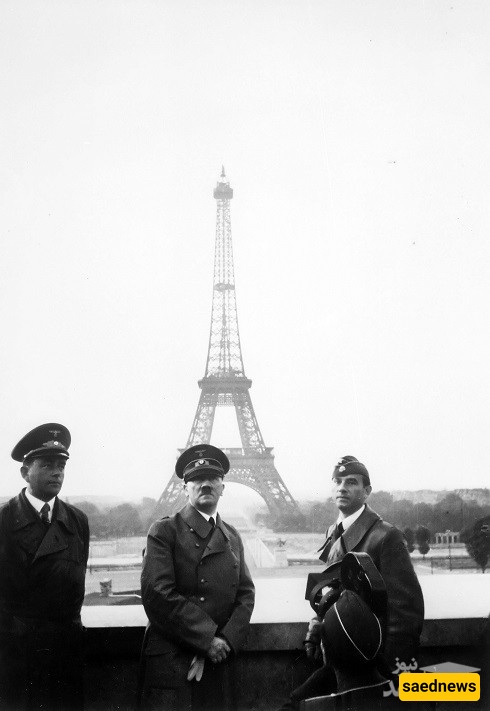
After France’s fall in 1940, Hitler visited Paris. French efforts to limit his experience included disabling access to the Eiffel Tower elevator. He was reportedly impressed by the city and Napoleon’s tomb.
Hitler was once a heavy smoker but later quit and became strongly anti-smoking. He launched public campaigns against tobacco use and rewarded close associates who quit smoking.