SAEDNEWS: The remains of a cargo ship dating back to the Roman era were recently discovered on the floor of Lake Neuchâtel in Switzerland. Many of the goods that went down with the ship appear remarkably well-preserved even after two thousand years.

According to SaedNews’ social affairs report, a ship that sank between 20 BCE and 50 CE has been discovered in Switzerland. Although the ship’s hull has long since vanished, the site revealed a remarkable diversity and quantity of ancient artifacts—around 600 items—with many remaining well-preserved. This discovery is unprecedented in Switzerland, with no comparable find in any other lake north of the Alps.
The Neuchâtel Canton Archaeological Office (OARC) first identified the wreck in November 2024 during a drone-based aerial survey of the lake. This survey was part of a project initiated in 2018 to monitor vulnerable sunken vessels. A few days later, marine archaeologists conducted an exploratory dive and confirmed the presence of a large cargo of ceramics. Several objects were retrieved for analysis, including a piece of wood dated through carbon analysis to between 50 BCE and 50 CE.
In March 2025, the research team returned to the site and designated an area approximately 60 by 24 meters for detailed excavation. The center of the area was densely packed with ceramics, but the entire site was divided into a grid system to record each object meticulously. Several important finds were also recovered outside this primary grid, including wooden and metal chariot wheels—the first of their kind discovered in Switzerland. During this initial stage, about 150 items were retrieved and sent to a conservation lab for stabilization.
After a year, excavations resumed earlier this month, focusing on precise documentation of each object before removal. Most of the cargo consists of hundreds of ceramic vessels and amphorae stacked in groups, likely reflecting their arrangement inside the ship. The largest portion comprises “terra sigillata” red-ware, including plates, bowls, and cups produced in Switzerland’s central plateau. Amphorae containing olive oil from Spain were also among the cargo.
Among the finds were tools used by the ship’s crew, including metal cooking utensils such as a bronze cauldron, a metal melting pot, and a surprisingly well-preserved large wicker basket holding six ceramic containers differing from the main cargo—likely a sailor’s personal cooking kit.
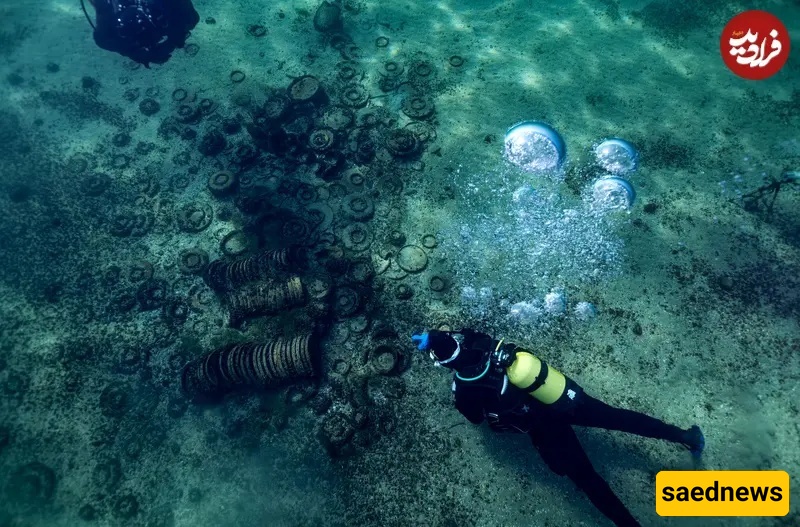
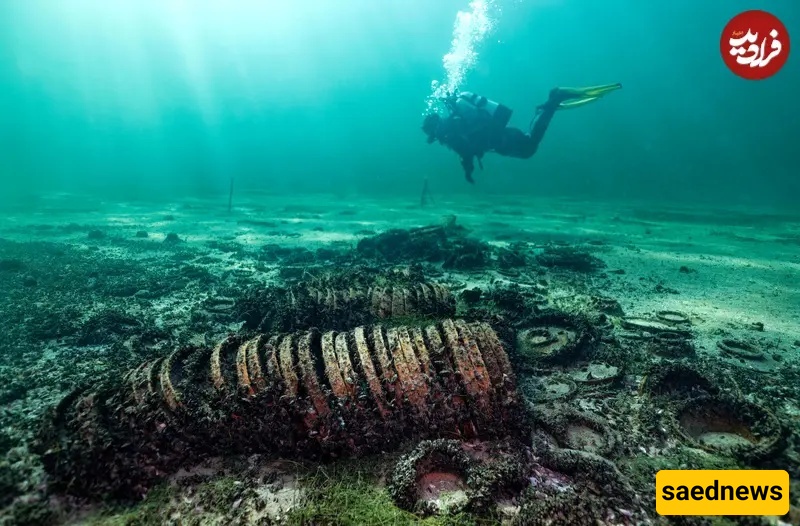
Additionally, several horse harness fittings, four wooden and metal chariot wheels, and military equipment linked to Roman legionaries were found, including a decorative medallion (phalera), a fibula, a belt buckle, and a military pickaxe (dolabra). Two complete swords—one still in its wooden scabbard—and a fragmented sword were also recovered.
These discoveries suggest the ship was accompanied by Roman legionary forces. Based on the dating, the troops likely belonged to the Thirteenth Gemina Legion stationed in Vindonissa (modern Windisch) in 16 CE. Their mission was to prevent Germanic tribes from advancing into the Swiss plateau and Alpine passes toward Italy.
Given the volume of cargo, the ship may have been transporting supplies from Italy, Gaul, and other regions of Helvetia to Roman forces along the Rhine and Danube frontiers. The presence of chariots and horse equipment indicates that the Romans employed a hybrid transport system: moving goods via waterways and then transferring them quickly to land routes when necessary.